01 — At a Glance
The Digital Payments Conglomerate That Finally Turned Profitable
- 52-Week High / Low₹1,382 / ₹652
- Q3 FY26 Sales₹2,194 Cr
- Q3 FY26 PAT₹225 Cr
- Q3 FY26 EPS₹3.52
- Annualised EPS (Q3×4)₹14.08
- Book Value₹240
- Price to Book4.33x
- Debt / Equity0.01x
- OPM %7.1%
- Operating Profit₹155 Cr
Backstage Auditor’s Note: Paytm just reported ₹225 crore PAT for Q3 FY26 — the third consecutive profitable quarter after years of losses. Revenues at ₹2,194 crore (up 20% YoY), operating profit at ₹155 crore (7.1% OPM), and payment processing margins finally holding above 4 bps. The stock is up 51.6% over the past year, trading at 123x P/E. But here’s the spoiler: a ₹80 crore PIDF subsidy is vanishing in Q4, management expects to absorb 30-40% of the impact through subscriptions, and investors are pricing in a smooth transition that might actually be messy. The market is cheering execution while overlooking the structural cliff.
02 — Introduction
From Zombie Unicorn to Profitable Mess
Paytm is the Indian fintech story that everyone has strong opinions about — and no one agrees. Six years ago, it was a unicorn on life support. Three years ago, it was a “too big to fail” narrative waiting for profitability. Two years ago, the RBI dropped a bomb on Paytm Payments Bank and everyone wondered if the company would survive. Today, it’s posting quarterly profits and the stock is up 51% in a year.
The transformation is real, but not the kind that fits cleanly into spreadsheets. Paytm has pivoted from trying to be everything — wallets, travel, lending, insurance, ticketing — to focusing on what actually makes money: merchant payments, merchant lending, and financial services distribution. It shut down its movie ticketing business, spun out its payments bank into a quasi-separate entity, and is now laser-focused on the cash-cow ecosystem it should have built six years ago.
Q3 FY26 results deliver exactly what the market wanted: three consecutive profitable quarters, revenue growth at 20% YoY, and operating margins finally inflecting upward. But the February 2026 concall revealed something management strategically downplayed — the Payment Infrastructure Development Fund (PIDF) subsidy that helped subsidize merchant device rollout is ending. It was worth roughly ₹80 crore a quarter. And while management claims they can offset it, the math is messy and the margin compression is coming.
So here’s the question: Is Paytm finally a real company, or just a subsidized one that learned to say the right words to investors?
Concall Takeaway (Feb 2026): “We are not sitting here to take grants as our profit and revenue,” said management. Translation: We took grants, they made profit look bigger than it was, and now we have to actually earn money the hard way. Welcome to earnings maturity.
03 — Business Model: The Fintech Hydra
Too Many Tentacles, But Only Three Make Real Money
Paytm owns multiple business segments but the revenue concentration tells the real story. Payment services (59% in H1 FY25) dominate, followed by financial services (21%) and marketing services (20%). On paper, it’s diversified. In reality, it’s a merchant-payments company with a lending side hustle and some ticketing revenue that it just sold off.
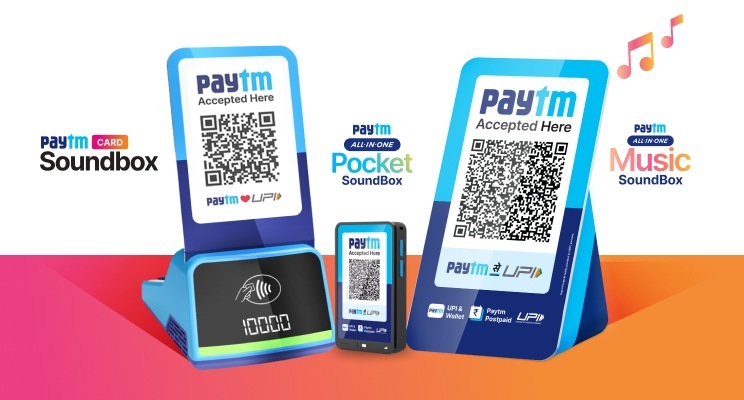
The core: merchant acquiring. Paytm has built a device-led merchant base through aggressive subsidies. Over 1.44 crore subscription merchants (the only merchant metric management cares about), 112 lakh devices across India, and ~7.1 crore monthly transacting consumers on the app. The business model hinges on monetizing merchants through three stacking revenue streams: (1) subscription fees from device rentals, (2) MDR (merchant discount rate) from payments processing, and (3) lending to those merchants.
Financial services segment is becoming the profit driver. Merchant lending now at penetration of ~7% on the device base, with management confident it could scale to 15-20%. The real growth narrative is BNPL and postpaid credit, which launched three months ago and already hit 1 lakh customers with expectations to reach ₹100 crore disbursals within six months. Classic Paytm playbook: launch fast, iterate based on unit economics, scale what works.
But the business model’s kryptonite is clear: unit economics were subsidized. PIDF covered device costs. Now that’s ending. Management’s response? Offsets and higher monetization. The test of whether this company is actually sustainable starts in Q4 FY26.
Monthly Users7.1 CrQ3 FY26
Merchants1.44 CrDevice Subscribers
Devices112 LPayment Infra
Processing Margin4+ bpsNow Stable
Management Claim Check: “Payment processing margin will stay above 4 bps for the next few quarters.” Translation: EMI volumes and RuPay-on-UPI mix improvements are holding. But if merchant quality deteriorates or competition heats up, that’s your first canary in the coal mine.
💬 Comment: Do you trust that Paytm can sustain profitability without the PIDF crutch, or is the subsidy withdrawal going to show cracks in Q4?
04 — Financials Overview
Q3 FY26: The Numbers That Matter
Result type: Quarterly Results (Dec 2025) | Q3 FY26 EPS: ₹3.52 | Annualised EPS (Q3×4): ₹14.08 | 9M FY26 Cumulative PAT: ₹369 Cr
| Metric (₹ Cr) |
Q3 FY26 Dec 2025 |
Q3 FY25 Dec 2024 |
Q2 FY26 Sep 2025 |
YoY % |
QoQ % |
| Revenue | 2,194 | 1,828 | 2,061 | +20.0% | +6.5% |
| Operating Profit | 155 | -223 | 140 | Positive Swing | +10.7% |
| OPM % | 7.1% | -12.2% | 6.8% | +1,930 bps | +30 bps |
| PAT | 225 | -208 | 21 | Profitable Swing | +971% |
| EPS (₹) | 3.52 | -3.26 | 0.33 | Positive Swing | +971% |
The Turnaround Story (Detailed): Q3 FY26 posted ₹225 crore PAT versus ₹-208 crore in Q3 FY25. That’s a ₹433 crore swing. Operating profit improved from ₹-223 crore to ₹+155 crore. OPM went from -12.2% to +7.1%. This is a real turnaround, not accounting smoke. Revenue at ₹2,194 crore (20% YoY growth) is solid. But the real question: how much of that profitability is structural cost discipline vs. one-time items and subsidies? The Feb 2026 concall answers it — PIDF was a ₹80 crore headwind that’s about to reverse into a ₹80 crore burden in Q4.
05 — The PIDF Cliff: The Story Nobody is Talking About
₹80 Crore Subsidy Ending. Can 30-40% Offset Really Save This?
Join 10,000+ investors who read this every week.