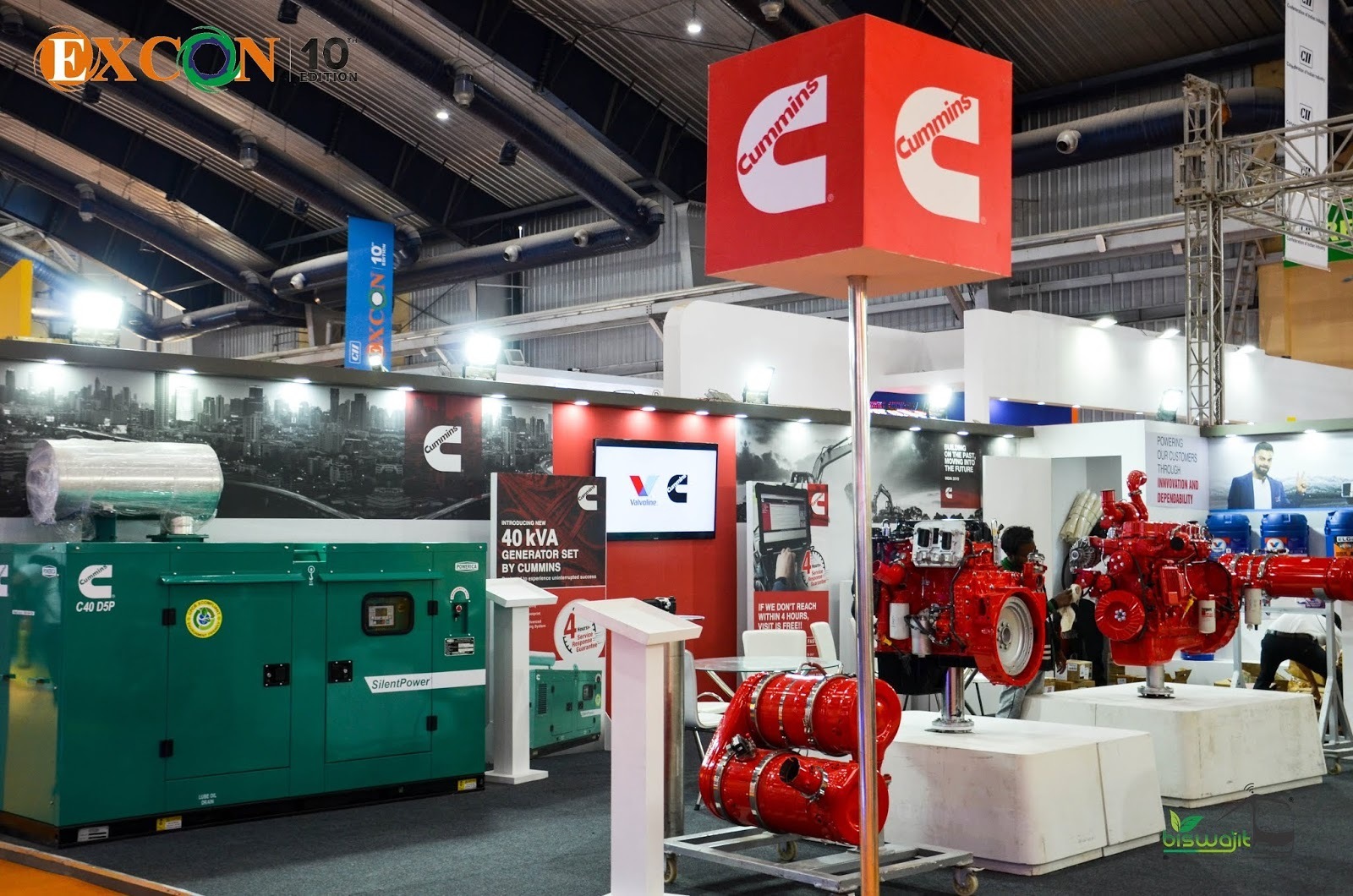
Cummins India:
₹4,801. P/E 57x.
Diesel Dreams & Data Centre Lumps.
Revenue nearly flat YoY. Margins at a decade high. Data centre orders lumpy as a broken shock absorber. Distribution scaling wildly. And the stock has returned 66% in one year. Coincidence? Maybe.
The Diesel Engine Maker That’s Trading Like a Semiconductor
- Q3 FY26 Revenue₹3,006 Cr
- Q3 FY26 PAT₹486 Cr
- Q3 EPS (₹)17.53
- Annualised EPS (Q3×4)₹70.12
- FY25 Full-Year EPS₹72.15
- Book Value₹285
- Price to Book16.9x
- 52-Week High / Low₹4,987 / ₹2,580
- Return (1-Year)+65.6%
- OPM (Q3)21.4%
A Diesel Engine Maker That’s Somehow Become a Darling
Cummins India makes diesel engines. And generator sets. And marine propulsion systems. And now battery energy storage systems. And defence platforms. And railway power cars. Basically: if you need something loud, heavy, reliable, and diesel-powered, Cummins is your guy.
The company is 51% owned by Cummins Inc., the USA-based engine behemoth with a 100-year history and customer lists that read like a who’s who of global infrastructure. The rest? Public shareholders, mutual funds, and a sprinkle of FIIs who apparently think diesel gensets are the next cryptocurrency.
For most of its public life, Cummins India has been the quiet overachiever: solid ROCE (36%), strong margins (20%+ OPM), near-debt-free balance sheet, and a distribution network so vast it makes other industrial companies weep. Yet the stock languished for years at boring valuations until suddenly — somewhere in 2024 — the market decided that India’s data centre boom, electrification mega-trends, and railway capex were going to make this stock 66% richer in 12 months. Was that rational? Let’s find out.
81% Engines. 19% Lubes. 100% Betting on Infrastructure.
Cummins India runs two core segments: (1) Engines (81% of FY25 revenue) and (2) Lubes (19% of FY25 revenue, run through Valvoline Cummins JV).
The engines business is glacially diverse. Power Generation (gensets) accounts for a decent chunk — delivering 23,000+ units in FY25, ranging from small backup sets to giant 2,500 kVA beasts for data centres. Then come Industrial engines: railways (LHB power cars), mining (dump trucks, excavators), oil & gas (compressors), defence (tank prototypes), construction (dozers, graders), and marine (warships, cargo vessels). It’s as if management said, “Let’s be in every business that requires a loud engine,” and then actually did it.
Distribution happens through 450+ service touchpoints, 116 highway dealerships, and OEM partnerships so deep they make competitors cry. Domestic revenue: 83% in FY25 (up from 73% in FY23). Exports: 17% (down from 27% in FY23). The story is clear: India is the golden goose. Abroad is volatility.
Q3 FY26: The Numbers Game
Result type: Quarterly Results | Q3 FY26 EPS: ₹17.53 | Annualised EPS (Q3×4): ₹70.12 | Full-year FY25 EPS: ₹72.15
| Metric (₹ Cr) | Q3 FY26 Dec 2025 | Q3 FY25 Dec 2024 | Q2 FY26 Sep 2025 | YoY % | QoQ % |
|---|---|---|---|---|---|
| Revenue | 3,006 | 3,096 | 3,170 | -1.3% | -5.2% |
| Operating Profit | 643 | 598 | 695 | +7.5% | -7.5% |
| OPM % | 21% | 19% | 22% | +200 bps | -100 bps |
| PAT (pre-exceptional) | 502 | 509 | 587 | -1.4% | -14.5% |
| PAT (post-exceptional) | 486 | 558 | 622 | -12.9% | -21.9% |
| EPS (₹) | 17.53 | 20.15 | 22.45 | -13.0% | -21.9% |
Is ₹4,801 a Bargain or a Bubble?
Method 1: P/E Based
FY25 full-year EPS = ₹72.15. Sector median P/E = 37.7x. Cummins trades at 57.1x. At sector median (37.7x), fair value = ₹2,717. At 1.2x sector (justified premium for ROCE and growth), fair P/E = 45.2x → Fair price = ₹3,261.
Range: ₹2,717 – ₹3,261
Method 2: EV/EBITDA Based
FY25 EBITDA = ₹2,478 Cr (from P&L). Current EV = ₹1,31,339 Cr → EV/EBITDA = 53x. Industry median: ~18x–22x for industrial peers. At 22x: EV = ₹54,516 Cr → Per share (net debt near-zero) = ₹1,964. At 28x: EV = ₹69,384 Cr → Per share = ₹2,501.
Range: ₹1,964 – ₹2,501
Method 3: DCF Based
Base OCF: ₹1,685 Cr (FY25). Growth: 12% for 5 years (targeting double-digit FY27 onwards). Terminal growth: 4%. WACC: 10.5% (high for this quality).
→ Terminal Value (4% growth / 6.5% cap rate): ~₹60,500 Cr
→ Total EV: ~₹69,400 Cr (near-zero net debt)
Range: ₹2,100 – ₹2,800
Data Centres, Battery Dreams, and the Occasional Tax Notice
🔥 The Big One: Data Centre Execution Is Lumpy
Management said it plainly on the concall: “data center execution… is lumpy… we had done the execution last quarter, that did not come in… Q3.” Translation: They had orders, execution fell through, and revenue took a hit. Data centres represent roughly 25% of Power Gen revenue on average, but order-to-installation timelines are 2–3 years. The pipeline is building. But lumpiness will persist. This is not a smooth growth story.
✅ Distribution Is Scaling Like Crazy
- • Distribution sales: ₹939 cr (+26% YoY, +18% QoQ)
- • Record-like quarter per analysts; management unbothered
- • Asset base growing steadily; aftermarket capture expanding
- • Warranty shift (July 2024, 2-year coverage) → Aftermarket wave FY27 onwards
- • This is the real growth driver, not lumpy data centre orders.
⚠️ Margin Sustainability Questions
- • OPM at 21.4% (Q3) includes one-time supplier benefits
- • ₹50 crore one-time management cost true-up in Q3
- • Copper prices rising (~₹1,320/kg); pricing pass-through aggressive but limited
- • Steel/iron stable; no major near-term commodity tailwind
- • Current margins may represent a peak, not a new floor.
✅ Battery Energy Storage Systems (BESS)
- • Launched June 2025; commercial traction early stage
- • Management: “a lot of inquiries, very slow sales”
- • Huge addressable market theoretically; capex a barrier practically
- • Management refused to provide revenue targets: “your modeling will be as good as mine”
- • Bet on it, but don’t model it yet.
✅ Industrial Segments: Mixed Signals
- • Rail: tender-based volatility; outlook “very positive”
- • Marine: ₹92 crore in Q3; strong execution on customized builds
- • Mining: activity improving; tenders lag behind activity
- • Construction: road construction pace slow; excavator sales weak post-monsoon
- • Don’t read too much into one quarter; outlook improving.
Is the Fort Still Standing?
| Item (₹ Cr) | FY23 | FY24 | FY25 | Sep 2025 |
|---|---|---|---|---|
| Total Assets | 7,919 | 8,971 | 10,168 | 10,540 |
| Net Worth (Eq + Reserves) | 5,758 | 6,612 | 7,561 | 7,895 |
| Borrowings | 376 | 127 | 30 | 24 |
| Other Liabilities | 1,784 | 2,231 | 2,577 | 2,621 |
| Total Liabilities | 7,919 | 8,971 | 10,168 | 10,540 |
Borrowings down to ₹24 Cr (Sep 2025) from ₹376 Cr (FY23). Debt to Equity: 0.00x. Interest coverage: 200x. The balance sheet is not just clean — it’s immaculate.
Net worth up from ₹5,758 Cr (FY23) to ₹7,895 Cr (Sep 2025). Capital employed growing; retained earnings accumulating. Equity base getting stronger, not leverage masking weakness.
Asset base ₹10,540 Cr generating ₹11,602 Cr in annual revenue (TTM). No balance sheet bloat. Working capital cycles tight (Cash Conversion Cycle: 49 days). Quality stuff.
The Operating Engine Never Stops
| Cash Flow (₹ Cr) | FY23 | FY24 | FY25 | TTM |
|---|---|---|---|---|
| Operating CF | +820 | +1,285 | +1,685 | +1,685+ |
| Investing CF | +87 | -248 | -580 | -580+ |
| Financing CF | -687 | -1,134 | -1,168 | -1,168+ |
| Net Cash Flow | +219 | -97 | -63 | -63+ |
The Report Card
Annual Trends — FY23 to FY25 (TTM)
| Metric (₹ Cr) | FY23 | FY24 | FY25 | TTM |
|---|---|---|---|---|
| Revenue | 7,772 | 9,000 | 10,391 | 11,602 |
| EBITDA | 1,248 | 1,770 | 2,080 | 2,478 |
| EBITDA Margin % | 16% | 20% | 20% | 21% |
| PAT | 1,228 | 1,721 | 2,000 | 2,242 |
| EPS (₹) | 44.31 | 62.07 | 72.15 | 80.87 |
Here’s the problem: historical CAGR doesn’t predict future growth. FY23–FY25 was driven by post-COVID normalization and margin expansion. FY25–FY28 will depend on: (1) data centre execution (lumpy, 2–3 year lag), (2) distribution aftermarket capture (accelerating but dependent on installed base), (3) industrial segment recovery (lagging), and (4) BESS traction (early stage). None of these are guaranteed 15%+ CAGR material.
How Cummins Stacks Up (And Why It Shouldn’t Be Here)
| Company | Sales (₹ Cr) | PAT (₹ Cr) | P/E | ROCE % | ROE % |
|---|---|---|---|---|---|
| Cummins India | 11,602 | 2,329 | 57.1x | 36.3% | 28.2% |
| Kirloskar Oil | 7,334 | 544 | 40.4x | 13.7% | 15.4% |
| Elgi Equipments | 3,831 | 415 | 39.6x | 21.9% | 20.1% |
| KSB | 2,696 | 289 | 45.7x | 24.5% | 18.3% |
| Ingersoll-Rand | 1,415 | 277 | 44.2x | 60.0% | 45.0% |
Sector median P/E: 37.7x. Cummins trades at a 52% premium. Kirloskar Oil trades at a 7% premium (has 13.7% ROCE though). Ingersoll-Rand has 60% ROCE and trades at 44.2x P/E. The premium is justified by quality, but not at this extreme.
Who Owns This Diesel Dream?
- Promoters (Cummins Inc USA)51.00%
- DIIs20.60%
- FIIs19.42%
- Public8.98%
Pledge: 0.00%. No pledges ever. Shareholding pattern stable across quarters. FII holding steadily increasing (from 13.99% Jun 2023 to 19.42% Dec 2025). That’s the real story.
Promoter: Cummins Inc. (USA)
One of the world’s largest independent engine and power generation manufacturers. Markets span 150+ countries. Customers include Fortune 500 OEMs. Global R&D budgets that dwarf Indian competitor spends. The 51% stake means Indian management has a very capable parent to lean on — and very high standards to meet.
FII Accumulation Is The Signal
FII holding has risen from 13.99% to 19.42% in just 2.5 years. This suggests institutional capital is buying into the data centre thesis, the distribution story, and the ROCE profile. Either they’re right, or they’re the ones driving valuations to unsustainable levels. Both are possible.
The Boring But Critical Stuff
✅ The Clean Sheet
- ✓ No pledged shares ever
- ✓ Interest coverage at 200x — laughably safe
- ✓ Zero material audit qualifications
- ✓ Dividend payout at 71% (sustainable)
- ✓ Interim dividend declared (Feb 2026): ₹20 per share
- ✓ Postal ballot for related party transactions (Dec 2025)
- ✓ Strong R&D spend (historically 1–3.5% of turnover)
⚠️ Watch List
- ⚠ CFO Ajay Shriram Patil resigned (Jan 2025)
- ⚠ Interim CFO Prasad Kulkarni in place (Dec 2024)
- ⚠ Subsidiary (CSSPL) ceased operations (Apr 2025)
- ⚠ Income tax order (Dec 2025): ₹1.19 Cr penalty; appeal filed
- ⚠ ITAT relief: ₹210 Cr for FY2017-18 (Dec 2025)
- ⚠ Data centre lumpiness = visibility risk
Diesel Engines in an EV-Obsessed World
India’s power generation market runs at ~20 GW of genset capacity installed, growing at 5–7% CAGR. The market is split between grid-connected backup (data centres, hospitals, factories) and off-grid prime power (rural, mining, remote). Neither segment is going electric anytime soon. A lithium battery can replace a diesel tank in theory. In practice, the capex is 4x higher, battery life is 10 years vs 30 for a diesel engine, and when you lose power at 2 AM on a monsoon in a mine 500 km from the nearest battery farm, diesel is your only prayer.
📊 Data Centres: The $10 Billion Elephant
India is now the world’s fastest-growing data centre market. Announcements from Amazon, Google, Microsoft, and Reliance tower into the hundreds of billions. But here’s the thing: they all need backup power. 2,500 kVA+ gensets, 48-hour autonomy, 24/7/365 reliability. Cummins makes these. So does Caterpillar and Perkins. But Cummins has the distribution and the OEM relationships. The order-to-installation lag is 2–3 years. The margin is fat. And the lumpiness is expected. Management is clear: “pipeline is building out very well.”
🔄 Distribution Aftermarket: The Real Growth Engine
Cummins sold 23,000+ gensets in FY25. Every genset needs service every 500–1,000 hours. That’s aftermarket revenue for 10+ years. The full CPCB IV+ transition (July 2024, 2-year warranty) means the out-of-warranty wave starts FY27. Distribution sales already up 26% YoY. This is the real secular growth story, not lumpy data centre orders.
🚂 Railways: The Sleeper Hit
Indian Railways is electrifying aggressively but selectively. Power cars on LHB coaches still need diesel. Cummins has been the first mover here. The order book is tender-based (lumpy), but the outlook is “very positive” per management. Just not in any analyst model yet.
⚡ BESS: The Bet That’s Too Early
Battery Energy Storage Systems launched June 2025. Market opportunity is huge. Commercial traction is “a lot of inquiries, very slow sales.” This is real optionality, but 3–5 years away from material contribution. Don’t model it as a near-term growth driver.
Competitive dynamics: Caterpillar (global giant, strong in data centres), Perkins (robust in LHP segments), and Ashok Leyland (cost player in domestic) are the real threats. Cummins wins on technology, reliability, and OEM credibility. But pricing is fierce, especially in gensets. Copper and steel inflation could squeeze margins if pass-through lags.
Macro tailwinds: Infrastructure capex at all-time highs (railways, roads, ports). Data centre buildout accelerating. Rural electrification expanding. Grid reliability concerns (load shedding in some states). These all help. But they don’t guarantee 15%+ revenue CAGR. At best, they support 10–12%.
The Engine That’s Running Hot
Cummins India is a legitimate quality business with near-zero debt, 36% ROCE, 28% ROE, decade-high margins, and a diversified end-market footprint across power generation, railways, mining, marine, and defence. But somewhere between late 2023 and March 2026, the stock price divorced itself from business fundamentals. The market is pricing in sustained 15%+ growth. The company is guiding for double-digit growth. At ₹4,801 per share, you’re paying ₹57 for every rupee of earnings. The risk-reward is tilted toward the risk.
FY26 Execution So Far: Q3 revenue nearly flat YoY (–1.3%). Data centre execution lumpy. Distribution momentum strong (+26% YoY). Margin expansion real (+200 bps OPM YoY) but includes one-time supplier benefits and a ₹50 crore management cost true-up. The underlying business is solid, but not as exciting as the stock price suggests.
The Data Centre Mirage: Yes, India is building data centres at an unprecedented pace. Yes, Cummins will win orders. Yes, margins are fat. But the order-to-delivery lag is 2–3 years, and execution is lumpy. Management explicitly said: “data center execution… is lumpy.” This is not a smooth growth story. It’s a feast-or-famine revenue driver dressed up as a secular mega-trend.
Distribution: The Real Story: Aftermarket sales up 26% YoY. Warranty shift starting to unlock aftermarket waves (FY27 onwards). This is recurring, high-margin, low-capex revenue with real visibility. But it’s baked into the ₹4,801 price. There’s limited upside surprise here.
Valuation Context: At FY25 EPS of ₹72.15, fair value under three methods ranges from ₹1,960 to ₹3,261. CMP is ₹4,801 — a 48–144% premium. For that premium to be justified, you need either (1) FY27–FY28 earnings growth to 15%+ CAGR, sustained for 5+ years, or (2) a multiple expansion to 70x+ P/E (unlikely). Neither seems probable.
✓ Strengths
- 36.3% ROCE — exceptional capital efficiency
- 28.2% ROE — consistent across cycles
- Zero net debt; interest coverage 200x
- Distribution network = competitive moat
- Aftermarket tailwind building (FY27+)
- OEM credibility (railways, defence, marine)
- Strong parent (Cummins Inc.) R&D backing
✗ Weaknesses
- Revenue growth capped at 10–12% (not 15%+)
- Data centre orders lumpy; 2–3 year lag to revenue
- Commodity exposure (copper rising)
- Pricing power limited in competitive segments
- Exports volatile and geography-dependent
- Current margin peak includes one-time items
- BESS is early-stage; no near-term material revenue
→ Opportunities
- Data centre buildout (multi-year, fat margins)
- Railway electrification (power cars, tenders)
- Distribution aftermarket capture (FY27+ tailwind)
- Mining capex recovery (tenders converting from activity)
- BESS commercialisation (3–5 year horizon)
- Marine customisation wins (growing order book)
- Industrial lubricants (Valvoline JV expansion)
⚡ Threats
- EV adoption in gensets (long timeline, but real)
- Valuation compression if growth disappoints
- Copper price inflation (pass-through difficult)
- Geopolitical (exports already volatile)
- Data centre lumpiness creating revenue volatility
- Competitive intensity in gensets (Caterpillar, Perkins)
- Margin reversion if supplier benefits don’t repeat
Cummins India is a quality business trapped in an expensive valuation.
The company has world-class capital efficiency, near-zero debt, and access to mega-trends (data centres, railways, distribution aftermarket). But the stock price has already priced all of that in — and then some. At ₹4,801, you’re not buying the business as it is; you’re betting that it will grow significantly faster than management is guiding. That’s not investing. That’s speculation with a strong balance sheet as a consolation prize.
For long-term compounders, the business is excellent. For value investors, the price is prohibitive. For momentum traders, the setup is already done (66% in one year). The right move depends on your time horizon and risk tolerance — but the math doesn’t hide the fact that fair value (₹1,960–₹3,261) is significantly below market price.