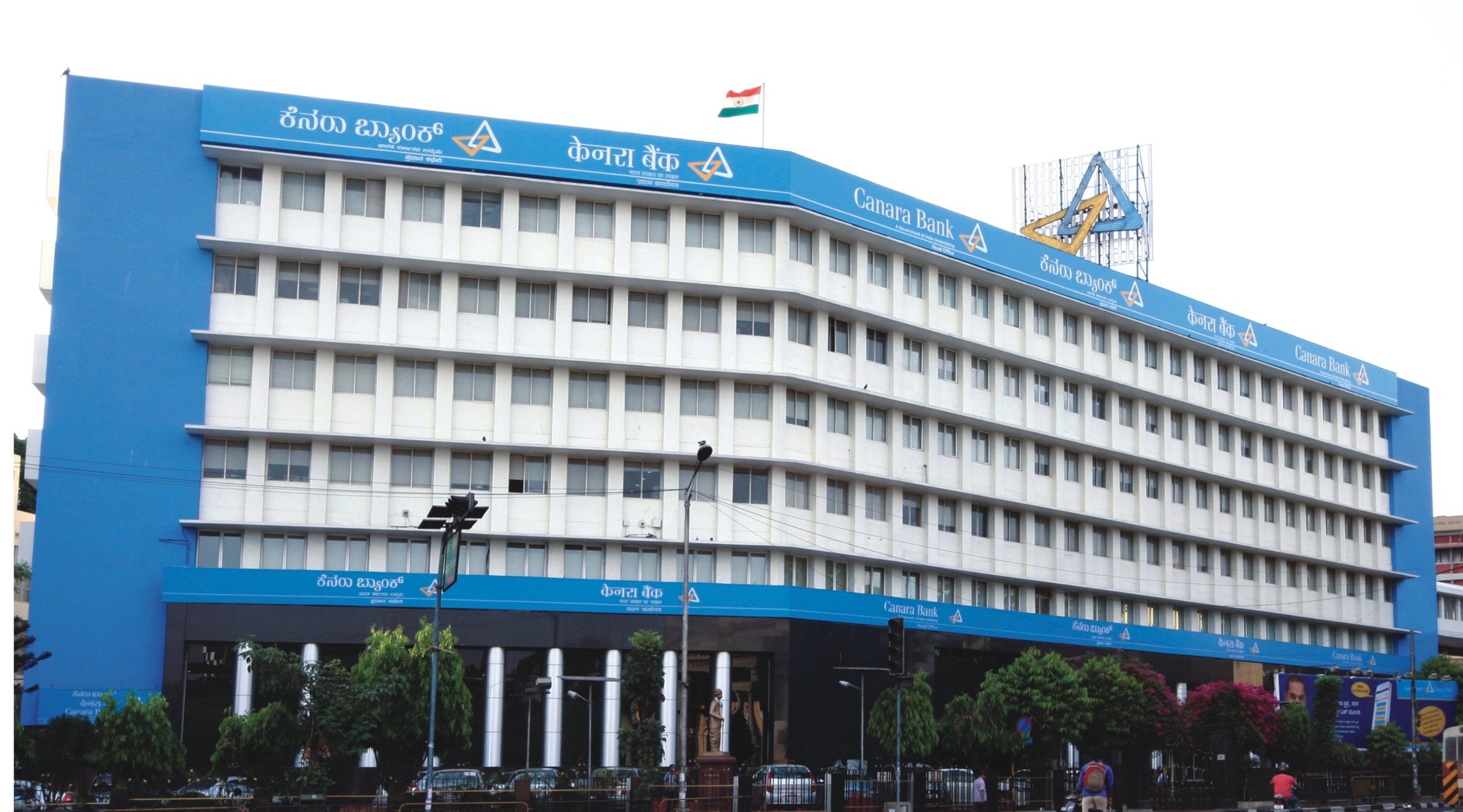
Canara Bank:
₹21,480 EPS. 25.6% Profit Growth.
The Boring PSU That’s Actually Printing Money
Third straight quarter of double-digit growth. NPA practically vanished. Deposits growing faster than your credit card debt. And the stock has quietly returned 72% in one year while everyone debated crypto.
The Government-Backed Deposit Machine Running at Full Throttle
- 52-Week High / Low₹163 / ₹81.4
- Q3 Revenue₹30,938 Cr
- Q3 Net Profit₹5,255 Cr
- Q3 EPS₹5.79
- Annualised EPS (Q3×4)₹23.16
- Book Value₹129
- Price to Book1.13x
- Dividend Yield2.74%
- Debt / Equity14.2x
- Return (1 Year)71.7%
The Most Exciting Boring Thing Happening in Indian Banking
Let’s be honest. When you think of banks, you think of lobbies with free pens that don’t work, loan officers with spreadsheets older than your parents, and quarterly earnings calls where a MD talks about “digital transformation” while his slides look like they’re from 2007. Welcome to the PSU banking experience. Canara Bank — oldest in the pack, government-owned since 1969, and the kind of institution that still uses the word “custodian” in annual reports.
But here’s what happened in Q3 FY26: Net profit jumped 25.6%. Deposits grew 13.59% year-on-year. Asset quality improved so dramatically that gross NPAs dropped from 4.23% (March 2024) to 2.08% (December 2025) — a level of cleansing that would make Marie Kondo weep. The slippage ratio is 0.64%, described by management as “industry best.” RAM (Retail, Agriculture, MSME) credit — the holy trinity of boring but profitable lending — is growing at 18.7%. The bank is earning ₹500 crores annually just from selling insurance and mutual funds through its branch network.
It’s not exciting. Nobody’s writing Medium articles about “How Canara Bank Disrupted the Banking Sector.” But for people who actually care about compounding returns instead of meme stocks, this is the story. A ₹1.32 lakh crore government-backed bank that’s growing faster, cleaning up faster, and returning cash to shareholders — all while trading at one of the lowest multiples in the sector.
They Take Your Mom’s Savings Account and Lend It Out to Businesses. Simple.
Canara Bank was incorporated in 1906 — yes, before India was even independent — and was nationalized in 1969. In April 2020, it merged with Syndicate Bank, instantly becoming one of India’s top-5 banks by market cap. Today it operates 10,066 domestic branches, 13,167 BC points (basically bank-in-a-box), and handles ₹15.21 lakh crore in deposits as of Q3 FY26.
The business model is refreshingly simple. Deposits come in from retail customers (savings accounts, current accounts, fixed deposits). The bank lends this money to corporate entities (45% of the loan book), farmers (25%), retailers (16%), and MSMEs (14%). Profit = interest earned minus interest paid, minus operational costs, minus provisions for bad loans. It’s what banks were doing 50 years ago and what they’re still doing today.
Canara’s moat is straightforward: government backing (moral hazard = lower deposit costs), 10,066 branches in semi-urban and rural India (where competitors rarely venture), and decades of relationship banking with corporate clients. Within corporates, the bank has major exposure to NBFCs (32%), Infrastructure (31%), Textiles (4%), and Steel (4%) — all sectors deeply intertwined with India’s infrastructure ambitions.
The Numbers That Made Everyone Upgrade Their Price Targets
Result type: Quarterly Results | Q3 FY26 EPS: ₹5.79 | Annualised EPS (Q3×4): ₹23.16 | FY25 Full Year EPS (TTM): ₹20.25
| Metric (₹ Cr) | Q3 FY26 Dec 2025 | Q3 FY25 Dec 2024 | Q2 FY26 Sep 2025 | YoY % | QoQ % |
|---|---|---|---|---|---|
| Revenue | 30,938 | 30,751 | 32,072 | +0.6% | -3.5% |
| Operating Profit | 9,119 | 7,844 | 7,863 | +16.4% | +15.9% |
| OPM % | 30% | 25% | 24% | +500 bps | +600 bps |
| Net Profit | 5,255 | 4,181 | 4,896 | +25.6% | +7.3% |
| EPS (₹) | 5.79 | 4.65 | 5.35 | +24.5% | +8.2% |
Three Methods. One Conclusion: This Thing Is Cheap.
Method 1: P/E Based
FY25 full-year EPS = ₹20.25. TTM EPS (using annualised data) ≈ ₹20.25. Median sector P/E = 8.09x. Canara trades at 6.56x — a 19% discount to sector despite superior ROE (17.8% vs 15.35% median). Fair P/E should be 8x–10x given government backing and improving asset quality. Fair value range: P/E 8x to 9.5x on TTM EPS of ₹20.25 = ₹162–192.
Range: ₹162 – ₹192
Method 2: Price to Book Based
Book value per share = ₹129. Current P/B = 1.13x. Sector median P/B = 1.11x. Government PSU banks typically trade at 1.2x–1.5x P/B due to deposit franchise and implicit sovereign backing. Fair P/B: 1.3x–1.5x on book value ₹129 = ₹168–194.
Range: ₹168 – ₹194
Method 3: ROE-Based Justified P/E
ROE = 17.8%, Cost of Equity ≈ 10% (blended 9% risk-free + 1% risk premium for PSU). Justified P/E = (ROE – Growth) / (CoE – Growth). Assuming 6% perpetual growth: (17.8% – 6%) / (10% – 6%) = 2.95x earnings + 1x base = ~3.95x. But government backing justifies premium of 1.5x–2x. Final justified P/E: 8x–9x. On ₹20.25 EPS: ₹162–182.
Range: ₹162 – ₹182
Leadership Changes, Subsidiary IPOs, and Other Plot Twists
🔴 Management Turnover: K. Satyanarayana Raju Retired as MD
MD K. Satyanarayana Raju retired on December 31, 2025 (superannuation). Hardeep Singh Ahluwalia assumed additional charge as MD & CEO from January 1, 2026 for three months until the permanent appointment is finalized. Change of guard at the top — par for the course in government banks, but watch for any strategy shifts post-succession.
✅ Canara HSBC IPO: Diluting But Monetizing
- • Board approved divestment of 14.5% stake in Canara HSBC Life Insurance via IPO
- • Current stake: 51%; post-IPO: ~36.5%
- • FY24 profit: ₹113 crore; Q3 gains booked: ₹2,006 crore (one-off)
- • Also divested 13% from Canara Robeco (51% → 38%)
- • Strategy: Monetize subsidiaries, reduce complexity, deploy capital where ROI is highest
✅ Capital Raise: Strong, Self-Sufficient
- • CRAR: 16.5% vs 11.5% regulatory minimum (healthy buffer)
- • CET1: 12.4% vs 9.5% requirement (way above minimum)
- • Issued ₹5,000 cr Tier II bonds @ 7.24% (Feb 2026)
- • Issued ₹3,500 cr AT1 bonds @ 7.55% (Dec 2025)
- • Outlook: No equity dilution needed; capital will be self-generated
The Clearest Balance Sheet in PSU Banking
| Item (₹ Cr) | Sep 2025 | Mar 2025 | Mar 2024 | Dec 2025 (Latest) |
|---|---|---|---|---|
| Total Assets | 1,735,918 | 1,730,691 | 1,535,018 | 1,811,503 |
| Net Worth (Equity + Reserves) | 115,202 | 106,606 | 92,133 | 117,440 |
| Deposits | 1,527,472 | 1,456,495 | 1,312,242 | 1,555,893 |
| Borrowings (Debt) | 91,131 | 89,665 | 57,538 | 92,155 |
| Advances (Loans Given) | 1,192,000 | 1,050,000 | 960,602 | 1,190,000 |
Deposits up from ₹1.46L cr (Mar 2025) to ₹1.56L cr (Dec 2025) in just 9 months. Growth rate: 12.95% YoY. Retail savings growing at 8.51%, suggesting steady inflows from non-institutional sources.
Debt/Equity 14.2x looks scary, but that’s how banks work. They borrow deposits (cheap) and lend them out (expensive). What matters: Debt is mostly deposits paying ₹5% interest cost.
Loans up 13.59% YoY to ₹1.19L cr. Advances-to-deposits ratio: 76%, indicating balanced book (not overextended). Room to grow without fresh capital.
From Crisis to “Industry Best” in 18 Months. Here’s How.
| Metric | Mar 2024 | Mar 2025 | Dec 2025 | YoY Trend |
|---|---|---|---|---|
| Gross NPA % | 4.23% | 2.9% | 2.08% | Down 215 bps |
| Net NPA % | 1.27% | 0.7% | 0.45% | Down 82 bps |
| Slippage Ratio | 1.6% | ~1.2% | 0.64% | Down 96 bps |
| Provision Coverage % | 89.1% | 92.7% | 94.19% | Up 305 bps |
| SMA (Stressed) | ₹62,700 Cr | ~₹43,917 Cr | ₹35,604 Cr | Down 43% |
This is not hyperbole. Two years ago, Canara Bank had an NPA crisis typical of PSU banking. Today? 0.45% net NPA — which is HDFC Bank territory. How?
Fresh slippages are microscopic: Q3 total slippages of ₹1,857 crore across ₹11.9L crore advances = 0.64% annualised. Segment-wise: Agriculture ₹789 cr, MSME ₹739 cr, Retail ₹294 cr, Gold ₹35 cr. Notably — “No corporate account has slipped.” The cleanup is real.
Write-offs and recoveries are the secret weapon: Written-off book stands at ₹64,000–66,000 crore, but the bank is recovering ₹2,000+ crore per quarter (Q3: ₹2,051 crore). Even from the written-off pile, they recovered ₹370 crore that flowed into interest income. Recent wins: Chenani Nursery ₹288 cr, Karanja Terminals ₹271 cr. They’re aggressive with NCLT, DRT, SARFAESI, and OTS routes.
NIM Compression, But Operating Leverage Still Working
NIM Story: Management attributed NIM pressure to policy rate transmission asymmetry — 49% of advances are repo-linked, so when rates were cut, yields fell immediately. But deposit repricing lagged. Forward outlook: NIM is expected to stabilize at 2.45–2.50% range, with upside of 15–20 bps once rate cycle settles. Only 15% of deposits left to reprice (77 bps dip in new deposits already achieved).
Operating Leverage is Still There: Cost-to-income at 47% vs sector median of ~65%. Despite revenue growth being modest (+0.6% QoQ), operating profit is accelerating (+16.4% YoY). This is pure margin expansion from controlled costs and lower credit provisions.
Annual Evolution — Why Profitability Matters More Than Growth
| Metric (₹ Cr) | FY22 | FY23 | FY24 | FY25 |
|---|---|---|---|---|
| Total Revenue | 70,614 | 85,885 | 110,519 | 121,601 |
| Operating Profit | 9,906 | 16,553 | 31,665 | 33,777 |
| OPM % | 14% | 19% | 29% | 28% |
| Net Profit | 6,158 | 11,345 | 15,401 | 17,692 |
| EPS (₹) | 6.75 | 12.41 | 16.84 | 19.34 |
Three year story: Revenue +20% CAGR, Profit +42% CAGR. Translation: Operational leverage is working. Every incremental rupee of revenue is converting to a much larger profit. This is the mark of a maturing business cleaning up its act — FY22 had inherited legacy NPAs, FY23 had restructured stress, FY24 onwards is pure growth + margin expansion.
Where Does Canara Bank Actually Rank?
| Bank | P/E | P/B | ROE % | ROCE % | NPA % |
|---|---|---|---|---|---|
| Canara Bank | 6.56x | 1.13x | 17.8% | 6.79% | 2.08% |
| SBI | 13.02x | 1.78x | 17.2% | 6.47% | 2.8% |
| Bank of Baroda | 7.85x | 0.93x | 15.5% | 6.29% | 2.6% |
| Union Bank (I) | 7.60x | 1.10x | 17.1% | 6.72% | 2.2% |
| Industry Median | 8.09x | 1.11x | 15.35% | 6.23% | ~2.5% |
The Story in Numbers: Canara has the lowest P/E (6.56x) among its peer group while ROE sits at sector-leading 17.8%. It’s trading at a 19% discount to sector median on P/E while being 16% above median on ROE. NPA at 2.08% is among the best. The valuation discount is unjustified. SBI trades at 13x with similar ROE — not because SBI is better, but because SBI is India’s largest bank and enjoys a scarcity premium. Canara offers similar economics at 50% the multiple.
Government Owns 62.93%. You Own The Rest.
- Promoter (GoI)62.93%
- Public (Retail)11.98%
- DIIs (incl. LIC)10.47%
- FIIs14.61%
Total Shareholding: 15.3 million public shareholders as of Dec 2025. Pledge: 0.00%. Clean cap table. Government has no incentive to dump shares — stability of PSU system is existential for political continuity.
The Promoter: Government of India
Since nationalization in 1969. No private equity drama, no founder exit questions. The government’s stake has only diluted because of QIPs (₹4,500 cr raised in 2020-2021), not by design. Moral hazard = deposit insurance; implicit backing = lower cost of funds than private banks of similar size.
FII Holding At 14.61% 👀
Interesting move. Global asset allocators are nibbling. FII buying in PSU banks signals confidence in India’s economic stability. If FIIs are comfortable with government-bank duration, retail should probably be too.
The Checks & Balances That Actually Work
✅ Strong Audit & Compliance
- ✓ Clean audit history — no material audit qualifications
- ✓ AGM conducted on schedule (Mar 30, 2026 announced)
- ✓ BRSR (Business Responsibility & Sustainability Report) filed
- ✓ 48 quarterly earnings concalls since Q1 FY23 (management transparency)
- ✓ SEBI-CSCRF: Cybersecurity framework compliance 54% (closure by Mar 17, 2026)
- ✓ CRISIL AAA/Stable rating on bonds — best-in-class credit profile
⚠️ Minor Regulatory Friction
- ⚠ RBI penalty of ₹4.35 crore (Nov 2025) for currency chest shortages
- ⚠ Classification reclassification (overseas deposits reclassed as borrowings per RBI feedback)
- ⚠ CASA ratio (32.29%) remains constraint — structural for PSU banks
- ⚠ Calendar year reporting (Jan-Dec) vs industry standard (Apr-Mar); causes comparison friction
- ⚠ ECL (Expected Credit Loss) provisioning to be implemented Apr 1, 2027 (estimated ₹10,000 cr additional provision over 4 years)
The ECL transition is the only forward watch item. Management estimates ~₹10,000 cr total ECL-related provisions, amortizable over 4 years (₹2,000–2,500 cr per year). At current profit trajectory (₹17–20L cr annually), this is an absorption problem, not a crisis. Capital ratios would dip 1 percentage point even in worst case but stay comfortably above regulatory minimums.
The Great RAM (Retail-Agri-MSME) Consolidation
Indian banking is undergoing a structural consolidation. Corporate loan growth has slowed as repo rates fell and large corporates became cost-sensitive on funding. Retail lending (mortgages, auto loans, consumer credit) and MSME growth are the new battlegrounds. This is where Canara is winning.
🚀 RAM: The Holy Trinity of Growth
RAM (Retail, Agriculture, MSME) credit grew 18.7% YoY in Q3, driven by housing (+17.6%), gold loans (+30% YoY), and vehicle loans (+26.2%). Retail now ₹2.73L cr, up from ₹2.06L cr YoY. This is not risky growth—these are collateralized, monthly-pay products with payment discipline. Yields: Housing 7.8%, Gold ~9%, Vehicle ~8.5%, MSME ~9.28%. Margins are fat. Defaults are rare.
📊 Geographical Advantage: Rural + Semi-Urban Dominance
32% branches in rural, 29% in semi-urban. Competitors focus on metros. Canara’s branch density in smaller towns is unmatched among PSU peers. As India’s rural economy absorbs GST, digitalization, and UPI, small-ticket credit demand is exploding. Canara is positioned perfectly to capture this. Gold loans (₹2.21L cr total, ₹1.48L cr agri + ₹72,661 cr non-agri) are a proxy for rural purchasing power and financial inclusion.
⚡ Headwinds: Rate Cuts & NIM Compression
RBI cut rates 250 bps from 2022-2023. This triggered yield compression and asset-side re-pricing faster than liability side. Q3 showed this squeeze (NIM down 2 bps QoQ to 2.47%). But management guided NIM will stabilize at 2.45-2.50% with 15-20 bps upside once rate cycle stabilizes. Key lever: only 15% of deposits still to reprice at lower rates; 77 bps has already been captured. Once rate cycle bottoms, deposit costs will cool while yields stabilize.
🏦 Subsidiary Monetization & Cross-Sell Ecosystem
Canara has 10,066 branches staffed with relationship officers. Through subsidiaries (insurance, mutual funds, broking), it’s capturing ancillary fees. In one recent NFO, against a ₹500 cr target, it mobilized ₹6,050 cr in 15 days. Subsidiary income run-rate: ₹500 cr annually. This is a franchise advantage competitors lack. Post-Robeco/HSBC IPOs, the bank will maintain management rights but reduce subsidiary complexity — a smarter capital allocation approach.
The Slow Compounding Machine
Canara Bank is not a stock for people seeking thrills. It’s not a disruptor narrative. It’s not trading on AI hype or innovation momentum. It’s a government-owned bank that takes deposits, lends them out, and returns 17.8% ROE to shareholders while NPAs collapse and profits accelerate. For 72% annualised return over the past 12 months, it’s earned almost no media coverage.
The FY25 Story: Net profit jumped 17.7% YoY to ₹17.7K cr. EPS climbed from ₹12.41 (FY23) to ₹19.34 (FY25) — a 56% gain in two years. GNPA fell from 4.23% (Mar 2024) to 2.08% (Dec 2025), signalling the worst of the PSU crisis is behind us. Dividend payout: 21% (conservative for a bank this strong). CASA ratio (32.29%) is the only metric lagging — but this is structural for PSU banks and reflects the nature of government account deposits.
The Valuation Disconnect: Trading at 6.56x P/E while generating 17.8% ROE is rare. SBI (similar ROE, 13x P/E) trades at double the multiple because of scale and brand. But scale isn’t everything — a 1L-crore bank growing faster (20% net profit CAGR vs SBI’s slower pace) deserves premium, not discount. Fair value: ₹160–195 suggests 9–34% upside from CMP ₹146.
Forward Catalysts: (1) Rate cycle stabilization = NIM floor and upside potential; (2) Deposit repricing catch-up = further 100+ bps of cost relief; (3) Asset quality peak = sustained profitability without legacy writeoff drag; (4) Subsidiary IPOs = ₹4,000+ cr capital deployment, likely into higher-return organic lending; (5) ECL implementation (Apr 2027) = short-term earnings volatility but eventually beneficial for credit quality credibility.
Historical Context: The stock delivered 0–5% annual returns for a decade (2010–2020). Then the government merged Syndicate Bank (2020), cleaned up NPAs (2021–2023), and profitability exploded (2023+). Stock returned 35% in 5 years, 72% in 1 year. The inflection is recent, but real. Few investors caught it because PSU banks were considered “dead money” during the NBFC and private bank era.
✓ Strengths
- 62.93% government ownership = implicit sovereign backing + stability
- 17.8% ROE in a 15.35% sector median environment
- 2.08% GNPA — cleanest balance sheet in years
- 18.7% RAM credit growth with fat margins (8–9%+ yields)
- 10,066 rural/semi-urban branch network competitors can’t replicate
- ₹500 cr annual subsidiary income from 10,066-branch cross-sell machine
✗ Weaknesses
- Revenue growth only +6% TTM (asset growth is faster, margin compression)
- CASA ratio 32.29% = structural deposit cost disadvantage vs private banks
- NIM at 2.45% vs 3.5%+ in private banking (rate-sensitive business)
- Retail brand recognition outside regional strongholds is weak
- ECL implementation (Apr 2027) will add ₹2–2.5K cr annual provision burden
- Subsidiary dilution (Robeco, HSBC IPOs) = stake reduction even if value-accretive
→ Opportunities
- Rate stabilization = NIM floor + 15–20 bps upside if rates hold
- Rural credit penetration still low; gold loan book can grow 25%+ for years
- Housing finance partnership with CanFin Homes (~30% stake)
- International presence (4 overseas branches, GIFT City IBU) for NRI banking
- Digital transformation ROI just beginning (AI for fraud, lead generation)
- Capital redeployment post-subsidiary IPOs into higher-ROCE assets
⚡ Threats
- Further rate cuts = continued NIM compression until new equilibrium
- Deposit competition from digital banks (airtel payments, open lending platforms)
- Gold loan defaults if inflation spikes and borrowers default; agri exposure to monsoons
- Government ownership = dividend policy tied to fiscal considerations (not shareholder value)
- Concentration risk: 45% advances to corporates, 32% to NBFCs (cyclical if credit tightens)
- Mandatory preference to PSL (priority sector) lending limits yield optimization
Canara Bank is the antithesis of how investment is currently discussed in retail media.
It’s not a ten-bagger play. It’s not disruptive. It won’t move 50% in a single earnings beat. But it’s generating 17.8% ROE, trading at 6.56x earnings, growing net profit at 40%+ CAGR, and cleaning up a balance sheet that was a mess two years ago. The government owns 63%, which means it’s not going bankrupt. The 72% annual return in the last 12 months was barely covered by financial media — because banks aren’t sexy, PSU banks even less so, and a story about “boring profitability improvement” doesn’t drive clicks.
If you’re the kind of investor who buys HDFC Bank at P/E 30x because of a “quality” story, Canara at P/E 6.56x with nearly identical ROE should be equally interesting. If you’re seeking compounding over 5–10 years and don’t need 10x returns, this is the kind of stock that quietly delivers 15–20% annualised without dramatic volatility.