1. At a Glance
If Dalal Street had a comedy club, Zota Health Care’s latest quarter would headline it. The ₹4,618 crore market-cap pharma minnow just delivered a jaw-dropping 92 % YoY revenue surge to ₹128.9 crore in Q2 FY26 — only to then trip over its own shoelaces and post a ₹16 crore loss.
At ₹1,523 per share, the stock’s up 148 % in a year and 73 % in six months, making retail investors feel like pharmacists handing out free dopamine tablets.
Book Value? ₹104. P/B? 14.6 times. ROE? -36 %. ROCE? -17 %. Clearly, the only thing compounding here is confusion.
A company that makes generics, ayurvedics, nutraceuticals and OTC products across 30 countries somehow can’t generate profit at home. DavaIndia — their low-cost generic retail arm — has hit 2,055 stores, but the balance sheet looks like it just swallowed its own capsule.
Will this “Generic Revolution” become the next Indian retail-pharma success story or another case study in over-expansion? Let’s pop open the blister pack.
2. Introduction
Once upon a time in Surat, a small-town chemist dreamt of becoming the next Sun Pharma. He didn’t have Deepak Mehta’s cash or Dilip Shanghvi’s calm, but he had ambition — and a DavaIndia logo that looked like a health app from the future.
Fast-forward to FY26: Zota Health Care is a ₹4,600 crore circus juggling pharma formulations, nutraceuticals, and franchisee retail with equal parts enthusiasm and chaos.
They boast 3,000 + products, 1,050 + distributors, and dreams big enough to fit an entire chemist chain inside a single PowerPoint slide.
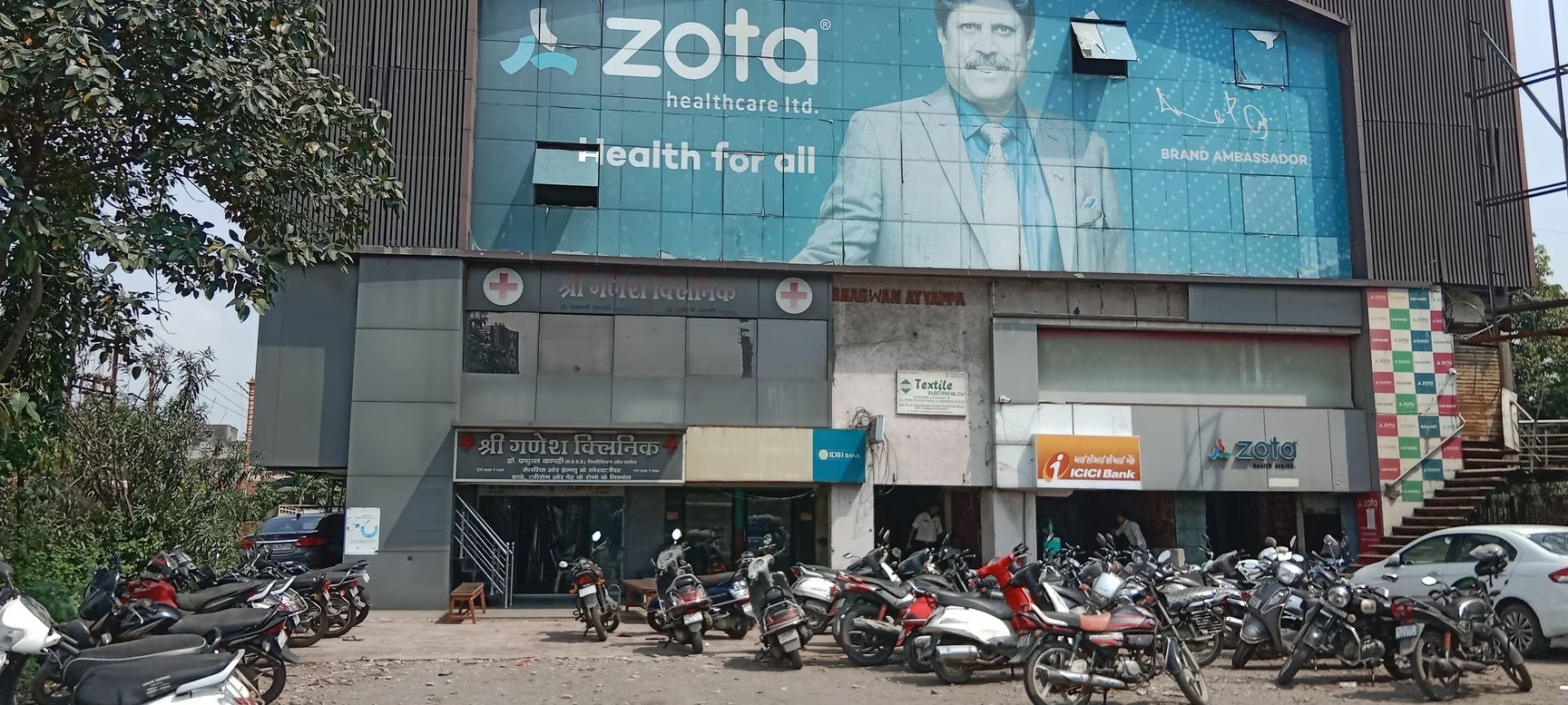
Yet, for all its “Make in India, Sell Everywhere” rhetoric, Zota’s P&L still bleeds like a bad injection. The R&D pipeline has 19 patents (7 granted) and the company’s mascot is literally Kapil Dev, because apparently nothing screams “pharmaceutical credibility” like a cricketer telling you to buy multivitamins.
So what’s going on behind those shiny QIP headlines, preferential issues, and the sudden 500-crore fundraising spree? We did what auditors won’t: we looked.
3. Business Model – WTF Do They Even Do?
Zota’s business model is basically a Bollywood plot — too many side characters, no clear hero.
- Domestic Business (≈ 49 % of FY21 revenue)
The OG division — distributing generic drugs and OTC products through 1,050 + distributors across India. Think of it as the “legacy Zota”: not sexy, but still paying the bills. - DavaIndia (≈ 22 %)
The franchise pharmacy chain offering generics at 30 % – 90 % discounts. 2,055 stores across 24 states, mostly FOFO model — which basically means Zota prints invoices while franchisees cry quietly. - Exports (≈ 29 %)
Spread over 30 countries in Africa, Asia, CIS and Latin America. 253 approved dossiers, 311 pending. A WHO-GMP plant in Surat’s SEZ keeps customs officials awake. - Digital & Nutraceuticals
A mobile app (Nutravedic.com) to sell capsules with spiritual hashtags like #GlowFromWithin and #DetoxBeforeItWasCool.
So, basically — a little of everything, a lot of nothing yet profitable.
4.