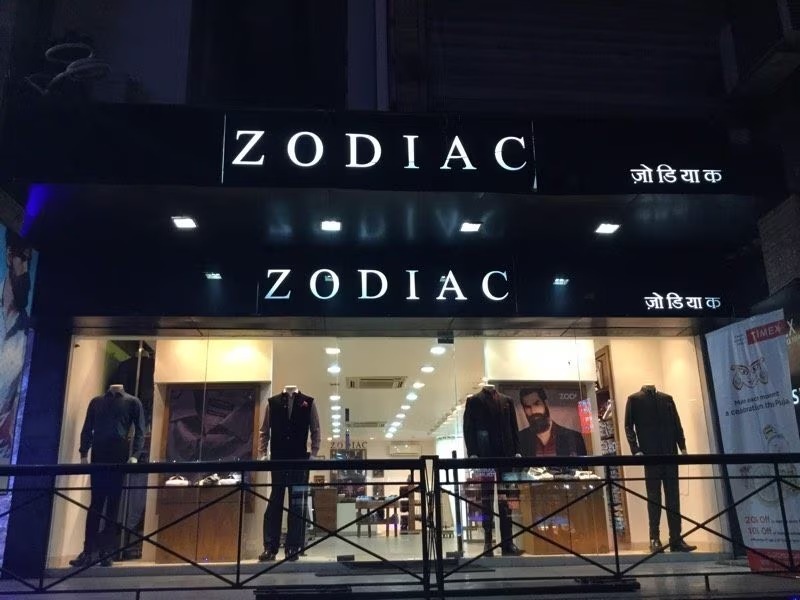
Zodiac Clothing FY26: A 1984-Vintage Tailor Posts Its Third Straight ₹35 Crore Loss While Promoters Buy More
Spotted a factual error — a wrong number, date, or fact? Tell us and we will check the source.
General information and entertainment, not investment advice. The author is not a SEBI-registered adviser or research analyst. No recommendation, no promised returns. Markets carry risk including loss of capital. Figures may not be current. Consult a registered adviser before acting.
1 — At a Glance
Zodiac Clothing closed FY26 with revenue of ₹161.51 crore and a net loss of ₹35.04 crore — the third consecutive year of losses landing within a hair of each other (₹36.37 crore in FY24, ₹37.20 crore in FY25, ₹35.04 crore now). Operating margin sat at -7.86% for the year, meaning the core business of stitching shirts spent another twelve months handing back money on every rupee of sale. Reserves have eroded from ₹220.10 crore at the end of FY24 to ₹154.52 crore now, a ₹65 crore drain over two years that ₹15 crore of fresh promoter equity in January 2026 only partly slowed.
The attention signal: promoters raised their stake from 71.40% to 72.93% during the year, putting more of their own money into a company posting steady losses. The worry signal: borrowings climbed from ₹86.03 crore to ₹106.92 crore across the same stretch, while ROE registered -18.1% and ROCE -8.03%.
A company can survive years of operating losses if the balance sheet carries the weight — and here a ₹181.98 crore net worth has been doing exactly that, quietly absorbing the shortfall. The question the rest of this entry circles back to is how long that cushion lasts at this burn.
The one bright spot worth holding for later: the Q4 operating loss shrank to ₹0.36 crore, the narrowest in three years.
2 — Introduction
Zodiac Clothing Company was incorporated in 1984, the listed face of a men’s-formalwear house whose promoter family traces seven decades in the trade. The company cuts, stitches, washes and presses fabric into apparel, selling through the flagship Zodiac brand (formal wear), the ZOD! sub-brand (party and club wear), and Z3 (relaxed casual). Those brand names are not actually owned by the listed entity — they are licensed from Metropolitan Trading Company, a 100% promoter-owned group firm, under a perpetual arrangement that charges Zodiac a royalty of 1% of annual turnover.
The consolidated group spans wholly-owned and step-down subsidiaries in Switzerland, the UAE, Bangladesh, the UK and the USA, covering export and duty-paid delivery routes into European and US markets.
The financial year’s defining corporate event was a preferential equity issue. On 16 January 2026, the company allotted 14,64,414 shares of ₹10 each at a ₹92.43 premium to the promoter and promoter group, raising ₹14,99,99,926 — roughly ₹15 crore. The board’s stated objects were funding capital expenditure (₹11.25 crore) and general corporate purposes (₹3.75 crore). On 28 May 2026, the board approved the audited FY26 results, and auditors MSKA & Associates issued an unmodified opinion.
In October 2025, Crisil reaffirmed its long-term rating at BB/Stable on ₹53 crore of bank facilities.
3 — Business Model: WTF Do They Even Do?
Strip away the boutique lighting and Zodiac is a contract for the male torso: it makes shirts, trousers, suits, ties, polos, lounge wear and accessories, then sells them through about 104 stores and 816 multi-brand and exclusive outlets across some 40 tier-I cities, plus a meaningful export book.
The structural quirk is the brand licence. The company that is Zodiac does not own the word “Zodiac.” Metropolitan Trading Company — entirely promoter-owned — holds the trademarks and collects 1% of turnover for the privilege. So on FY26 revenue of ₹161.51 crore, roughly ₹1.6 crore flowed out the door as royalty to a related party before the income statement even got interesting. It is an arrangement where the listed shareholders rent the name their own company built its reputation on.
The deeper challenge is the inventory. This is formalwear, a category that ages in a warehouse rather than a fridge but ages all the same — last season’s lapel width is this season’s markdown. The data sheet puts inventory days at 368 for FY26, meaning finished goods and fabric sit for roughly a year before converting to a sale. Working-capital intensity is the textile model’s birthright, and Zodiac inherited it fully.
Where the business strains is the gap between scale and structure: ₹161 crore of revenue carrying a multi-subsidiary international footprint, a licensed-brand royalty, and a full retail network. The overhead was built for a larger company than the one currently filing results.
Does a 1% royalty to a promoter entity read differently when the listed company is losing ₹35 crore a year than it would in a profitable year?
4 — Financials Overview
Figures are consolidated, in ₹ crore.
Metric
Latest Q (Mar 2026)
YoY (Mar 2025)
QoQ (Dec 2025)
Revenue
44.63
47.94
41.27
Operating Profit
-0.36
-4.12
-1.90
PAT
-5.27
-3.18
-8.64
EPS (₹, reported)
-1.92
-1.22
-3.32
Revenue fell 6.9% against the year-ago quarter and rose 8.1% against the prior quarter. The standout line is operating profit: the Q4 operating loss of ₹0.36 crore is the narrowest in the entire quarterly run, against losses ranging up