Spotted a factual error — a wrong number, date, or fact? Tell us and we will check the source.
Zenith Bank and the new African economy
For decades, Africa’s growth story was framed around potential. Today, it is increasingly about execution, integration and capital. Zenith Bank’s expansion across the continent reflects a broader shift in African finance, as homegrown institutions seek to power trade, investment and economic transformation from within. Dame Dr. Adaora Umeoji, OON, Group Managing Director/CEO at Zenith Bank spoke exclusively with World Finance
June 23, 2026
When Jim Ovia, CFR, founded Zenith Bank in May 1990, the unity and prosperity of Africa were among his greatest dreams. For the renowned businessman, banker, and philanthropist who went on to paint the picture of the continent he envisioned in his book, Africa Rise and Shine, one thing was crystal clear: building a formidable financial institution was a potent catalyst for Africa’s transformation.
In three and a half decades, Zenith Bank, his brainchild and the bank in which Ovia CFR previously served as chairman, has been integral in Africa’s remarkable metamorphosis into a continent expected to anchor global growth in the coming decades. Today, the International Monetary Fund’s World Economic Outlook ranks 11 of the world’s 15 fastest-growing economies in Africa, and the continent is among the world’s most resilient regions. In 2026, the African Development Bank’s African Economic Outlook puts Africa’s growth at 4.2 percent, among the highest globally.
For Africa, the journey toward unity, with 54 nations now pursuing shared and common goals, has been fundamental. For instance, the unity of purpose brought about by the African Continental Free Trade Area (AfCFTA) and the push to integrate payments through the Pan-African Payment and Settlement System are clear indications of a continent on the rise. The impacts of AfCFTA are nothing short of phenomenal. The agreement has created the world’s largest free trade area, a single market of over 1.4 billion people with a combined gross domestic product (GDP) of $3.4trn.
Dame Dr. Adaora Umeoji, OON, Group Managing Director/CEO of Zenith Bank
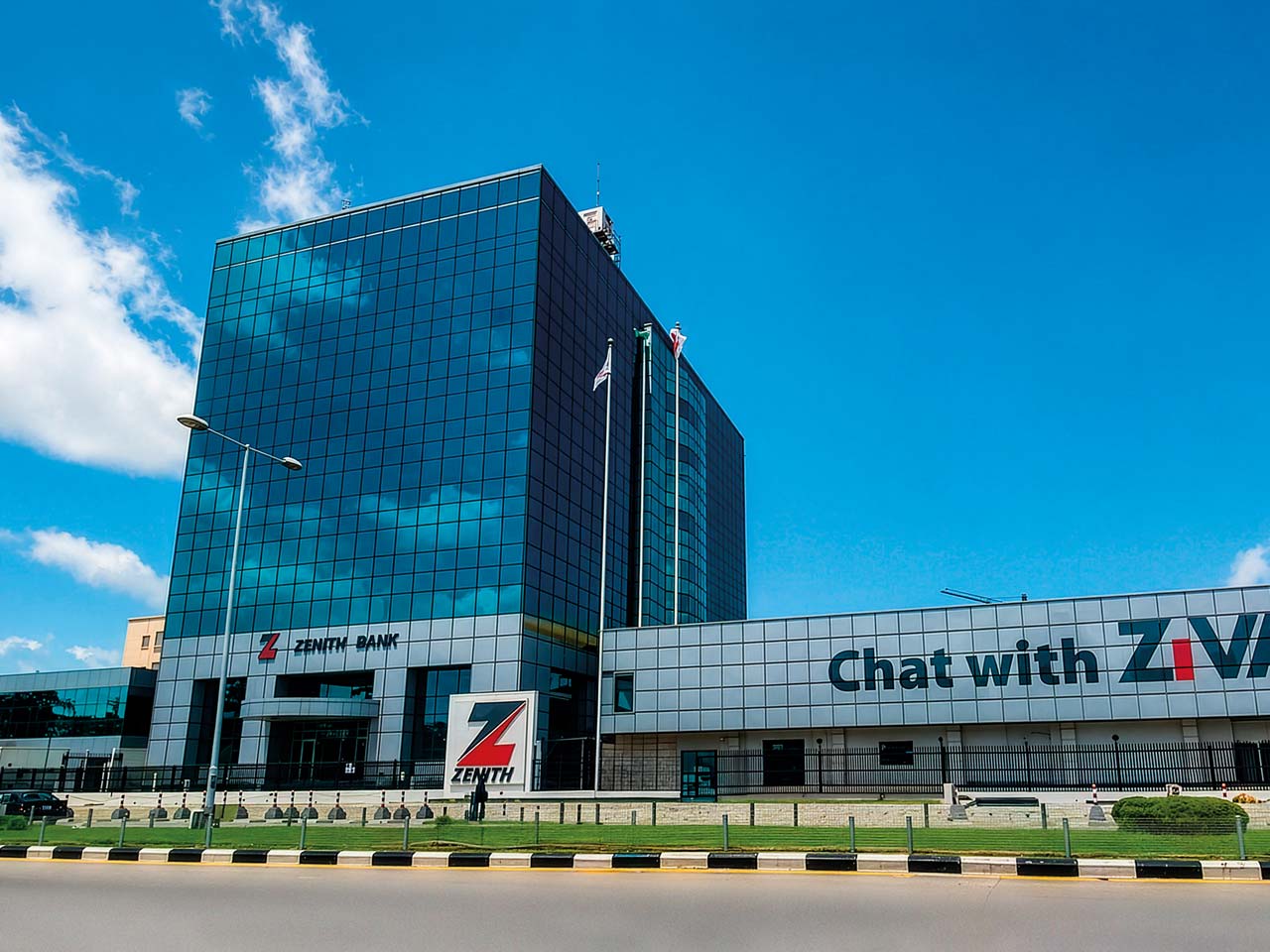
Zenith Bank has been central to Africa’s economic ascent. On this, the bank has been deliberate. From its home market in Nigeria, and through a business strategy anchored in people, technology, and service, Zenith Bank has evolved over the years into a top financial institution in Africa with a solid financial foundation. Today, the bank is not only Nigeria’s largest financial institution by Tier-1 capital but also one of Africa’s leading banks, a far cry from its modest beginnings when it commenced operations in July 1990.
While building the requisite financial scale has been critical, ensuring it meets market needs has been another masterstroke. In this regard, Zenith Bank offers a wide array of financial products and services for individual and corporate clients. The solutions span corporate and retail banking, commercial and consumer banking, personal and private banking, and investment banking. These include trade services and foreign exchange, treasury and cash management services, and other non-bank financial services mainly offered through its subsidiaries.
These solutions, supported by massive investments in technology and a deeply entrenched culture of innovation, have driven exponential growth across all metrics. Cumulatively serving 36 million customers, the bank operates an extensive branch and ATM network at home and also has a presence in the UK, France, Sierra Leone, the Gambia, the United Arab Emirates, as well as a representative office in China. In recent months, the bank has also embarked on a Pan-African expansion strategy, entering Côte d’Ivoire and Kenya.
Profitability anchored on execution
For Zenith Bank, one of its outstanding trends has been sustaining a strong culture of profitability through every economic cycle. In 2025, the bank once again lived up to this mantra, posting ₦1.04trn ($727m) in profit after tax. The performance was reinforced by robust capital and liquidity positions, both well above the regulatory minimum, alongside a prudent risk management culture that kept non-performing loans well in check.
Zenith Bank has been central to Africa’s economic ascent
One key metric in which the bank was an exceptional performer was cleaning its bad-loan book. In a policy directive, the Central Bank of Nigeria (CBN) required banks to clean up legacy exposures previously held under regulatory forbearance by June 30, 2025. Zenith Bank used the transition to clean its books, implementing measures such as write-offs and loan recoveries. Owing to decisive actions, the bank managed to reduce its non-performing loan (NPL) ratio substantially from 4.7 percent in 2024 to 3.8 percent in 2025, well clear of industry norms.
The Nigerian banking industry is highly competitive, and Zenith Bank’s impressive results reflect disciplined, focused execution of its strategy. Specifically, the bank has been astute in strengthening its asset quality, optimising its balance sheet and investing in capabilities to propel growth. A key differentiator during the year was the bank’s strong position in international trade and foreign exchange flows.
In recent years, Nigeria has been on a mission to reduce its dependence on the oil sector, which is a major source of forex and government revenues. Data from the Nigerian Export Promotion Council indicate that in 2025, the country’s non-oil exports reached a historical high of $6.1bn, an 11.5 percent increase from $5.4bn in 2024. As a key facilitator of international trade, Zenith Bank played a central role in repatriating over 40 percent of Nigeria’s non-oil export proceeds. Owing to its role, the bank was able to deepen relationships with large corporates and supported transaction-led income. The franchise remains critical for the bank, as trade finance generates recurring business, strengthens customer relationships, and supports foreign currency liquidity.
Apart from the trade sector, Zenith Bank also maintained a disciplined lending approach, which led to gross loans rising to about ₦11trn ($7.9bn). The major focus was on viable sectors such as manufacturing, agriculture, and telecommunications, as well as key value chains that offered more predictable cash flows. Non-interest income from fees, commissions and digital channels also contributed to the impressive performance, supported by a steady push in digital transformation that improved customer experience, increased transaction volumes and lowered operating costs. Also impactful was the high-interest-rate environment, which supported returns from the loan book and from investments in government securities.
For Zenith Bank, the high-interest-rate environment delivered strong returns across lending and investment activity. Through 2025, the Monetary Policy Committee held the policy rate at 27.50 percent at its February, May