1. At a Glance
Welcome to Yasho Industries Ltd — a ₹1,964 crore market-cap chemical cocktail that’s part specialty, part stress, and part suspense. The stock currently trades at ₹1,631, down about 7.5% in the last three months, which is basically the market saying, “Nice plants, but where’s the profit, bro?”
In Q2FY26, the company reported revenue of ₹183 crore, up 9.7% YoY, and PAT of ₹4.86 crore, up 11.5% YoY — numbers that look more like a careful whisper than a confident announcement. Despite having a strong operating profit margin of 18.07%, the company’s P/E of 155x screams “priced like a biotech startup,” not a specialty chemical manufacturer.
Debt sits heavy at ₹584 crore, giving a debt-to-equity ratio of 1.37, while ROE stands at a humble 1.63% — which means the company is earning just enough to buy office stationery after paying interest. And yet, investors hang on, perhaps hypnotized by the shiny new ₹470 crore Pakhajan plant and that 15-year lubricant additive deal worth ₹150 crore annually starting FY27.
So yes — Yasho is that friend who just joined a gym, bought supplements for ₹10,000, and still skips leg day.
2. Introduction
Yasho Industries is the kind of company that makes the financial community pause and ask, “How can someone make 148 different chemicals and still make single-digit profits?”
Founded with the ambition of manufacturing specialty chemicals for global markets, Yasho exports to over 50 countries, serving over 2,000 customers, including giants like Dabur, Adani Wilmar, MRF, CEAT, and HPCL. The company’s pitch is simple: a blend of aroma, rubber, food antioxidants, and lubricant additives — in short, everything from your chewing gum’s flavor to your car’s tire.
The last two years have been a thrill ride. The ₹470 crore Pakhajan (Dahej) greenfield plant, commissioned in April 2024, expanded total capacity by 20,000 MTPA, nearly doubling the company’s production potential. Management expects revenues of ₹950–1,000 crore in FY26 and ₹1,250–1,300 crore in FY27 when both Vapi and Pakhajan hum at full rhythm.
But here’s the punchline: all this expansion has inflated debt, reduced profitability, and squeezed returns. Investors are still waiting for the day when all this capex translates into cash instead of just capacity.
So the stage is set — Yasho has the ingredients, but can it finally cook profits that smell as good as its aroma chemicals?
3. Business Model – WTF Do They Even Do?
Let’s decode the Yasho chemistry lab:
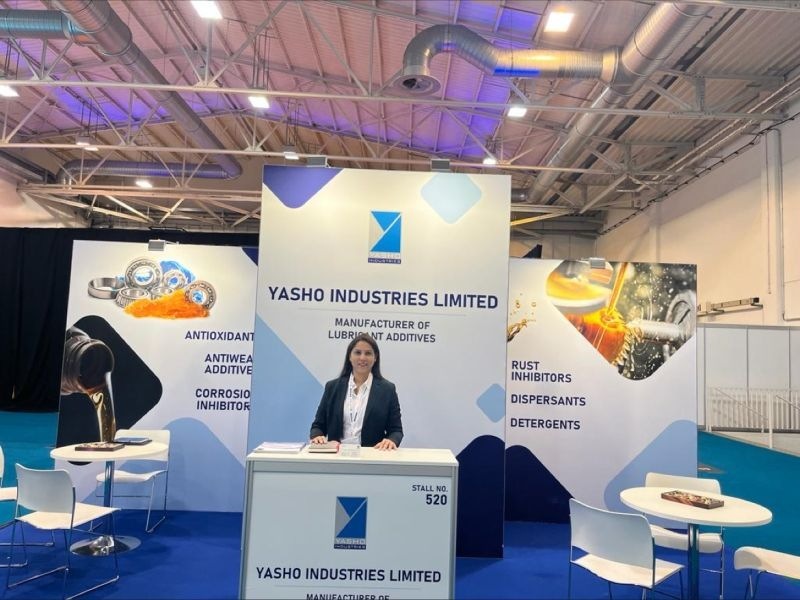
The company operates across five divisions — Food Antioxidants, Aroma Chemicals, Rubber Chemicals, Lubricant Additives, and Specialty Chemicals. In short, Yasho produces everything from ingredients in your toothpaste to chemicals used in high-performance tires and industrial lubricants.
Its business is split into two segments:
- Industrial (82% of 9MFY25 revenue): Includes Rubber Chemicals, Lubricant Additives, and Industrial Specialty Chemicals. These are sold to sectors like tires, automobile components, and industrial machinery. Think CEAT and JK Tyre — every turn of your wheel might have a hint of Yasho in it.
- Consumer (18%): Focuses on Aroma Chemicals and Food Antioxidants — the fragrant and edible side of chemistry. They serve customers in personal care, cosmetics, food, and nutraceutical industries.
The company has three plants in Vapi and one brand-new, state-of-the-art facility in Pakhajan (Dahej) — together offering 32,500 MTPA capacity.
To put it simply: Yasho manufactures molecules that make both perfumes smell