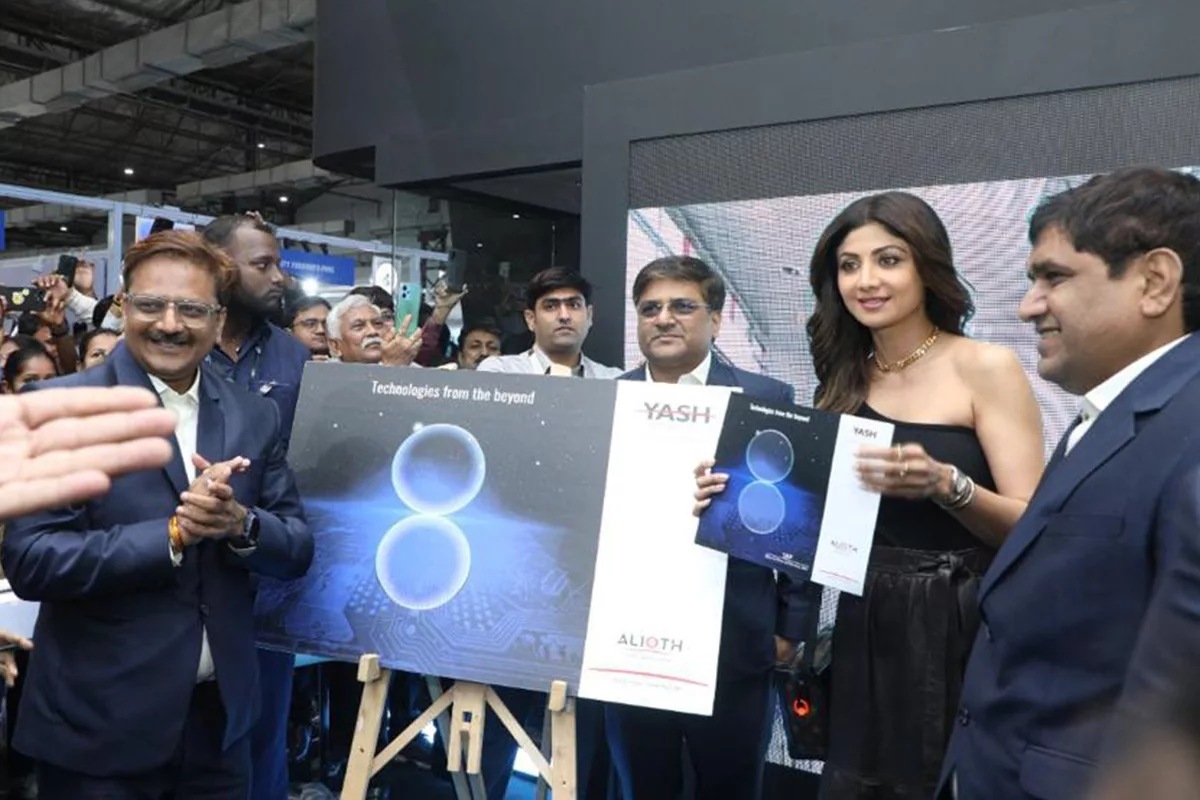
The optics of this business are either crystal clear or dangerously blurry, depending on which side of the balance sheet you focus on. Yash Optics & Lens Ltd is currently at a critical junction, having just commissioned its Vapi manufacturing facility with a capacity of 10,000 pairs per day. While the topline is expanding and the company has aggressively moved to reduce its debt, the underlying cash flows tell a story of a business that is burning through its IPO proceeds to fuel massive infrastructure.
With a market capitalization of ₹342 Crore and a P/E of 37.8, investors are clearly pricing in a future where Yash is no longer just a distributor of “Pentax” lenses but a self-reliant manufacturing powerhouse. However, the numbers reveal a significant gap: despite reporting a PAT of ₹9.05 Crore, the company generated a Negative Free Cash Flow of ₹23.69 Crore in FY26.
The manufacturing capacity is there, the distribution network of 7,000+ stores is active, and the promoter holding remains rock solid at 73.19%. But as the company pivots from a trading-heavy model to a capital-intensive manufacturing one, the margin of error has shrunk. Is the Vapi plant a masterstroke of backward integration or a Capex trap that will weigh down returns for years to come?
1. At a Glance
Yash Optics & Lens Ltd is attempting a high-stakes transition from a high-margin distributor to a full-scale manufacturer. At first glance, the growth looks impressive. Revenue from operations climbed to ₹53.99 Crore in FY26, up from ₹43.21 Crore in the previous year. But if you dig into the half-yearly performance, the picture becomes more volatile. The H2 FY26 (March 2026) revenue stood at ₹30.61 Crore, a significant jump from H1 FY26’s ₹23.38 Crore.
However, growth comes at a cost. The Operating Profit Margin (OPM) has taken a hit, sliding from 35.5% in FY24 to 27.3% in FY26. This contraction suggests that the costs of scaling up and the transition to in-house manufacturing are eating into the profitability that was once easily earned through distribution.
The most glaring red flag is the Cash Conversion Cycle, which sits at a staggering 471 days. Let that sink in. It takes the company over a year to turn its investment in inventory and receivables back into cash. While this is an improvement from the 558 days seen in FY25, it still points to a business model that is incredibly thirsty for working capital. The company’s inventory days are at 483 days, meaning they are holding onto stock for nearly 16 months before it moves.
On the bright side, the debt-to-equity ratio is a measly 0.05. The company used its IPO proceeds to slash borrowings from ₹25.26 Crore in FY24 to just ₹4.53 Crore in FY26. They are effectively debt-free, which gives them the breathing room to handle the initial hiccups of the Vapi plant.
But here is the kicker: the company has announced its maiden dividend of ₹0.50 per share. For a company that is reporting negative free cash flows and is in the middle of a massive expansion phase, paying out a dividend feels more like a move to keep shareholders happy than a prudent capital allocation strategy.
Critical Observation: Are they paying dividends out of profits or out of the remaining IPO cash? When a company’s free cash flow is deep in the red, every rupee sent to shareholders is a rupee not spent on the business.
2. Introduction
Yash Optics is not your average neighborhood lens shop. Since its inception in 2010, the company has built a massive ecosystem that spans across 20+ Indian states and 30+ countries. They’ve positioned themselves as a one-stop-shop for everything from basic single-vision lenses to high-end progressive lenses that would make a tech CEO jealous.
The company’s crown jewel is its exclusive distribution agreement for “Pentax” ophthalmic lenses in India, courtesy of HOYA Lens India. This gives them a premium edge in a market that is increasingly moving towards branded, high-quality vision correction.
Historically, Yash functioned largely as a trading house, procuring lenses from China, South Korea, and Japan. This was efficient but left them vulnerable to supply chain shocks and currency fluctuations. The current narrative is all about “Atmanirbharta”—bringing that manufacturing home to Mumbai and Vapi.
They serve a massive B2B network of 7,000+ partner stores. If you’ve walked into an optical showroom in Maharashtra or Gujarat recently, there’s a high probability you’ve seen their products. The business is currently dominated by Progressive Lenses, which account for a whopping 65.80% of their revenue. This is a high-value segment, which explains why they can maintain double-digit