XPRO India FY26: The ₹240 Cr Bet on Keeping Your Refrigerator and EV Running
Section 1 — At a Glance
XPRO India’s financial narrative in FY26 shifted dramatically from a steady polymer processing operation into a high-stakes, capital-heavy expansion phase. Headline metrics revealed substantial pressure: annual consolidated revenue contracted by 5.16% to ₹505.49 crore, while net profit dropped sharply by 49.39% to ₹19.23 crore. This earnings compression was primarily driven by a volume slowdown in the core Coex division—which provides refrigerator door and cabinet liners—and was further exacerbated by a volatile ₹11.14 crore unrealised non-cash foreign exchange loss on euro-denominated supplier credit.
Investor attention remains intensely focused on the company’s aggressive capital expenditure cycle. The pivotal event of the year was the commercial commissioning of the new polypropylene dielectric capacitor film line at Barjora on March 27, 2026, which effectively doubled domestic capacity to 8,000 MT annually. Capitalized at approximately ₹240 crore, this asset marks a structural shift toward the high-margin, high-barrier electronic and electrical components market.
However, near-term worry signals are visible. Total debt escalated significantly to ₹324.77 crore to finance this expansion, pushing interest costs higher and dragging the company’s Return on Capital Employed (ROCE) down to a lean 3.78%.
When a asset-heavy business capitalizes a massive project at the very end of the fiscal year, historical return ratios inevitably break down before the new capacity can generate its first rupee of cash flow.
The ultimate test for XPRO now lies in its execution trajectory, specifically the commercial ramp-up of the Barjora unit and the upcoming commissioning of its 5,000 MTPA UAE facility, which is exposed to ongoing geopolitical and shipping disruptions in West Asia.
Section 2 — Introduction
XPRO India Ltd, incorporated in 1997, operates as a specialized player in the Indian polymer processing landscape. Far from a generic plastic packer, the company has carved out two distinct industrial niches: manufacturing coextruded sheets for white goods and acting as India’s solitary domestic producer of highly precise dielectric capacitor films.
The company is currently executing a fundamental transformation of its asset base. For years, XPRO operated under severe capacity constraints within its high-margin film business, running its lines at utilization rates near 90%. The strategic response has been a massive, multi-year ₹650 crore capex program designed to expand its global capacity sixfold over the medium term.
Financed through an intricate combination of warrants, a Qualified Institutional Placement (QIP), and foreign currency debt, this expansion represents a major corporate pivot. As the company transitions management leadership and faces volatile crude-derivative raw material inputs, it is attempting to transform from a domestic refrigerator component supplier into a global, high-barrier specialty film manufacturer.
Section 3 — Business Model: WTF Do They Even Do?
To understand XPRO, you must look past the word “polymer” and split the company into its two vastly different operational personalities:
The Cash-Cow Heavyweight: Coex Division (75% of FY25 Revenue)
This division is essentially an outsourced manufacturing arm for the consumer durable giants. XPRO takes crude derivatives, runs them through multilayer sheet lines, and thermoforms them into the plastic inner liners that keep your refrigerator from looking like an open insulation hazard. It is stable, relationship-driven, and highly dependent on how many Indians decide to upgrade their kitchens. The downside? Massive customer concentration, with the top five consumer clients commanding 56% of total revenue, and a single client taking a quarter of the entire corporate output.
The High-Tech Monopoly: Biax Division (25% of FY25 Revenue)
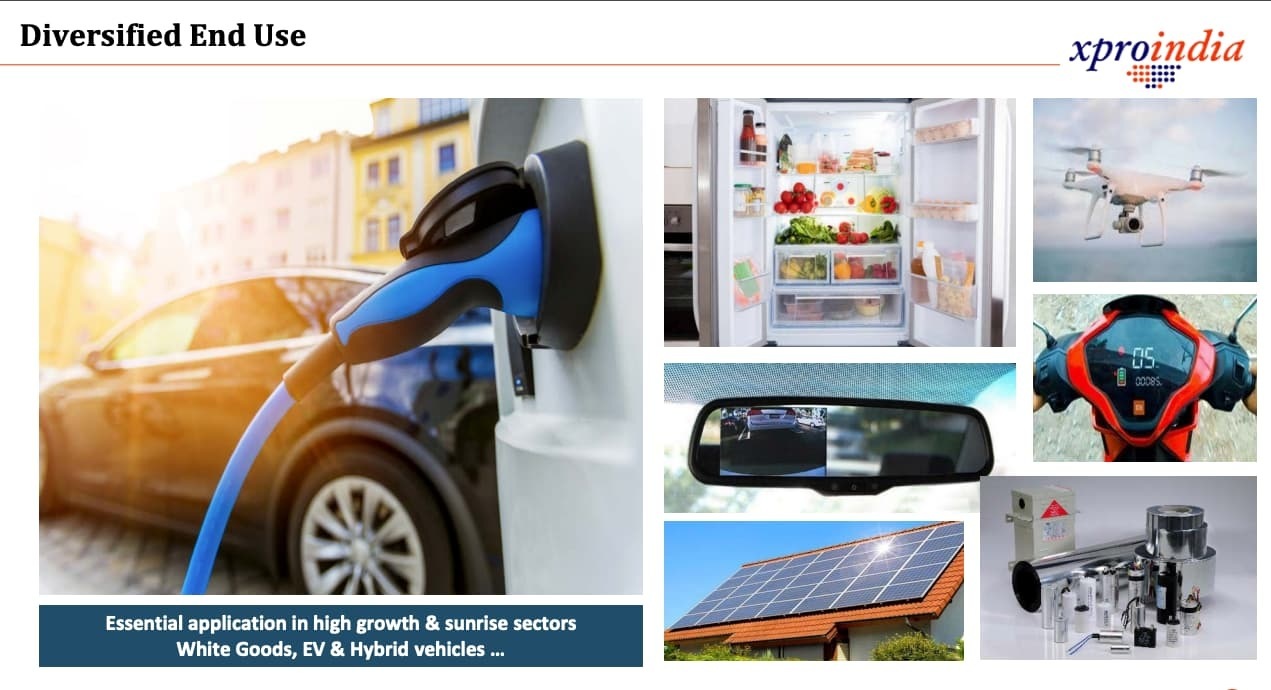
This is where the real strategic intrigue lies. XPRO is the only domestic manufacturer of dielectric capacitor films, commanding an absolute local monopoly with a market share exceeding 30% (the rest is imported). These ultra-thin, highly engineered films—measuring down to a microscopic few microns—are critical components in electronic inverters, solar panels, wind turbines, and electric vehicles (EVs). It boasts incredible structural entry barriers because global component giants will not buy from an uncertified line.
Section 4 — Financials Overview
Figures are consolidated, in ₹ crore.
Metric
Latest Quarter (Mar ’26)
YoY Change (%)
QoQ Change (%)
Revenue
₹134.37
-15.07%
+26.39%
EBITDA / Operating Profit
₹16.22
-3.34%
+52.73%
PAT
₹12.97
+4.34%
+91.30%
Reported EPS (₹)
₹5.53
-1.95%
+91.35%
Did Management Walk the Talk?
Reviewing past commitments reveals a mixed delivery report card. Management previously guided for steady operational performance while expansions neared completion. However, the legacy Coex business hit an unceremonious speed bump in FY26.
Volumes moderated by 5% because an early monsoon apparently chilled refrigerator sales across India, proving that even advanced polymer engineering is no match for unexpected rain. Furthermore, a sharp compression in absolute operational profit occurred due to lower blended realisations and the burden of pre-operating expenses.
On the project side, however, the execution was precise. Management promised the commercial launch of the new Barjora line in the final quarter of FY26, and they officially commenced invoicing on