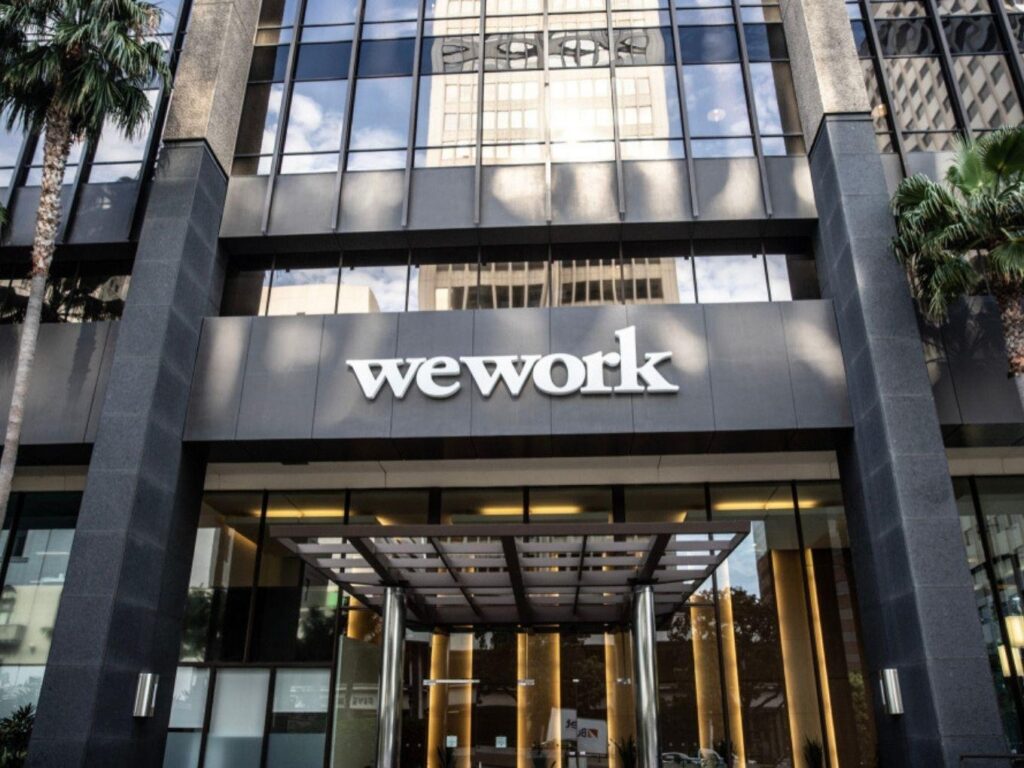
WeWork India Management Ltd. wants to waltz into Dalal Street with a 4.63 crore share Offer for Sale (OFS). Translation: company gets nothing, selling shareholders get everything. The IPO price band is still a mystery (RHP teaser), but considering FY25 PAT of ₹128 Cr and an EPS of ₹9.56, even a conservative 40x multiple could stretch valuations into the ₹7,500–8,000 Cr market cap zone.
This is no fresh issue for growth—Embassy Group (Virwanis) and other early investors are basically cashing out while saying, “Thank you, India Inc, for paying rent and IPO premium both.” The company boasts 68 operational centres with over 114,000 desks across 8 cities, serving clients like Amazon, JP Morgan, Discovery, and Grant Thornton. Bengaluru and Mumbai alone fund most of the chai.
From -₹146 Cr losses in FY23 to +₹128 Cr PAT in FY25, the turnaround story is dramatic enough to be a Bollywood script. Net worth went from negative ₹437 Cr to positive ₹200 Cr. Flexible offices may have saved startups during COVID, but can they save your portfolio returns now?
2. Introduction
Let’s be honest: the word WeWork still gives finance bros PTSD. Remember Adam Neumann? The tequila-fueled, surfboard-carrying messiah who turned “co-working” into a cult and then blew up $47 billion in SoftBank’s face? Yeah, that brand.
Now fast forward. In India, WeWork didn’t vanish—it just got adopted by the Embassy Group, India’s real estate royalty. Unlike the US mess, WeWork India is surprisingly… profitable. Yep, you heard that right. The same brand that globally became a Netflix documentary is here showing EBITDA margins of 63%.
But here’s the twist: this IPO is not about growth capital. The money goes to selling shareholders. The company pockets zilch. You, dear investor, are essentially providing an exit ramp for promoters. Think of it like buying last night’s biryani leftovers at 5-star pricing.
Still, the flexible workspace story in India has strong legs. Startups don’t want long leases. Enterprises want hybrid models. And developers want cash flows. WeWork India sits right at this crossroad. The only question: is this IPO a genuine real-estate play in disguise, or another chance to fleece retail investors with a hot brand name?
3. Business Model – WTF Do They Even Do?
In simple terms: WeWork India rents big office spaces (Grade A properties in top markets), slices them into Instagrammable offices, adds free coffee, motivational quotes, and overpriced community managers—then sublets to corporates, startups, and freelancers.
Their offerings include:
Enterprise Suites & Managed Offices – customised for big corporates (JP Morgan, AWS, Deutsche Telekom).
Private Offices – lockable cabins for SMEs.
Hot Desks & Coworking – pay-per-seat for startups.
Hybrid & Digital Add-ons – apps, meeting room credits, etc.
So while they sell “flexibility” to clients, the balance sheet itself isn’t very flexible—it’s tied to fixed lease obligations.
4. Financials Overview
Metric
FY25
FY24
FY23
YoY %
2Yr CAGR
Revenue
₹2,024 Cr
₹1,737 Cr
₹1,423 Cr
17%
19%
EBITDA
₹1,236 Cr
₹1,044 Cr
₹796 Cr
18%
25%
PAT
₹128 Cr
-₹136 Cr
-₹147 Cr
Swing to profit
NA
EPS (₹)
9.56
(10.12)
(10.95)
Turnaround
NA
Commentary: From -₹136 Cr losses to +₹128 Cr PAT in one year? Bollywood doesn’t write turnarounds this dramatic. EBITDA margins at 63% scream “real estate arbitrage king.” But PAT margins are still just 6%, so don’t break out the champagne yet.
5. Valuation Discussion – Fair Value Range Only
Assuming IPO valuations ~₹7,500–8,000 Cr. Let’s test sanity.