Waterbase FY26: ₹350 Cr of Sales, a ₹15 Cr Loss, and a Feed Plant Running at 13%
Spotted a factual error — a wrong number, date, or fact? Tell us and we will check the source.
General information and entertainment, not investment advice. The author is not a SEBI-registered adviser or research analyst. No recommendation, no promised returns. Markets carry risk including loss of capital. Figures may not be current. Consult a registered adviser before acting.
1. At a Glance
Waterbase closed FY26 with revenue of ₹349.74 crore — up 28% on the prior year’s ₹272.52 crore — and a net loss of ₹14.66 crore. That is the headline tension in one line: the top line grew by nearly a third while the bottom line stayed underwater for the fourth consecutive year. The loss did shrink from FY25’s ₹18.15 crore, so the trajectory bent the right way, but a company selling ₹350 crore of shrimp feed and frozen shrimp still could not turn an operating profit.
The operating margin sat at roughly -3% for the year. Underneath the growth, the shrimp feed plant — the historical core — ran at about 13% capacity utilisation through FY25 and the first half of FY26, per CARE’s rating report. A 110,000 MTPA plant operating near one-eighth of capacity is the kind of number that explains a P&L without anyone having to editorialise.
The market caps the whole business at ₹183 crore. CARE downgraded its bank facilities in November 2025. The board changed its Managing Director effective April 2026. There is a lot moving here, and almost none of it is the share price.
A four-year loss streak in a business three decades old is less a crisis than a slow question: what exactly stopped working?
2. Introduction
Waterbase Limited, incorporated in 1987 and commercially operational from 1993, is the partially integrated aquaculture arm of the Karam Chand Thapar (KCT) group — a conglomerate whose interests run from coal logistics to real estate. The company makes and sells shrimp feed, runs a hatchery, processes shrimp for export, and sells farm-care products. All of it operates out of Nellore, Andhra Pradesh.
For most of its life, Waterbase was a feed company that also did some processing. That description has quietly inverted. In FY26, the Processed Shrimp segment booked ₹209.89 crore of revenue against Shrimp Feed’s ₹118.10 crore, per the audited segment disclosure. The export processing business is now the larger half of the company by revenue — a structural shift the income statement has been registering for a while.
The recent corporate calendar has been busy. CARE Ratings downgraded the company’s bank facilities in November 2025. The board approved FY26 results on May 28, 2026 with an unmodified auditor opinion from Deloitte Haskins & Sells. And effective April 1, 2026, Ramakanth V. Akula became Managing Director with Chola Varma Alluri appointed CEO. A company changes leadership; the loss streak it inherits does not change with it.
3. Business Model: WTF Do They Even Do?
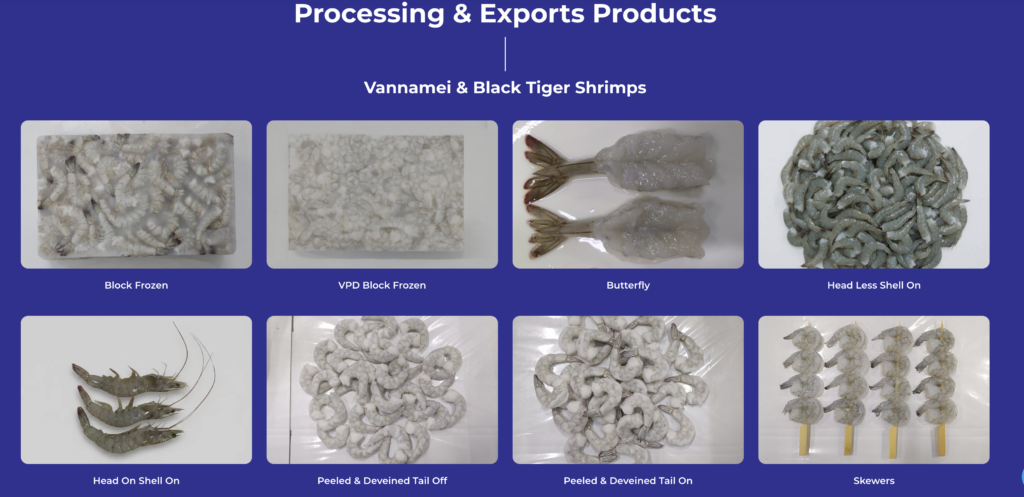
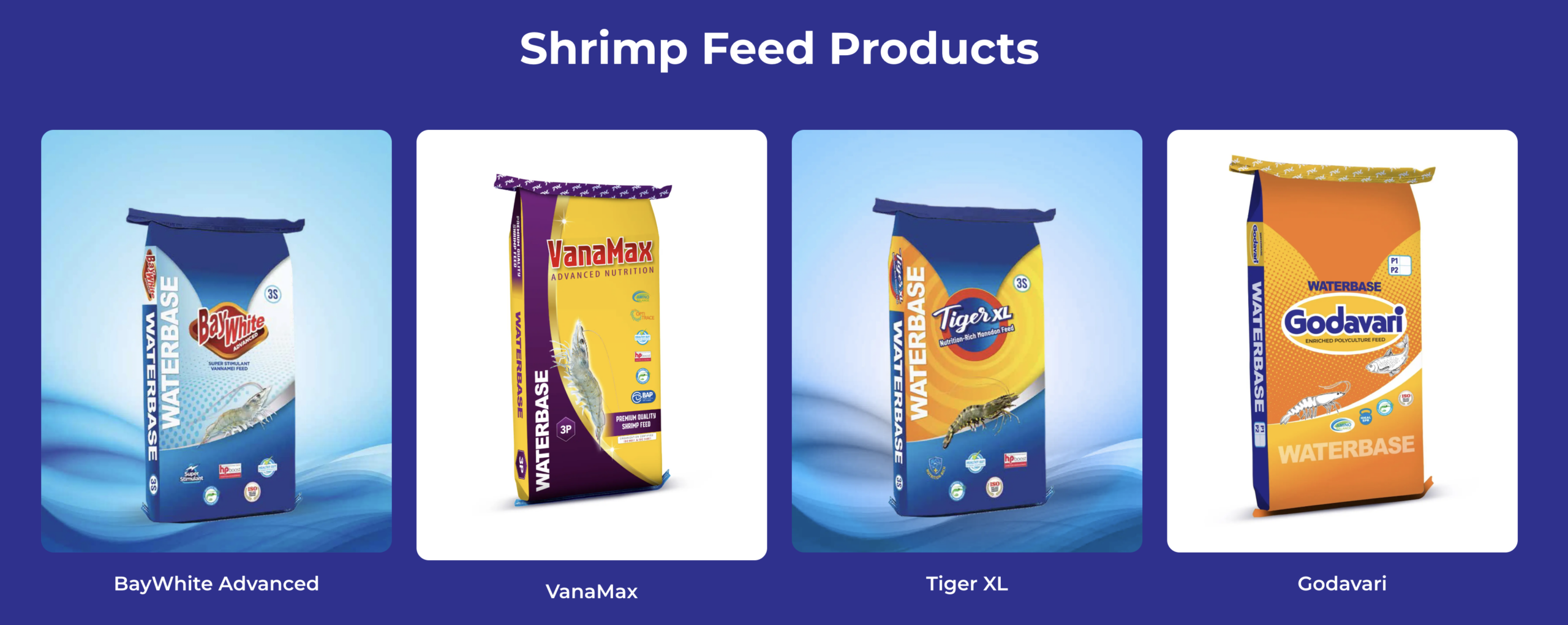
Waterbase sits across three stages of one animal’s life. It runs a hatchery producing up to 250 million post larvae, sells shrimp feed under brands including Bay White, Ultra XL, Tiger Bay XL and Vanamax through a coastal-belt dealer network, and processes shrimp — IQF, block frozen and cooked — for export to global markets.
The feed business is the part that built the company and the part now running cold. Capacity utilisation of the feed unit was around 13% in FY25 and H1FY26, against roughly 20% the year before, per CARE. When a plant sized for 110,000 tonnes runs that empty, fixed overheads get spread across far too few units, and the per-unit economics turn ugly without anyone making a single bad sale. CARE attributes the operating losses precisely to this under-absorption of fixed overheads at low utilisation.
The processing business pulls the other way on volume but not on profit. CARE reports the processed shrimp unit’s utilisation improved to about 87% in H1FY26 from 57% in FY25 — yet the segment still lost ₹10.26 crore in FY26 on its ₹209.89 crore of revenue. High utilisation, large revenue, negative result: the processing arm is busy without being profitable.
Raw materials — soya, wheat flour, fish meal — make up about 71% of cost of sales, per CARE, and the company has limited ability to pass price increases through. A model where three-quarters of your cost is a volatile commodity you can’t reprice is a model that lives and dies on input prices.
What does Waterbase do? It runs the entire shrimp value chain, and in FY26 every segment of it lost money.
4. Financials Overview
Figures are consolidated, in ₹ crore.
Metric
FY26
FY25
YoY
Revenue
349.74
272.52
+28.3%
Operating Profit
-10
-18
Loss narrowed
PAT
-14.66
-18.15
Loss narrowed
EPS (₹)
-3.54
-4.38
Loss narrowed
Revenue grew 28%, driven by the processed shrimp segment, while feed revenue fell. CARE notes feed sales dropped about 35% in FY25 after the company shifted