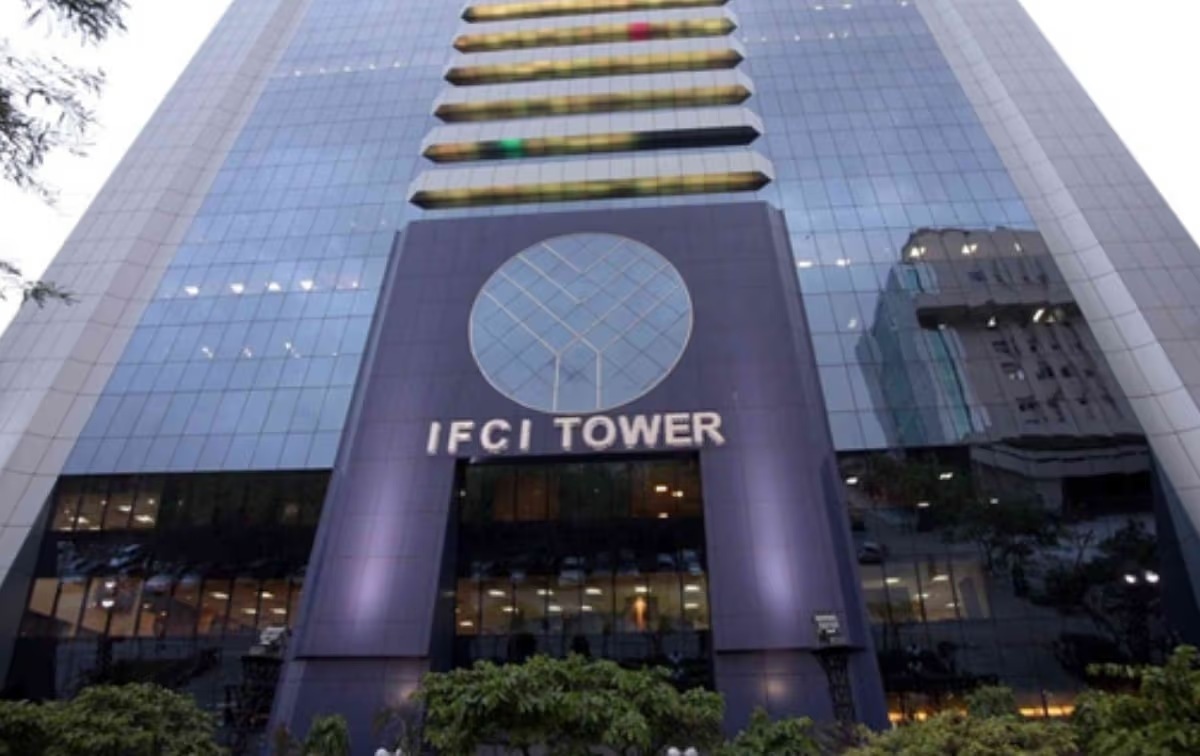
IFCI:
96% Gross NPA. Negative CRAR.
₹-12 Cr PAT in Q3. Yet GoI Keeps Writing Cheques.
India’s first development financial institution, born 1948, now runs on taxpayer infusions, NPA recoveries, and advisory fees while its loan book shrinks faster than your broker’s optimism. Q3 FY26 delivered another quarterly loss, 96% GNPA, and a fresh ₹500 Cr equity from GAIL. Business as usual for this government-backed auditor’s nightmare.
The Auditor’s Favourite Client Just Posted Another Loss
- 52-Week High / Low₹74.5 / ₹35.7
- Q3 FY26 Revenue₹456 Cr
- Q3 FY26 PAT₹-12 Cr
- TTM EPS₹1.47
- Annualised EPS (Q1-Q3 Avg × 4)₹0.83
- Book Value / Share₹32.9
- Price to Book1.63x
- Gross NPA (Dec 2025)96.31%
- Net NPA (Jun 2025)79.78%
- Loan Book (Mar 2025)₹3,848 Cr
The DFI That Time (and Markets) Forgot
Picture this: 1948. India is fresh out of colonial rule, dreaming of steel plants and dams. Enter IFCI — the very first development financial institution, set up to lend long-term money to industry. Fast-forward 77 years and the loan book has shrunk to ₹3,848 crore, gross NPA is 96%, CRAR is deeply negative, and the only growth is in government equity infusions. Yet the stock trades at 36x TTM earnings and 1.63x book. Welcome to the auditor’s favourite client.
Q3 FY26 was textbook IFCI: another quarterly loss, sky-high NPAs, zero fresh lending, and a fresh ₹500 crore from GAIL. The business has pivoted from project finance to “advisory services + recoveries + dividend income”. Translation: we stopped lending because we have no capital, and now we recover old bad loans and advise others on how not to repeat our mistakes.
The government owns 72.57%. It has pumped ₹500 crore every year for the last three years. Brickwork Ratings reaffirms B+/Negative with a laundry list of caveats. The stock is up 30% in one year on hopes of merger and more infusions. If this doesn’t scream “funny auditor territory”, nothing does.
They Used to Finance India. Now They Recover, Advise & Wait for Cheques.
IFCI was set up in 1948 to provide long-term finance to industry. Today? No new disbursements since FY22. Loan book down from ₹5,097 crore (Mar 2024) to ₹3,848 crore (Mar 2025). 96% of what remains is NPA. The “business” is now: (1) recover whatever possible from old NPAs (₹800 crore recovered in FY25), (2) earn advisory fees (31 assignments in FY23, still the mainstay), (3) manage government schemes like Sugar Development Fund and PLI, and (4) wait for the next equity infusion from GoI/GAIL.
Products that still exist on paper: project finance, corporate finance, syndication, structured debt. In practice: zero. Revenue breakup (9M FY24, latest available): interest 18%, dividend 23%, fee & commission 27%, sale of services 23%. Translation: they are running a consultancy + recovery agency funded by taxpayers.
Government ownership 72.57% gives them sovereign backing for ratings and borrowing, but also policy risk — “lend to priority sectors even if they are doomed”. The Maharatna dream never happened. Instead, we have a shrinking balance sheet and negative CRAR. Classic.
Q3 FY26: The Numbers That Make Auditors Sweat
Result type: Quarterly Results | Q3 FY26 EPS: ₹-0.06 | Q1 EPS ₹0.15, Q2 ₹0.53, Q3 ₹-0.06 | Avg Q1–Q3 EPS: ₹0.207 | Annualised EPS: ₹0.83
| Metric (₹ Cr) | Q3 FY26 Dec 2025 |
Q3 FY25 Dec 2024 |
Q2 FY26 Sep 2025 |
YoY % | QoQ % |
|---|---|---|---|---|---|
| Revenue | 456 | 459 | 414 | -0.68% | +10.1% |
| Financing Profit | 27 | 98 | 85 | -72.4% | -68.2% |
| PAT | -12 | -31 | 23 | +61.3% | -152% |
| EPS (₹) | -0.06 | -0.12 | 0.53 | +50% | -111% |
What Is This Recovery Agency Actually Worth?
Method 1: P/E Based
TTM EPS ₹1.47. Sector median P/E 17.8x. For a company with 96% GNPA, negative CRAR and zero lending, a 40-60% discount is justified. Fair P/E band: 7x–12x.
→ 7x × ₹1.47 = ₹10.3 12x × ₹1.47 = ₹17.6
Range: ₹10 – ₹18
Method 2: Price to Book Value
Book Value ₹32.9. Current P/B 1.63x. For a DFI with negative CRAR and 96% NPA, fair P/B is 0.4x–0.8x (assets largely illusory).
→ 0.4x × ₹32.9 = ₹13.2 0.8x × ₹32.9 = ₹26.3
Range: ₹13 – ₹26
Method 3: EV/EBITDA (Recovery + Advisory Basis)
TTM Operating Profit ~₹860 Cr (financing + other income). EV ≈ ₹14,089 Cr. EV/OP ~16.4x. Given zero growth and government dependence, 8x–12x band is realistic.
Range: ₹12 – ₹22
More Infusions, Merger Talk & Auditor’s Delight
🔴 The Never-Ending Equity Pump
GoI infused ₹500 crore via GAIL in Jan 2026. This is the third straight year of ₹500 Cr infusions. CRAR improved from -48% (Mar 2024) to -16.51% post infusion, still negative. Brickwork calls it “continued support”. Auditor calls it “the taxpayer ATM is still open”.
⚠️ Other Corporate Actions
- • Proposed merger of group companies (Jul 2025) — financial advisor appointed, pending GoI approval
- • Sale of 40% stake in NEDFi for ₹122 Cr (Dec 2025)
- • Jagdish Garwal re-appointed CRO (Feb 2026)
- • Chirag Sapra appointed CFO (Nov 2025)
- • Income-tax demand ₹13.64 Cr — company filed stay
✅ Recoveries & Advisory
- • ₹800 Cr recovered in FY25
- • Managing PLI schemes and Sugar Development Fund — steady fee income
- • 31 advisory assignments in FY23 (latest disclosed)
₹23,540 Cr Assets, Mostly Hope and Recoveries
| Item (₹ Cr) | Mar 2023 | Mar 2024 | Mar 2025 | Sep 2025 (Latest) |
|---|---|---|---|---|
| Total Assets | 16,939 | 18,918 | 25,724 | 23,540 |
| Net Worth (Eq + Reserves) | 3,767 | 5,535 | 8,690 | 8,863 |
| Borrowings | 6,020 | 5,367 | 3,714 | 3,507 |
| Other Liabilities | 7,152 | 9,016 | 13,319 | 11,170 |
| Total Liabilities | 16,939 | 18,918 | 25,724 | 23,540 |
Down from ₹6,020 Cr (Mar 2023). Good. But with negative CRAR, every rupee borrowed is on government guarantee life-support.
From ₹3,767 Cr (Mar 2023) to ₹8,863 Cr (Sep 2025) — entirely on GoI cheques. Organic growth? Zero.
₹3,848 Cr (Mar 2025). No fresh sanctions. Only recoveries and write-offs. The balance sheet is on a diet — enforced by capital shortage.
Negative Operating Cash Flow, Positive Government Cash Flow
| Cash Flow (₹ Cr) | Mar 2023 | Mar 2024 | Mar 2025 |
|---|---|---|---|
| Operating CF | -336 | 12 | -984 |
| Investing CF | -59 | -155 | -70 |
| Financing CF | +734 | +404 | +415 |
| Net Cash Flow | +339 | +261 | -639 |
The Report Card That Needs a Bailout
Annual Trends — FY23 to FY25 + TTM
| Metric (₹ Cr) | Mar 2023 | Mar 2024 | Mar 2025 | TTM |
|---|---|---|---|---|
| Revenue | 1,699 | 1,988 | 1,879 | 2,012 |
| Financing Profit | 702 | 650 | 860 | 860 |
| PAT | -120 | 241 | 349 | 400 |
| EPS (₹) | -0.95 | 0.47 | 0.63 | 1.47 |
Profit growth on paper is impressive only because it was coming from massive losses. Real cash generation is still recovery-driven and infusion-dependent. No lending growth. No organic story.
IFCI vs The Power Finance Gang (and the Rest)
| Company | Qtr Revenue (₹ Cr) | Qtr PAT (₹ Cr) | P/E | ROE % | Gross NPA |
|---|---|---|---|---|---|
| IFCI | 456 | -12 | 36.3x | 2.60% | 96.31% |
| Power Fin.Corpn. | 29,095 | 8,212 | 5.53x | 21.01% | 1.26% |
| REC Ltd | 15,018 | 4,052 | 5.23x | 21.51% | – |
| IRFC | 6,661 | 1,802 | 18.78x | 12.77% | – |
| HUDCO | 3,431 | 713 | 12.85x | 15.67% | – |
IFCI trades at 6–7x the P/E of healthy peers with 1/8th the ROE and 76x the GNPA. The market premium is entirely on government ownership and merger hopes. Auditor finds this… amusing.
President of India Owns 72.57%. Literally the ATM.
- Promoter (President of India / GoI)72.57%
- Public20.88%
- FIIs2.58%
- DIIs1.62%
Pledge: 0.00%. Shareholders ~9.59 lakh. FIIs tiny. Everyone knows this is a government stock — retail holds the rest for the volatility lottery.
The Promoter: Government of India
72.57% via President of India. Has infused ₹1,500 Cr in last three years. The ultimate backstop. Without it, CRAR would be -70% and the company would be in NCLT.
GAIL Just Joined the Party 👀
₹500 Cr equity infusion via GAIL in Jan 2026. Even PSUs are now funding other PSUs. Circular economy of taxpayer money at its finest.
PSU + Negative CRAR = Endless Monitoring
✅ The Clean(ish) Sheet
- ✓ Promoter pledge 0%
- ✓ Regular equity infusions from GoI/GAIL
- ✓ Recoveries of ₹800 Cr in FY25
- ✓ Advisory business stable
- ✓ BRSR filed (despite fine for board composition)
⚠️ Watch List
- ⚠ CRAR negative -16.51%
- ⚠ Gross NPA 96.31%
- ⚠ No fresh lending since FY22
- ⚠ Merger pending GoI approval — timeline unknown
- ⚠ Income-tax demand ₹13.64 Cr
- ⚠ Liquidity dependent on recoveries + GoI
The governance is as good as a government-owned entity with negative capital can be. The real issue is structural — the business model died years ago and is now on life support. Auditor’s verdict: clean books would be nice, but we’ll settle for more cheques.
Development Finance: Where Dreams Go to Get Written Off
India’s development finance institutions were supposed to fund the big infrastructure dreams that banks wouldn’t touch. Most are now ghosts or merged. IFCI is the last standing patient on the ventilator. The power-finance twins (PFC & REC) are thriving with clean books and 21% ROE. IFCI is the cautionary tale they show in boardrooms.
⚠ The NPA Legacy That Refuses to Die
96% GNPA is not a ratio — it’s a museum exhibit. Legacy thermal, real estate, and steel projects from the 2000s-2010s. Most are in NCLT. Recoveries are happening, but at a pace that would make a snail blush.
🔄 The Advisory Pivot
IFCI now earns more from fees and PLI scheme management than lending. It’s like a bank that stopped banking and started consultancy. Sustainable? Only as long as government keeps giving mandates.
💰 The Infinite Cheque Theory
GoI has infused ₹1,500 Cr in three years. With merger talks and GAIL infusion, the tap is still open. Markets love it. Auditors roll their eyes. The macro tailwind is government capex — but IFCI is not participating in new lending.
Competitive dynamics: PFC and REC dominate healthy power finance. IRFC has zero credit risk. HUDCO has housing. IFCI has… memories and a shrinking book. No real competition because no one else is this broken.
The Final Audit Note
IFCI is not a bank. It is not a growth story. It is a government-owned recovery and advisory vehicle that occasionally posts accounting profits thanks to write-back of provisions and equity infusions. The loan book is a museum of 2000s-era bad decisions. The business model is on government life support. And yet the stock trades at 36x earnings.
The NPA Story Is Not Over: 96% GNPA, 80% net NPA. Recoveries are happening (₹800 Cr FY25), but the absolute stock is tiny. Any fresh lending is impossible till CRAR turns positive.
The Merger Wildcard: Group company consolidation is in process. If approved, it could clean up the structure. But timelines are government timelines — expect delays.
Historical context: 10-year stock CAGR 9%. 5-year 28%. 3-year 71%. All on the back of recovery rallies and infusions. No organic growth. Dividend zero for years. This is a volatility play for traders who love government-backed lottery tickets.
✓ Strengths
- 72.57% Government of India ownership
- Consistent equity infusions (₹500 Cr p.a.)
- ₹800 Cr recoveries in FY25
- Advisory + scheme management fees stable
- Borrowings reduced significantly
✗ Weaknesses
- Gross NPA 96.31% — industry record territory
- CRAR negative (-16.51%)
- No fresh lending since FY22
- Loan book shrinking every quarter
- Profit entirely recovery + accounting driven
→ Opportunities
- Successful group company merger
- More government scheme mandates
- Further stake sales (NEDFi done, others possible)
- Any large NCLT resolution windfall
⚡ Threats
- Delay or denial of further GoI capital
- Fresh provisioning on unresolved NPAs
- Merger execution risk and valuation disputes
- Regulatory action on negative CRAR
- Interest rate cycle hurting recovery
IFCI is the auditor’s favourite client — and the market’s favourite lottery ticket.
96% GNPA, negative CRAR, zero lending, and yet 36x P/E on recovery income and government cheques. The stock has delivered 71% 3-year return purely on hope and infusions. The business model is dead; the government keeps the corpse breathing. Merger may clean the structure, more infusions may keep CRAR from going to -70%, but organic growth is a myth. For traders who love volatility and faith in Delhi’s chequebook — this is paradise. For long-term fundamental investors — this is the definition of moral hazard. Everything else is just red ink and hope.