Vaswani Industries FY26: Profit Before Tax Climbed to ₹14 Cr, Profit After Tax Fell to ₹4.24 Cr — the Taxman Kept the Difference
Spotted a factual error — a wrong number, date, or fact? Tell us and we will check the source.
General information and entertainment, not investment advice. The author is not a SEBI-registered adviser or research analyst. No recommendation, no promised returns. Markets carry risk including loss of capital. Figures may not be current. Consult a registered adviser before acting.
1 — At a Glance
Vaswani Industries closed FY26 with revenue of ₹467 crore, up from ₹412 crore — a steel-and-sponge-iron business growing its top line at a respectable clip. Operating profit jumped to ₹40 crore from ₹27 crore, and operating margin reached 9% against 7% the year before. So far, a year of expansion working.
Then the bottom line. Profit before tax came in at ₹14.01 crore, slightly ahead of FY25’s ₹13.17 crore. Profit after tax was ₹4.24 crore — down from ₹8.6 crore. The gap is tax: a ₹9.77 crore charge on a ₹14 crore pre-tax profit, a 70% effective rate, against ₹4.56 crore the prior year. Per the filing, the solar plant and induction furnace were capitalised during the year, raising depreciation under the Income Tax Act and driving a large deferred-tax entry.
Underneath, borrowings tell their own story: ₹277 crore at year-end, up from ₹33 crore two years earlier. A company that spent the year building generated a smaller net profit while its debt and depreciation both climbed.
The market currently pays 42.3x earnings here. The tension worth holding through the rest of this entry: a capex cycle visibly underway, a pre-tax line that held, and a post-tax line that did not.
2 — Introduction
Incorporated in 2003 and run out of Siltara, Raipur, Vaswani Industries makes mild-steel billets and sponge iron, with captive power feeding the steel-melting shop. It is part of the Vaswani group, active in iron and steel for roughly three decades.
The past two years have been defined by spending. Across FY24–26 the company laid out a planned capex programme of about ₹175.2 crore, funded largely by external debt of ₹125.2 crore with the balance from internal accruals, unsecured loans, and a preferential issue. Two large projects sit inside that figure: a billet-unit expansion and a solar power plant.
Both moved in FY25–26. Billet capacity went from 66,000 MT to 150,000 MT, completed around June 2025. On the solar side, 16.25 MWp was commissioned on 10 January 2025 at Village Thandar, Chhattisgarh, with the generated power banked with Chhattisgarh State Power Distribution Company while the company awaits Long-Term Open Access approval for withdrawal.
The capital structure shifted to match. The same balance sheet that carried ₹33 crore of borrowings in FY24 carried ₹277 crore by FY26 — the financial signature of a company in the middle of building two plants at once.
3 — Business Model: WTF Do They Even Do?
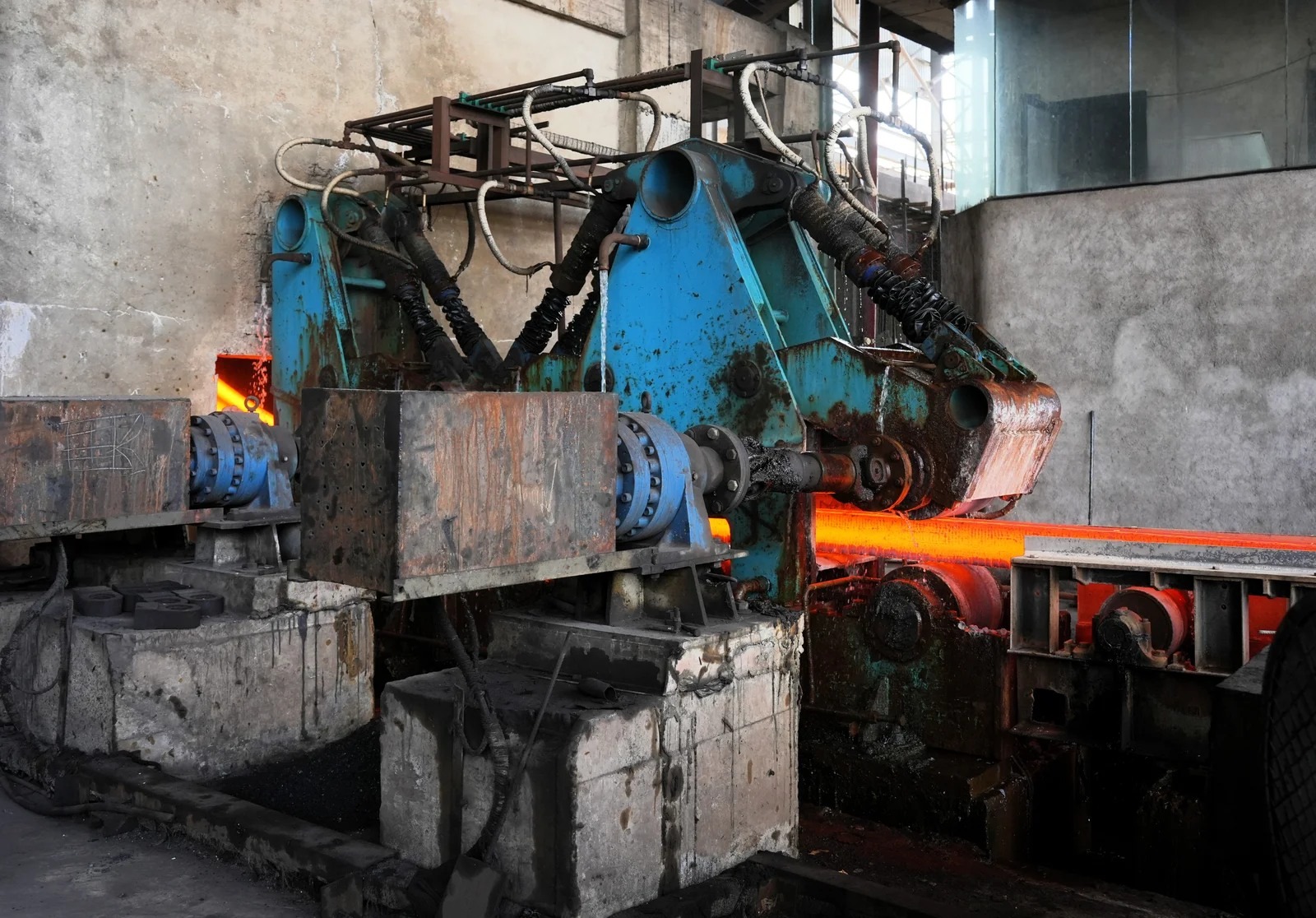
Three things, wired together. They reduce iron ore into sponge iron (Direct Reduced Iron), melt it into mild-steel billets, and run captive power plants to keep the furnaces fed. In FY24 the iron-and-steel segment was about 94% of revenue and power about 6% — so this is, overwhelmingly, a steel company that happens to make some of its own electricity.
The power plant is the quietly clever part. Of the 11.5 MW captive capacity, 9 MW comes from Waste Heat Recovery Boilers — electricity made from heat the steel process throws off anyway. The other 2.5 MW is coal-based. A new Siemens turbine was commissioned in FY24 to lift generation efficiency.
The plants run at very different intensities. Sponge iron ran at 93.25% capacity utilisation (83,927 MT against 90,000 MTPA capacity) — close to flat out. Billets, at the old 66,000 MTPA capacity, ran at 67.18% (44,341 MT). One furnace is straining; the other has slack — which is part of why the 150,000 MT billet expansion exists.
Then there’s the FY24 object-clause rewrite, where the company added the right to do nearly everything: acquire property, enter joint ventures, buy businesses and goodwill, amalgamate, acquire patents and trademarks, collaborate internationally. A sponge-iron maker now formally licensed for the full corporate decathlon. The articles read like a company keeping its options very, very open.
Does a captive WHRB plant making 6% of revenue change the story of a business where 94% is the brutal, cyclical economics of melting metal? The plant helps the cost line; it doesn’t change what the company is.
4 — Financials Overview
Figures are standalone, in ₹ crore.
Metric
Latest Q (Mar 2026)
YoY (Mar 2025)
QoQ (Dec 2025)
Revenue
143.89
115.40
124.19
Operating Profit
20.69
9.88
3.49
PAT
5.39
1.99
-7.96
EPS (₹)
1.64
0.63
-2.42
The March quarter was the strongest of the year by a wide margin: operating profit of ₹20.69 crore on ₹144 crore of revenue, a 14.38% operating margin against the low single digits seen mid-year. The quarter immediately before it, December 2025, posted a ₹7.96 crore net