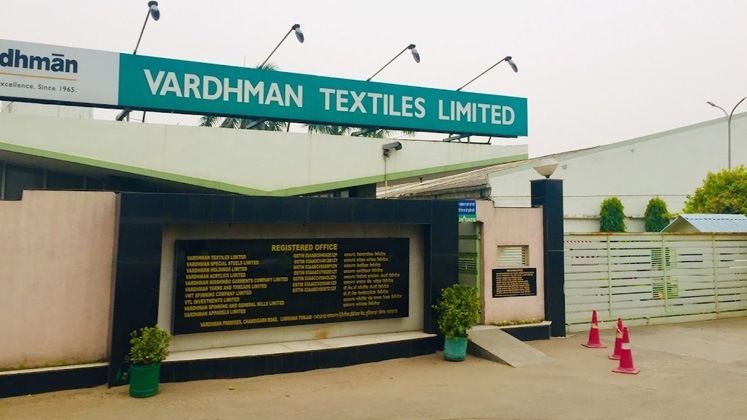
The textile landscape in 2026 is no place for the faint-hearted. While global trade wars and “tariff shocks” have sent many competitors into permanent closure, Vardhman Textiles (VTL) is playing a high-stakes game of survival and scale. The company just wrapped up FY26 with a Profit After Tax of ₹740 crore, proving that even when the industry is “crying,” a diversified titan can still find its feet.
1. At a Glance
Vardhman Textiles is currently commanding the attention of every serious investor in the sector, and for a very specific reason: resilience in the face of a structural crisis. While the market is obsessed with the raw numbers, the real story lies in the $0.08 per pound disadvantage the Indian textile industry is currently swallowing.
Indian cotton prices are being artificially propped up by the CCI’s aggressive procurement, which has sucked up nearly 50% of the daily arrivals. This has created a “supply deficit” where India expects to consume 322 lakh bales but will only produce 292 lakh. Management isn’t sugarcoating it—they’ve explicitly stated that India cannot sustainably earn commodity margins if its raw materials stay more expensive than the rest of the world.
Yet, investors are watching VTL because of its massive capacity expansion. The company didn’t just sit back; it commissioned major lines at Baddi and Budhni, pushing its processed fabric capacity to a staggering 200 lakh meters per month. They are essentially betting that while 15 million spindles across India might shut down permanently in the next year, Vardhman will be the one standing to capture the redistributed demand.
The company is also making a bold pivot toward green energy, targeting a jump from 9% to 50% renewable power by FY27. This isn’t just a PR stunt; it’s a calculated move to slash operating costs in a high-inflation environment. With a Dividend of ₹5 per share announced and a management transition on the horizon for 2026, the stage is set for a massive transformation. The question is: will the newly commissioned capacities fire up fast enough to offset the global tariff drama?
2. Introduction
Vardhman Textiles is not just a company; it is a conglomerate with a footprint in 75 countries and a massive workforce of over 23,000 people. It operates at a scale that most domestic players can only dream of, maintaining over 1.2 million spindles and accounting for approximately 2% of India’s total installed spinning capacity.
The business is divided into three major segments: Yarn, Fabric, and others (which includes Acrylic Fiber and a growing Garment division). Yarn remains the backbone, contributing over 62% of the revenue, but the strategic focus is rapidly shifting toward high-value Processed Fabrics and Performance Textiles.
In a year where “demand disruptions” became the new normal, VTL’s geography mix—54% domestic and 46% exports—served as a critical buffer. They are currently the preferred suppliers to global giants like Zara, H&M, GAP, and Calvin Klein. However, with 40-45% of their fabric exports tied to the US market, they are currently sitting in the crosshairs of global tariff uncertainties.
The management has been brutally honest about the “Global Parity Gap.” When Vietnam and Indonesia can source cotton at $0.72 per pound while India sits at $0.80 due to import duties and MSP hikes, the competitive edge thins out. VTL’s response? Modernization and Diversification. They are moving away from US concentration toward the EU, UK, and Australia, while doubling down on their garmenting capacity.
3. Business Model – WTF Do They Even Do?
If you think Vardhman just makes “cloth,” you’re missing the point. They are an integrated textile powerhouse. They take raw cotton, turn it into high-end yarn (Melange, Core-spun, Sustainable), weave that into fabric, and then process that fabric with specialized finishes for global fashion brands.