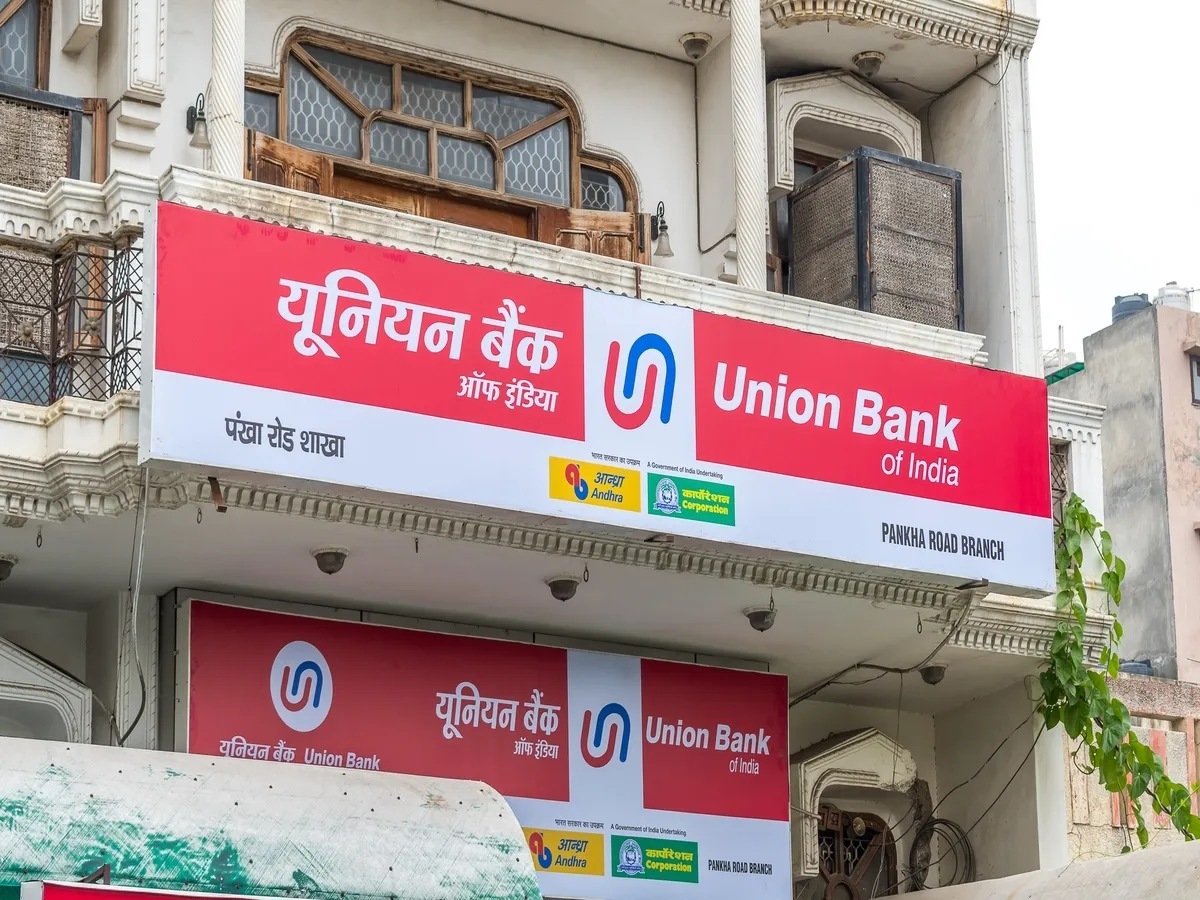
Union Bank of India Q2 FY26 – From ₹4,249 Cr Profit to RBI’s Penalty Parade: The PSU That Went From Public to PUNny Sector Banking
1. At a Glance
Union Bank of India (UBI) just dropped its Q2 FY26 results — and let’s just say the numbers have both charm and chaos. Net profit stood at ₹4,249 crore, a 6.8% dip QoQ but a solid 19% YoY growth. Revenue came in at ₹26,665 crore, a slight -0.82% QoQ wobble, proving even PSU banks occasionally skip leg day. The stock trades at ₹142 — about 0.95x book and a ridiculously low 5.84x P/E — basically a clearance sale for profitability. Market cap? ₹1.08 lakh crore, making it the fifth-largest public sector bank with a CASA ratio still around 34%.
Gross NPA has dropped to 3.29% — that’s like an ex finally cleaning their life up. The ROE stands tall at 17%, while the Dividend Yield flaunts 3.34%, so even your FD uncle is secretly jealous. However, the RBI seems to have found a new side hustle — fining Union Bank for cash-handling errors. ₹1.07 lakh here, ₹5.97 lakh there — the penalty log reads like a fine collection jar. But hey, at least it’s not for mis-selling insurance this time.
With ₹12.34 lakh crore in deposits and ₹9.04 lakh crore in advances, Union Bank now plays in the same league as the big boys — SBI, BoB, PNB, and Canara. The problem? It’s also inherited their favorite hobby: paying fines and managing mountains of compliance memos.
2. Introduction
There’s something beautiful about PSU banks — they’re like Bollywood reboots. You think you’ve seen the plot before, and yet, you still end up watching. Union Bank of India’s Q2 FY26 story is no different: profit’s up, NPAs are down, but RBI is still finding creative ways to say, “Beta, form bharo sahi se.”
Once mocked as a mid-tier public sector struggler, Union Bank today stands as a ₹1.08 lakh crore behemoth — a three-year turnaround that’s less “Govt of India drama” and more “Netflix redemption arc.” After the 2020 merger with Andhra Bank and Corporation Bank, this PSU became the financial equivalent of a Thanos snap — instantly doubling its reach, scale, and confusion.
Fast-forward to 2025: 8,466 branches, nearly 9,000 ATMs, and operations in Dubai, Sydney, and London (through its UK subsidiary). Its loan book of ₹9 lakh crore spans retail, MSME, agriculture, and corporate lending. And despite being a PSU, its digital transformation drive is no joke — ₹1,150 crore in IT capex last year and another ₹1,400 crore lined up for FY25.
Yet, like every good Indian bank story, there’s always that “but.” The RBI penalties are turning into a recurring segment — with fines for everything from soiled notes to CCTV mismanagement. If this were a game show, RBI would be the judge, and Union Bank would be the contestant who keeps losing points for “presentation.”
Still, the numbers tell a different story: GNPA down from 11.1% in FY22 to just 3.29% now. That’s not cleanup — that’s a full pressure wash.
3. Business Model – WTF Do They Even Do?
Union Bank of India, like every PSU bank, has a simple mantra — “Lend to everyone, then spend a decade collecting it back.”
Here’s the setup: Corporate and Wholesale Banking brings 36% of revenue, Retail adds another 34%, Treasury operations account for 27%, and the rest 3% is miscellaneous stuff like internet banking, insurance, and your favorite SMS balance alerts.
Retail is the golden child — home loans, vehicle loans, personal loans — the works. Corporate lending, meanwhile, has been the rehab center for India Inc’s “strategic defaulters.” MSME and Agri add the socialist flavor.
Its geographical mix is impressively diverse: 30% rural, 29% semi-urban, 21% metro, and 20% urban. Translation: one branch for every cow, chaai stall, and IT park.
After merging with Andhra and Corporation Bank, UBI went from being a decent-sized PSU to a full-blown hydra with over ₹12 lakh crore in deposits. Its exposure story reads like an Indian economy map — Infrastructure (10%), NBFCs & HFCs (13.5%), Metals (2.7%), Textiles (1.9%), and Petroleum (1%). Together, that’s 34% of advances — down from a nerve-wracking 43% in FY22.
The bank also acts as a financial Swiss Army knife — from merchant banking and wealth management to mutual funds and insurance tie-ups. Basically, it sells everything except cold drinks.
Commentary: The bank’s P/E ratio is lower than your favorite momo stall’s hygiene score. Revenue dipped slightly QoQ, but PAT stability shows operational control. YoY growth of ~24% proves the cleanup act is working — not just cosmetically.
5. Valuation Discussion – Fair Value Range Only
Let’s calculate like a CA who’s just found caffeine:
Method 1: P/E Based
Annualised EPS = ₹23.2
Peer PSU P/E = ~7.5x (Median of SBI, BoB, Canara) → Fair Value Range = ₹23.2 × (6–8x) = ₹139–₹186
Method 3: Simplified DCF Assume profit growth at 10% for 5 years, terminal growth 3%, cost of equity 12%. → Intrinsic value range = ₹150–₹180
Educational Disclaimer: This fair value range is for educational purposes only and not financial advice. The numbers are estimates based on current financials — not your uncle’s WhatsApp tip.
6. What’s Cooking – News, Triggers, Drama
UBI’s recent months were a full episode of PSU Bigg Boss.
RBI Fines Parade: Between September and October 2025, the RBI fined the bank five times in a single month — for issues ranging from “soiled notes” to “CCTV deficiencies.” Someone at RBI clearly found a new hobby.
Leadership Shuffle: Asheesh Pandey was appointed as MD & CEO on 30 Sept 2025. He’s known for his tech-first vision — maybe the next penalty will be for “over-automation.”
Credit Rating Upgrades: In August 2025, S&P upgraded Union Bank to BBB/Stable. Fitch followed with a “Viability Rating bb-.” Not AAA yet, but hey, it’s progress.
Capital Raising Plan: ₹6,000 Cr equity and Basel III bonds on the way. Because in banking, capital adequacy is like chai — you can never have enough.
Foreign Funding: USD 300 million syndicated loan raised via Dubai branch. Proof that the bank’s global presence isn’t just a LinkedIn flex.
So what’s next? With an 11–13% projected loan growth for FY25 and NIM guidance of 2.8–3%,