Tuticorin Alkali March 2026 : The ₹150 Million Contingent Provision That Choked A Turning Tide
Section 1 — At a Glance
Tuticorin Alkali Chemicals & Fertilizers Ltd (TFL) presents a striking financial dichotomy where operational improvements are masked by legacy overhangs. The company generated a total sales revenue of ₹337.77 crore for the fiscal year ended March 31, 2026, marking a 9.14% increase from ₹309.49 crore in the previous year. Net profit, however, experienced a significant contraction, dropping by 41.13% to ₹36.61 crore down from ₹62.19 crore in FY25. This visual decline in core profitability was heavily driven by a one-time provisioning of ₹20.00 crore—spread as ₹15.00 crore in the first nine months and an additional ₹5.00 crore in the final quarter—pertaining to long-standing disputed commercial dues with the VOC Port Trust.
Investor sentiment remains divided between two core developments. On the positive side, operational performance has been bolstered by structural cost-reduction measures, notably the substitution of coal with biomass-based fuels and a ₹15.61 crore strategic equity investment in renewable energy to secure 15MW of clean power annually. These initiatives successfully mitigated input cost pressures and improved internal operating margins. Conversely, the company faces an immediate liquidity crunch that has forced its bank facilities of ₹80.00 crore to be placed on a Rating Watch with Negative Implications by India Ratings and Research. This action stems from an impending repayment schedule for an outstanding ₹50.00 crore External Commercial Borrowing (ECB) due to its promoter entity, AMI International Holdings Limited. While management is working to defer these maturities to FY28, the company continues to rely aggressively on extended trade payables to sustain day-to-day operations.
Extraordinary non-recurring provisions often distort immediate accounting profits, but structurally weak cash management reveals the true friction in a business cycle.
The following analytical deep-dive evaluates whether TFL’s aggressive capacity expansion will successfully deleverage its balance sheet or further strain its fragile liquidity architecture.
Section 2 — Introduction
Tuticorin Alkali Chemicals & Fertilizers Ltd, established in 1971, operates as the sole large-scale manufacturer of soda ash in southern India. The business model revolves around a dual-manufacturing process that concurrently synthesizes industrial soda ash and ammonium chloride fertilizers. After surviving an extended period of structural distress between FY17 and FY22—characterized by prolonged carbon dioxide plant maintenance failure and severe raw material shortfalls—the business achieved an operational turnaround in FY23.
This analysis is prompted by the simultaneous convergence of three critical events in May 2026: the release of audited FY26 financial results , the formal board appointment of Mr. E Rajeshkumar as Whole-time Director , and a high-stakes credit rating migration to a Negative Watch. With a massive ₹250.00 crore capacity augmentation project currently underway, TFL is attempting to transition from a localized niche manufacturer into a highly consolidated regional powerhouse. However, executing aggressive capital projects while holding minimal standalone cash reserves requires a precise examination of their working capital engine.
Section 3 — Business Model: WTF Do They Even Do?
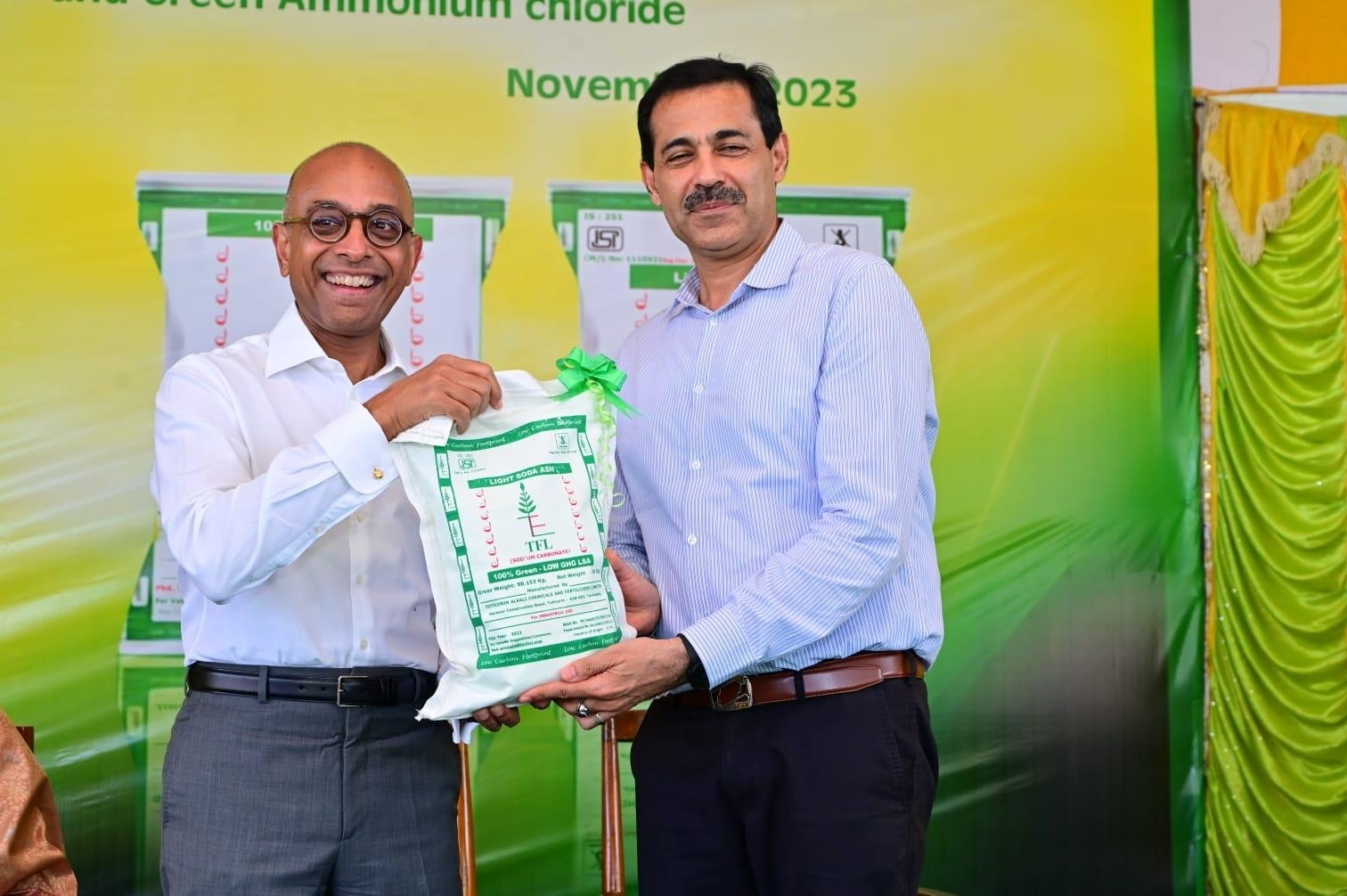
TFL operates a highly chemical-dependent, dual-output industrial model. The company takes imported ammonia and carbon dioxide to manufacture two primary product lines: Light Soda Ash (accounting for roughly 57% of recent turnover) and Ammonium Chloride (accounting for 38%). Soda ash is an essential chemical builder supplied directly to heavy industrial sectors like soaps, detergents, glass sheets, and silicates. Ammonium chloride is divided into fertilizer grade, sold for domestic agricultural cultivation, and technical grade, utilized in dry-cell battery manufacturing and pharmaceuticals.
The operational mechanics are deeply intertwined with the promoter ecosystem. TFL maintains a long-term commercial offtake contract with a single large corporate client that absorbs between 80% to 90% of its total soda ash production capacity. For its fertilizer arm, TFL bypasses open-market retail channels entirely by routing its entire ammonium chloride volume directly to its group entity, Greenstar Fertilizers Limited (GFL), for complex fertilizer manufacturing. This structure effectively insulates the company from market distribution risks but creates a total customer concentration where just two counterparties command 94% of its aggregate institutional turnover.