1. At a Glance
TRF Ltd — the Tata family’s long-lost engineering cousin — has once again managed to stay alive and semi-profitable in Q2 FY26. The company reported ₹22.3 crore in revenue (down 31.7% YoY) and ₹4.45 crore in profit (down 26.1% QoQ). With a market cap of ₹364 crore, a CMP of ₹331, and a P/E of 16x, this mini-Tata is trading more on nostalgia than growth.
The company’s latest quarter featured 27% operating margin, ROCE of 21.8%, and a much-improved debt-to-equity ratio of 1.44 — thanks to Tata Steel’s earlier cash infusions that cleaned up TRF’s financial mess like a parent bailing out their college kid.
But here’s the punchline: the proposed merger with Tata Steel, once meant to rescue this fading Jamshedpur-based engineering relic, was withdrawn in February 2024. Yes, the prodigal child was unadopted.
Still, with all debt repaid, a working factory in Jamshedpur, and a faint hum of new orders, TRF is finally acting like that 60-year-old relative who just got his first smartphone — slow, confused, but still in business.
2. Introduction
If the Tata Group were a Bollywood family, TRF would be the underdog — born in 1962 with dreams of becoming a global engineering hero but stuck in decades of midlife crisis.
Its full name — Tata Robins Fraser Ltd (TRF) — might not ring a bell anymore, but once upon a time, this company built the backbone of India’s material handling systems — conveyors, crushers, and bulk-handling equipment for ports, steel plants, and power stations. In the 1980s, TRF’s machines moved India’s coal. In the 2010s, they mostly gathered dust.
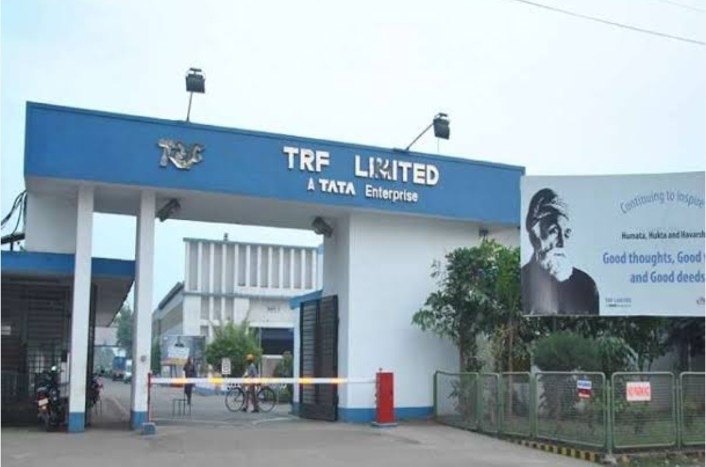
Fast forward to FY26, TRF is still alive — designing, manufacturing, and servicing material handling systems from its Jamshedpur base. Tata Steel owns 34.1%, providing moral (and financial) support whenever required.
The irony? A company that built conveyor belts couldn’t quite keep its own growth moving. Revenues dropped from ₹1,100 crore a decade ago to ₹96 crore in FY25 — that’s not a slowdown, that’s a retirement plan. Yet, miraculously, TRF has been profitable for two straight years.
So, what happened? Did the ghost of JRD Tata whisper some engineering secrets, or did the accountants simply reverse enough provisions to make it look good? Let’s find out.
3. Business Model – WTF Do They Even Do?
TRF operates two main divisions:
- Project Division – Handles turnkey contracts: designing, manufacturing, installing, and commissioning bulk material handling systems for sectors like power, steel, cement, ports, fertilizers, and mining. These are long, complex, and occasionally profitable projects.
- Product Division – Manufactures heavy-duty machinery like conveyors, crushers, screens, and hydraulic systems at its Jamshedpur facility. Think of it as Tata’s in-house IKEA for industrial parts — except everything weighs 20 tonnes.
It also has a Life Cycle Services vertical — covering O&M, refurbishment, and engineering supervision — basically, “after-sales service for machines