Section 1 — At a Glance
Transworld Shipping Lines Ltd (formerly known as Shreyas Shipping & Logistics Ltd) has sailed straight into a financial perfect storm. The headline metrics tell a story of severe operational distress: for the full fiscal year ended March 31, 2026, the company reported a massive consolidated net loss of ₹75.06 crore, a staggering reversal from the ₹27.93 crore net profit clocked in FY25. This bottom-line collapse occurred despite a consolidated revenue from operations of ₹548.31 crore, which actually fell 15.6% from ₹649.61 crore in the previous fiscal year. The quarterly trajectory is even more alarming; the company closed Q4 FY26 with a net loss of ₹29.52 crore, making it the fourth consecutive quarter of deep red ink.
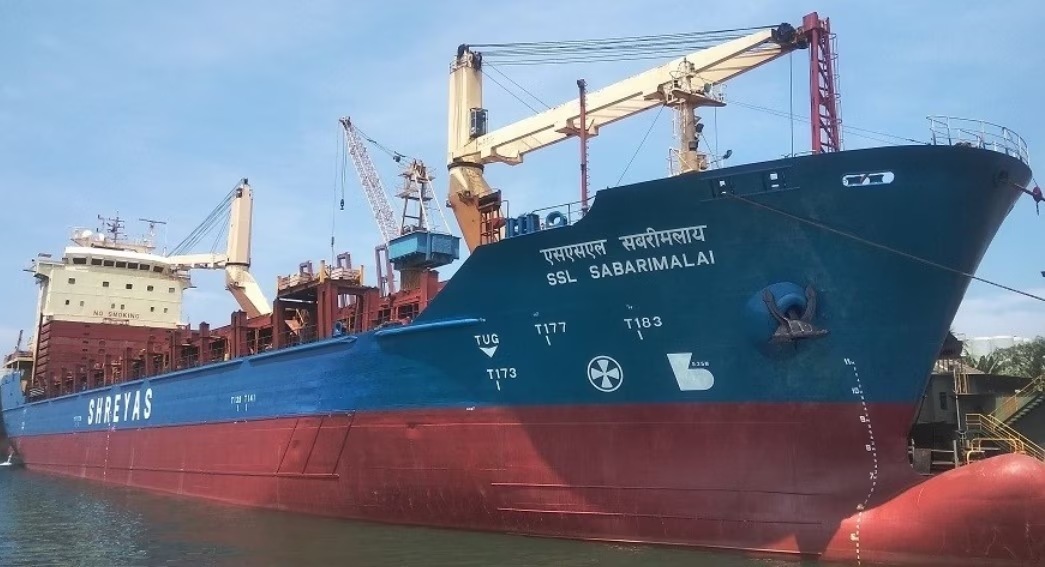
What is capturing fierce investor attention—and driving deep anxiety—is an unprecedented, systematic liquidation of the company’s core shipping assets. Subsequent to the balance sheet date, Transworld has signed Memorandums of Agreement (MoAs) to sell off five of its prominent container vessels, including SSL Krishna, SSL Godavari, SSL Gujarat, SSL Bharat, and SSL Mumbai, for a total combined valuation exceeding $43 million. While management frames this as an aggressive fleet renewal and debt-reduction blueprint, the immediate reality is a hollowed-out operating footprint. Operational inefficiencies have plagued the company, driven by an aging fleet with an average age of 21.91 years, leading to high maintenance outlays and unabsorbed standing costs. Compounding this, its vessel SSL Kaveri remains completely stranded at Jebel Ali Port due to Middle East geopolitical conflicts, dragging down asset utilization. In the capital allocation arena, a stock’s valuation cannot long disconnect from its structural return on capital. With a deeply negative ROCE of -4.56%, the market is heavily discounting the business model. Investors are now left parsing whether this is a controlled structural turnaround or a structural retreat from container ownership.
Section 2 — Introduction
Transworld Shipping Lines Ltd, which shed its legacy moniker of Shreyas Shipping & Logistics Ltd in September 2024, has been a fixture of the Indian maritime landscape since 1988. Historically celebrated as a pioneer in domestic coastal transshipment at major hubs like JNPA in Nhava Sheva, the company has structurally altered its corporate DNA over the last few years. After divesting its domestic coastal and EXIM feeder shipping operations to Avana, Transworld transitioned into an asset-heavy tonnage provider, relying on vessel ownership and long-term charters.
This analytical deep dive exists because Transworld is currently undergoing a radical, high-stakes structural mutation. The confluence of an escalating civil war of operational costs on its remaining aging ships, the sudden forced immobilization of assets in conflict zones, and a flurry of post-year-end vessel sales has pushed the stock down 48.3% over the past year. With its primary credit facilities recently slapped with a ‘Watch Developing’ status by CRISIL, we pull back the curtain to see if the underlying business can survive its own cure.
Section 3 — Business Model: WTF Do They Even Do?
Strip away the nautical romance, and Transworld is essentially a maritime landlord. The company owns a fleet of 12 vessels—comprising 10 container feeder vessels and two dry handy-size bulk carriers. Instead of fighting for volatile spot cargo on the open seas, Transworld relies on a Fixed Charter Agreement (FCA) with Avana Logistek (a group entity under DP World’s Unifeeder umbrella). Avana leases Transworld’s entire container fleet, guaranteeing stable volumes and providing an overwhelming 84% of Transworld’s total revenue.
This creates an extreme case of customer concentration, where a single counterparty holds the keys to the castle. To diversify this stark dependency, Transworld recently completed the 100% acquisition of two promoter-owned freight forwarding and logistics entities, TILPL and TLPL, for a total outlay of ₹27 crore. The goal is to blend asset-heavy chartering with asset-light freight forwarding. However, operating a fleet where