01 — At a Glance
The Tower That Refuses to Fall Down (Stock Price Still Hasn’t Figured That Out)
- 52-Week High / Low₹856 / ₹375
- FY25 Revenue (Full Year)₹5,308 Cr
- FY25 PAT (Full Year)₹327 Cr
- Full-Year EPS (FY25)₹24.33
- Q3 FY26 EPS₹8.17
- Book Value₹154
- Price to Book3.20x
- ROE21.6%
- Debt / Equity0.39x
- Order Book (Dec 2025)₹14,733 Cr
The Opening Take: Transrail posted Q3 FY26 revenue of ₹1,796 crore (+32% YoY), PAT ₹110 crore (+18% YoY), and an order book of ₹14,733 crore. Nine months of FY26 saw revenue sprint to ₹5,017 crore (+49% YoY) with PAT of ₹324 crore (+62% YoY). Yet the stock trades at 14.9x P/E with 1-year returns of -0.77%. In other words: the business is firing on all cylinders. The stock? Still warming up with a cuppa chai and a newspaper.
02 — Introduction
Why Would Anyone Build Transmission Towers For A Living? Apparently, For Great Returns.
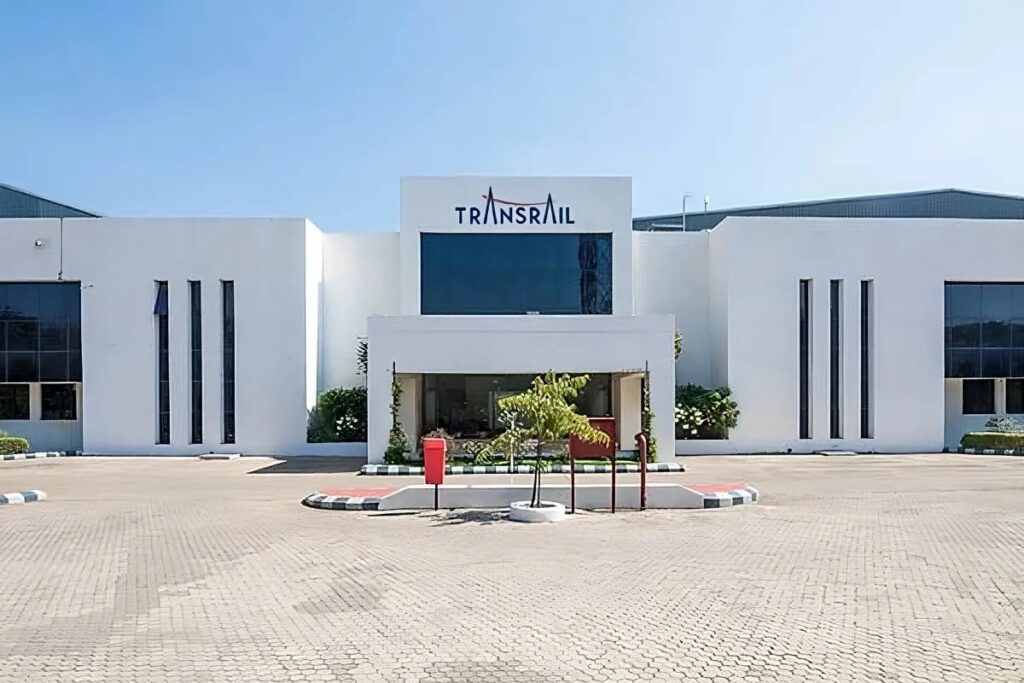
Welcome to Transrail Lighting Ltd — the company your electricity board secretly thanks every time you don’t experience a blackout because someone actually built the infrastructure to carry power across this country. IPO’d just three months ago in December 2024, fresh off a ₹425-crore equity raise, and already reporting the kind of growth numbers that would make growth fund managers weep into their cold brew.
Here’s what Transrail does: it’s an integrated transmission and distribution (T&D) company — meaning it designs, manufactures, and installs the lattice towers, conductors, poles, and substation equipment that keeps the lights on in 59 countries across Africa, SAARC, Middle East, and Europe. Not sexy. Definitely not a ChatGPT story. No AI co-pilot. No blockchain. Just … actual infrastructure that the Indian government desperately needs built, and they’re willing to pay for it.
The business model is textbook EPC (Engineering, Procurement, Construction), which is fancy for “we build stuff, governments pay us in instalments over 3 years, and we’re perpetually managing cash like our lives depend on it.” Transrail has four manufacturing facilities pumping out towers (1.01 lakh TPA), conductors (60,000 TPA), and poles (25,000 TPA). They’ve delivered infrastructure in Bangladesh, Africa, and the Middle East. They’re backed by a promoter (Ajanma Holdings) who seems to actually know what they’re doing. And they just raised cash to build more capacity because demand is literally outpacing their ability to supply.
Oh, and this matters: their ROCE is 35.2%. Return on Equity at 21.6%. A 26-28% revenue growth guidance for FY26, and an order book so chunky it gives them 2.5x book-to-bill ratio. This isn’t a lottery ticket. This is a structured business in a sector that’s only going to get bigger.
Concall Highlight (Feb 2026): Management said Bangladesh project is executing “better than what we had planned” and they’re being “selective about bidding rather than pursuing growth at any cost.” Translation: they’re not desperate. That’s the best sign a construction company can give you.
03 — Business Model: WTF Do They Even Do?
Building The Wires That Power Your Phone. The Phone You’ll Use To Yell At Someone Over WhatsApp About How The Stock’s Not Moving.
Imagine a business where your customers are literally the government, multilateral banks, and energy infrastructure funds. That’s Transrail. Their FY25 revenue split: 95% EPC contracts, 5% product sales. Geography: 59% exports, 41% domestic India. Customer base: 83% government, 17% private. This is not a company that wakes up worried about demand. They’re worried about execution. Massive difference.
An EPC contract in the transmission business looks like this: Client (say, Power Grid or a Middle Eastern utility) puts out a tender for building a 400kV transmission line across 200 kilometres of terrain that includes rivers, forests, and political sensitivity zones. Transrail bids for it. If they win (L1 status, or “lowest bidder”), they design it, manufacture the towers and conductors at their four factories, get regulatory approvals, execute the project over 18-36 months, collect cash in milestones, and pocket a margin of 13-14% on EBITDA.
The manufacturing bit is the moat. You can’t just outsource everything in EPC — especially for high-voltage transmission where tolerances matter and quality assurance is non-negotiable. Transrail has NABL certification, ISO 9001/14001/45001 compliance, and CE marking. They’ve been doing this for 38 years (since 1986 when they started as Transrail Engineering, then absorbed the T&D division of Gammon India in 2016). They’ve got strong relationships with PGCIL (Power Grid Corporation of India), Adani Energy, state utilities, and multilateral agencies like the World Bank and Asian Development Bank.
This means repeat orders. PGCIL has 20+ jobs with Transrail. Adani calls them up. Middle Eastern power utilities are now dialling their number. And the international exposure? That’s the kicker. FY25: 59% international revenue. That’s right — bulk of revenue comes from Bangladesh, Africa, and Middle East. Currency hedging, political risk? They’ve got insurance for that. Counterparty risk? Multilateral agency backing mitigates most of it.
Tower Capacity1.01L TPAAnnual Production
Conductor Capacity60K TPAAnnual Production
Pole Capacity25K TPAAnnual Production
Countries Served59Global Footprint
The Sweetener: Transrail is backward integrated. They manufacture their own towers, poles, and conductors. This is not unique, but it’s expensive to build. Means competitors can’t easily replicate. Means Transrail’s margins are better protected. And it means if a competitor tries to undercut on price, Transrail can adjust their own manufacturing cost and still win because they understand the value chain better. That’s called “playing with home advantage.”
💬 Quick thought: You ever think about who builds the towers that carry power to your house? Or just blame the power company when it goes down? Drop a comment.
04 — Financials Overview
Q3 FY26: The Numbers That Make You Wonder Why The Stock’s Down 37% In 6 Months