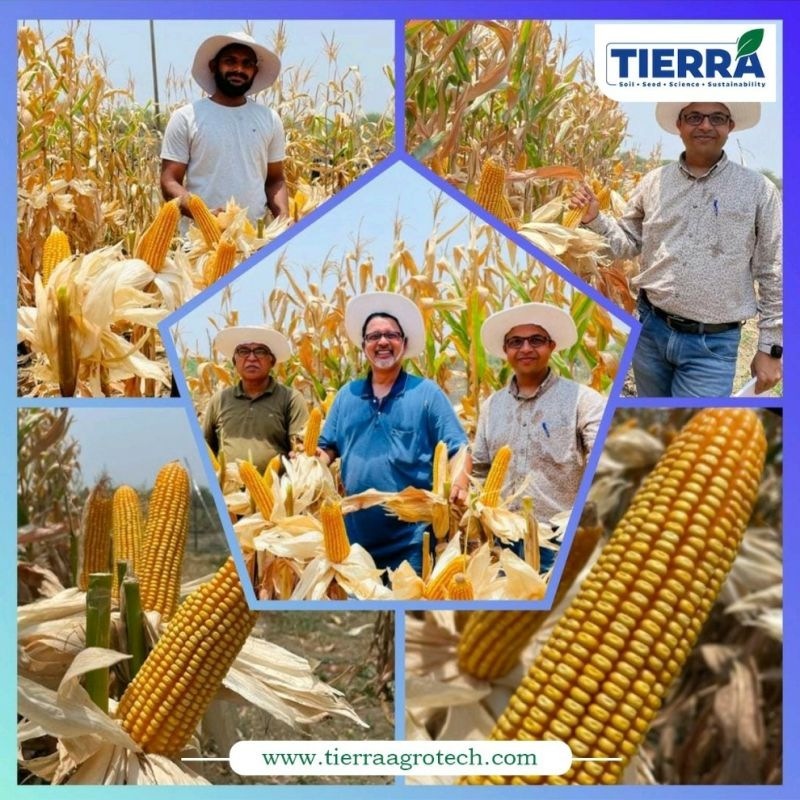
Tierra Agrotech Ltd Q3 FY26 – ₹14.7 Cr Revenue, ₹-5.69 Cr Loss, Negative ROCE & a Capital Reshuffle That Feels Like a Bollywood Plot Twist
1. At a Glance – When Seeds Don’t Sprout, But Hope Still Gets Irrigated
₹336 crore market cap. ₹51.2 stock price. A three-month return of +31.5% that looks like a sudden rain shower after years of drought. ROCE at -16.3%, ROE at -13.6%, PAT bleeding at ₹-8.73 crore (TTM), and yet the stock decides to party like it cracked a blockbuster quarter. Welcome to Tierra Agrotech Ltd, where numbers cry, charts dance, and investors argue in Telegram groups at 2 a.m.
Latest quarterly revenue stands at ₹14.73 crore, up a shocking 208% QoQ, which sounds heroic until you realise the base was so low it was practically underground. Losses continue, margins are negative, and interest coverage is a sad -8.75, but hey — debt is now down to ₹17.8 crore, promoter pledge is zero, and the company is busy with mergers, amalgamations, capital reductions, and share splits like a corporate makeover show.
This is not a boring seed company. This is a drama series — agriculture edition.
2. Introduction – A Seed Company with More Corporate Actions than Profits
Tierra Agrotech was incorporated in 2012 with a noble idea: research, develop, produce, process, and sell seeds. Cotton, paddy, rice, corn, vegetables — the full Indian thali of agriculture. The ambition was big, the crops were many, and the PowerPoint decks were probably excellent.
But execution? That’s where the soil turned rocky.
Over the years, Tierra became a loss-making seed company with eroded net worth, rising borrowings (peaking above ₹100 crore in FY23), frequent management changes, and a long list of corporate actions that could give even a seasoned company secretary mild anxiety.
FY22 saw the company merge into Grandeur Products Limited, becoming its wholly owned subsidiary. Then came listing in May 2022, preferential allotments, capital increases, promoter dilution, and now — in January 2026 — another big announcement: amalgamation with Nishpra Community Solutions, capital reduction from ₹10 to ₹4, and a 2:1 share split.
All this while core operations are still struggling to generate consistent profits.
So the obvious question: Is Tierra finally fixing the farm… or just rearranging the scarecrows?
3. Business Model – WTF Do They Even Do?
At its heart, Tierra Agrotech is a seed research and commercialisation company.
It operates across three buckets:
Field crops (cotton, paddy, rice, corn, mustard, soybean)
Vegetable crops (tomato, hot pepper, okra, chilies, cauliflower)
Other crops (fodder beet, fodder crops, niche hybrids)
The business model is simple on paper:
Develop hybrid seeds through R&D and breeding programs
Multiply seeds via contract farming
Process, test, and package seeds
Sell to distributors, dealers, and farmers
In reality, this is a working-capital-heavy, inventory-intensive, weather-dependent, and regulation-prone business.
Look at the numbers:
Inventory days: 623 days (FY25)
Cash conversion cycle: 286 days
Working capital days flipped from negative to +77 days
Translation: cash goes in today, may come back after two monsoons and one election.
The company is now starting pre-breeding programs focused on abiotic and biotic stress tolerance — basically seeds that survive heat, pests, diseases, and Indian farming reality. New formal breeding programs in chilies and tropical cauliflower have also been initiated.
Sounds good. But R&D burns cash before it earns any.
So ask yourself: Can Tierra survive long enough for its seeds to actually mature?