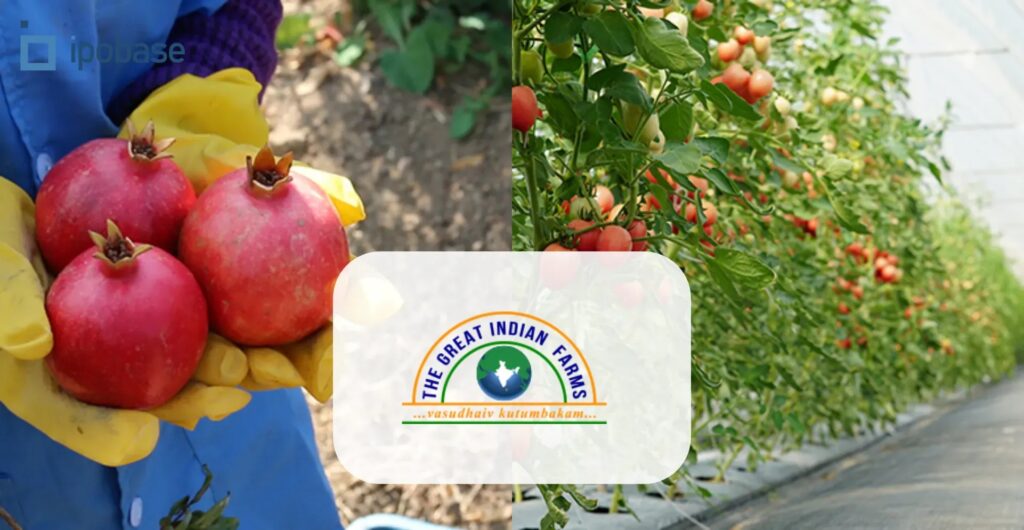
If you thought farming was all about monsoons, mandi bhav, and heartbreak, TGIF Agribusiness Ltd shows up wearing sunglasses and a smug smile. Listed on the BSE-SME in May 2024, this 2023-born horticulture baby farms fruits and vegetables on 110 acres in Rajasthan and somehow squeezes OPM north of 60% in its latest half-year results. Market cap sits around ₹23.3 crore, current price near ₹90, book value ₹45.4, ROE 26%, ROCE 27.6%, and debt — wait for it — zero. The latest half-year (H1 FY26, ended Sep 2025) delivered ₹1.73 crore sales and ₹1.06 crore PAT, even as quarter sales showed some wobble. Farming, but with spreadsheets that would make a SaaS founder nod approvingly. Is this a rare agri unicorn-in-the-making or just a very well-timed harvest? Keep reading, because the soil here is fertile with numbers and drama.
2. Introduction
Let’s be honest. When a company incorporated in 2023 claims it’s already profitable, debt-free, and throwing around 50–60% operating margins, the natural Indian investor reaction is: “Bhai, thoda ruk… kahin magic beans toh nahi bech rahe?”
TGIF Agribusiness Ltd (TGIFAL) is not selling magic beans. It’s selling pomegranates. Lots of them. In fact, 95%+ of revenue comes from pomegranate farming, with side quests in dragon fruit and Sagwan trees. The farms are spread across villages near Pindwara tehsil in Rajasthan, and the company uses a mix of B2B (mandis, wholesalers, retail chains) and B2C (direct-to-home in Ahmedabad) models.
What makes TGIF interesting isn’t just the crop, but the financial optics. Despite being a tiny SME, it reports margins that would make FMCG giants spill their chai. Of course, scale is small — FY25 TTM sales are just ₹3.21 crore — but profitability is already real, not “adjusted EBITDA after imagination.”
Add to this a recent IPO, a management reshuffle, and half-yearly results that look cleaner than a freshly washed apple, and you’ve got a company that invites curiosity. The big question: are these margins sustainable, or is this just one great harvest season captured in Excel?
3. Business Model – WTF Do They Even Do?
TGIF Agribusiness is refreshingly simple. No blockchain. No AI-powered tractors (yet). Just open-field horticulture.
The company owns/operates 110 acres of farmland, primarily dedicated to pomegranate cultivation, with experimental or supplementary crops like dragon fruit and Sagwan trees. The farming model includes practices like fruit thinning, soil moisture measurement, and vegetative growth management — basically, doing farming properly instead of leaving everything to bhagwan bharose.
TGIF doesn’t farm alone. It employs and supervises local farmers and croppers, which helps scale operations without hiring an army of salaried employees. Think of it as asset-light farming with supervision control.
On the sales side, TGIF runs a dual-channel strategy:
B2B: Selling directly from farms to mandis, wholesalers, and retail chains.
B2C: A direct-to-home model currently focused on the Ahmedabad market, with stated scope to expand.
Revenue in FY24 came 96% from agri-produce sales, with a tiny 4% from short-term capital gains. Translation: this is not a finance company pretending to be a farm. The money mostly comes from fruits, not Excel gymnastics.
Simple business. Fewer moving parts. Which makes the margins either very impressive… or very sensitive to weather gods. What do you think matters more here — farming skill or luck?
4. Financials Overview
Result Type Lock
The latest official announcement clearly states “Half Yearly Results” for the period ended September 30, 2025. 👉 Result Type Locked: HALF-YEARLY RESULTS 👉 Annualised EPS = Latest EPS × 2
Half-Yearly Performance Snapshot (₹ Crore)
Metric
Latest H1 (Sep 2025)
YoY H1 (Sep 2024)
Prev H1 (Mar 2025)
YoY %
QoQ %
Revenue
1.73
1.87
1.48
-7.5%
+16.9%
EBITDA
1.04
1.08
0.68
-3.7%
+52.9%
PAT
1.06
0.97
0.77
+9.3%
+37.7%
EPS (₹)
4.10
3.75
2.98
+9.3%
+37.6%
Annualised EPS (Half-Yearly) = ₹4.10 × 2 = ₹8.20
Commentary time. Sales dipped YoY, but profits still grew. That’s either pricing power, cost discipline, or both. EBITDA margins expanded to 60%+, which in farming is borderline offensive. Either TGIF has discovered a secret farming cheat code, or scale is still too small to show real volatility.
Would these margins survive at 10x revenue? That’s the million-rupee question.