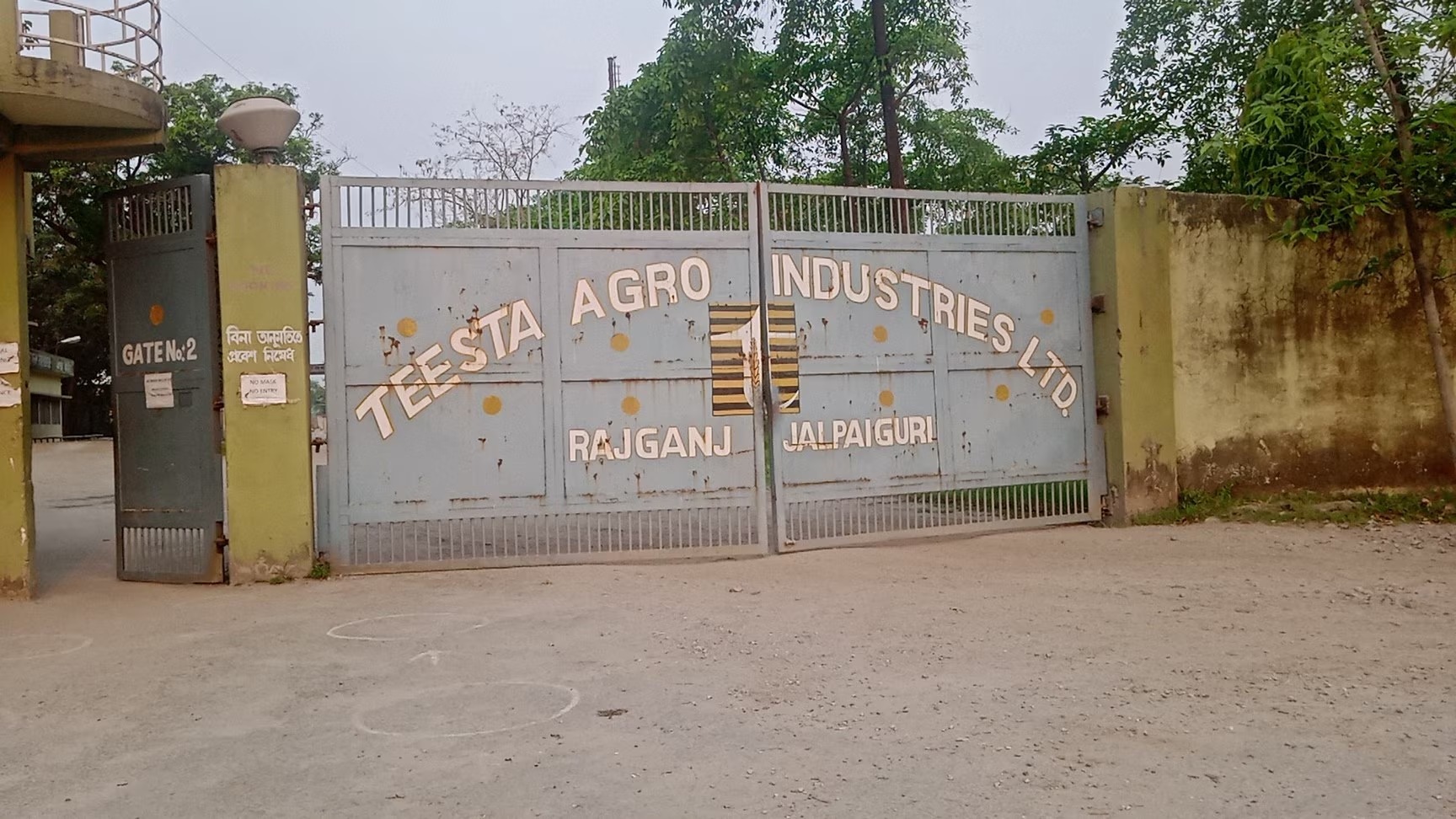
Teesta Agro Industries Ltd Q2FY26 – From Suspension to Superphosphate: The ₹72 Crore Mini Fertilizer Factory That Refuses to Die Quietly
1. At a Glance
Teesta Agro Industries Ltd — a fertilizer manufacturer so old it saw the 90s subsidy paperwork typed on typewriters, yet still kicking in 2025. With a market cap of ₹72.9 crore and a share price hovering around ₹130, Teesta is that small-town underdog of the fertilizer world. In the last three months, it’s up 5.8%, while your savings account is still pretending to be generous with 3.5% interest.
The Q2FY26 numbers look like a comeback movie: quarterly revenue at ₹66.6 crore (up 25% YoY) and PAT at ₹1.22 crore (up 71.8%). The EPS for the quarter: ₹2.17 — not bad for a company once suspended from trading. With ROE of 5.99%, ROCE at 7.97%, and debt at a mere ₹2.98 crore, this Jalpaiguri-based fertilizer mini-plant has the financials of a disciplined middle-class uncle — modest income, zero debt drama, and proud ownership of one working sulphuric acid plant.
They don’t pay dividends (because obviously, cash is sacred), but the valuation is attractive with a P/E of 9.4x and EV/EBITDA at 4.86x — way below the industry average of 22.7x. Price-to-book is 0.61x, meaning the market values it cheaper than the scrap value of its machinery.
Can a company that was once literally suspended from trading rise again as India’s rural infrastructure spends soar? Buckle up; this is a story of sulphur, subsidies, and stubborn survival.
2. Introduction
Picture this: a fertilizer company from Jalpaiguri that survived regulatory bans, rural politics, and multiple subsidy winters — and still managed to grow sales by 23% YoY in the trailing twelve months. Teesta Agro Industries Ltd may not be a market darling, but it sure has the resilience of a cockroach during an apocalypse.
Founded in 1986, back when Rajiv Gandhi was Prime Minister and the Indian farmer still used landline phones (shared by three households), Teesta Agro makes Single Super Phosphate (SSP), NPK Mixtures, and Sulphuric Acid under the brand name “KANCHAN.” The brand name itself sounds like a soap opera heroine, but in the Eastern and North Eastern Indian agri-markets, it’s a familiar label for phosphate-rich growth.
Despite its modest size, Teesta exports to Bangladesh, Nepal, and Bhutan — because if your local mandi is saturated, just ship your SSP over the border. The company’s installed capacity is no joke either: 1.65 lakh MT of SSP, 66,000 MT of sulphuric acid, and 33,000 MT of NPK fertilizer. Essentially, Jalpaiguri and Chittorgarh are home to mini chemical armies armed with sacks of phosphate dust.
And let’s not forget its resurrection arc: after being suspended from BSE in 2019 for non-compliance (classic smallcap move), Teesta’s shares were reinstated in June 2023. From silence to spotlight — that’s some filmi redemption.
3. Business Model – WTF Do They Even Do?
Teesta Agro manufactures fertilizers, but in a very Indian way — part chemistry, part subsidy, and part government paperwork. Their main products are:
Single Super Phosphate (SSP): The old-school fertilizer used by every sugarcane and mustard farmer east of Varanasi. Comes in powder and granulated versions — also “fortified with Zinc,” because nothing says marketing like adding micronutrients to impress the Krishi Vibhag.
Sulphuric Acid: Their 4,000 MT acid storage and 10,000 MT sulphur storage plant make them a mini-acid factory. It’s the industrial byproduct you sell when you realize fertilizer margins are thinner than hostel parathas.
NPK Fertilizer: The holy trinity — Nitrogen, Phosphorus, Potassium — mixed to precision in their 33,000 MT NPK unit. Basically, they take three boring elements and blend them into something that keeps India’s crops alive.
Micronutrients & Mixtures: Think of these as the “vitamin tablets” of the fertilizer world — small packs, big margins.
Their business model is 70% direct sales, 30% government subsidy. Meaning, every bag of fertilizer sold has one invisible shareholder — the Government of India. The retail network spreads across East and North East India — Bengal, Assam, Bihar, and Tripura — and the company even exports to Nepal and Bangladesh.
In short: they manufacture, distribute, beg for subsidy clearance, and repeat.
(Though Screener shows 9.42x — it’s likely based on TTM EPS of ₹13.8.)
Commentary: EBITDA margin at 3.5% is thinner than paneer at a dhaba buffet, but PAT growth of 72% YoY shows they’ve finally found operational discipline. This quarter’s revenue jump looks more like a monsoon-driven bumper