General information and entertainment, not investment advice. The author is not a SEBI-registered adviser or research analyst. No recommendation, no promised returns. Markets carry risk including loss of capital. Figures may not be current. Consult a registered adviser before acting.
1. At a Glance
Revenue hit ₹1,237 crore in FY26, a 2.3% year-on-year gain that overstates what happened inside. Operating profit shrank: the company earned ₹125 crore at a 10% margin, down from ₹194 crore at 16% in FY23—a 600 basis point collapse in return per rupee shipped. Net profit fell 41% from FY23 to ₹81.4 crore despite flat topline growth.
The company is debt-free with ₹136 crore net cash as of Q4—a fortress balance sheet. But fortresses don’t matter if the business loses money inside them.
Fleet utilisation sits at 83.25%, down from the 85% targets management cites. Road segment weakness in lifestyle and textiles—two industries that once anchored the model—has forced the company to push into rail and air, where volumes are smaller and execution remains unproven.
One data point: the company handles 1 million tonnes annually (a milestone hit in FY26), but that volume came at a 16% margin hit compared to FY23. The margin squeeze wasn’t volume-driven; it was margin-driven.
2. Introduction
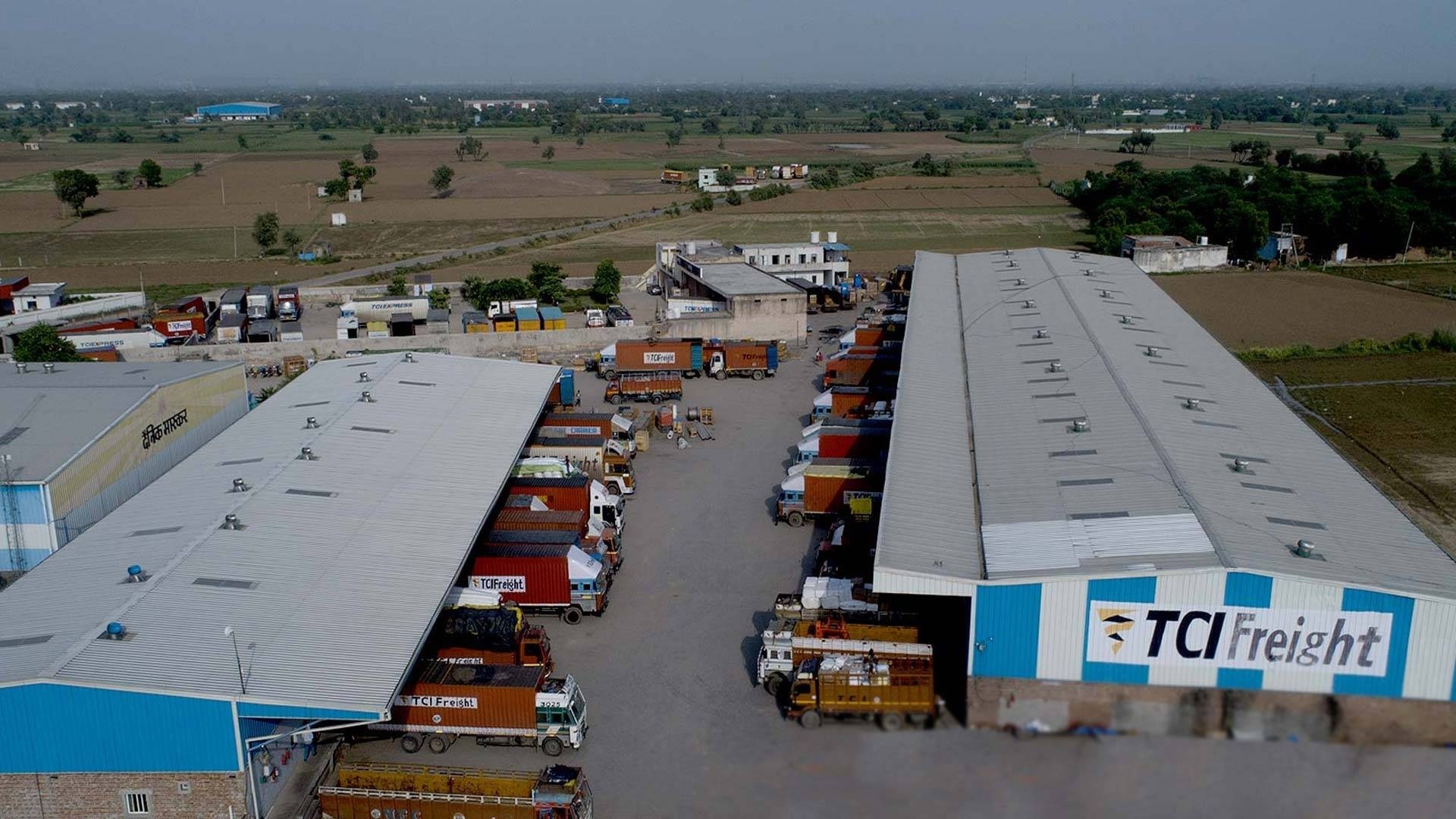
TCI Express began as a demerged unit of Transport Corporation of India (TCIL) in April 2016—the express division spun free. Ten years on, it runs 970 branches across 60,000 locations and operates a fleet of 5,500 containerised vehicles it does not own (asset-light model, the cover story).
The founding family—D. P. Agarwal, Chander Agarwal (MD), and various kin—hold 69.5% of equity. DIIs hold 9.39%, public 20.35%. The stock trades at ₹513 (as of June 8, 2026), giving a market cap of ₹1,974 crore.
Management framed FY26 as a “turning point”—Q3 and Q4 showed sequential improvement after two years of margin pressure. Q4 revenue rose 6% year-on-year to ₹328 crore; EBITDA margin hit 11.3%, up from 9.6% in Q3. But annualised, the year’s story is one of compression, not recovery.
The company faced headwinds: West Asian geopolitical tensions spiked airline fuel costs (ATF up ~50% in Q4); labour inflation hit harder than expected (100 basis points of cost); toll costs climbed. Customer stickiness to price hikes wavered—a sign pricing power had leaked.
3. Business Model: WTF Do They Even Do?
TCI Express ships stuff. B2B cargo, time-definite, across five modes: road (81–82% of revenue), rail, domestic air, international air, and customer-to-customer trucking (C2C). Add e-commerce express (refocused, low margin, now ~2.5% of mix). Services are containerised, GPS-tracked, and targeted at corporates (51% of FY25 revenue) and SMEs (49%).
The company owns zero trucks. It hires 5,500+ vehicles from vendors, pays per-trip or per-day, and scales capacity up or down. When demand falls (as it did in FY25–26), the company eats the utilisation loss because dumping capacity today means paying more to re-hire later. This is the asset-light trap: flexibility on the way up, stubborn overhead on the way down.
The network touches 60,000 locations through 970 company-owned branches (no franchises; management takes pride in this). It runs 28 sorting centres, two of which are automated: Taj Nagar in Delhi (15,000 packages/hour) and Chakan in Pune (11,000 packages/hour). Automation cuts sorting time by 40%, but ₹67 crore capex in FY26 on branches and automation suggests the company is investing to compete, not to innovate past competition.
End-market mix: automotive (OEM + components), pharma (cold chain growing), defence (new focus), solar and EV (macro tailwinds), textiles and engineering (the pain points). SME shipments historically anchored margins—lower volume, higher price. But SME stress in FY25–26 (47% vs 50% historical share) forced the company to take larger, lower-margin corporate deals to fill capacity.
4. Financials Overview
Figures are consolidated, in ₹ crore.
Metric
FY26
FY25
YoY
FY24
Revenue
1,237
1,208
+2.3%
1,254
EBITDA
146
125
+17%
187
EBITDA Margin
11.7%
10.4%
—
14.9%
PAT
81.4
85.8
-5.1%
131.7
PAT Margin
6.6%
7.1%
—
10.5%
EPS (full year)
₹21.2
₹22.4
—
₹34.3
Quarterly results (latest):
Q4 FY26 (Mar 31, 2026) revenue ₹328 crore, +6% YoY; EBITDA ₹31.5 crore at 9.6% margin; PAT ₹16 crore at 4.9% margin. Q4 results were inflated by one-time items (management did not quantify; concall was vague on this point).
Concall colour (Jun 2026):
Management cited “second consecutive quarter of positive momentum”—Q3-to-Q4 sequential improvement. But fiscal average margin compression wasn’t erased: FY26 EBITDA margin 11.7% vs FY24’s 14.9%. PAT margin 6.6% vs 10.5%. The year was a holding action, not a recovery.
Cost headwinds named: (1) air fuel (ATF) shock; (2) labour inflation “disproportionate”; (3) toll cost rises; (4) fleet underutilisation. Management guided FY27 EBITDA margin expansion to “100–150 basis points” on volume recovery and price passes. No numbers on magnitude of price hikes; guides were verbal.
5. Valuation Discussion: Fair Value Range (Educational Only)