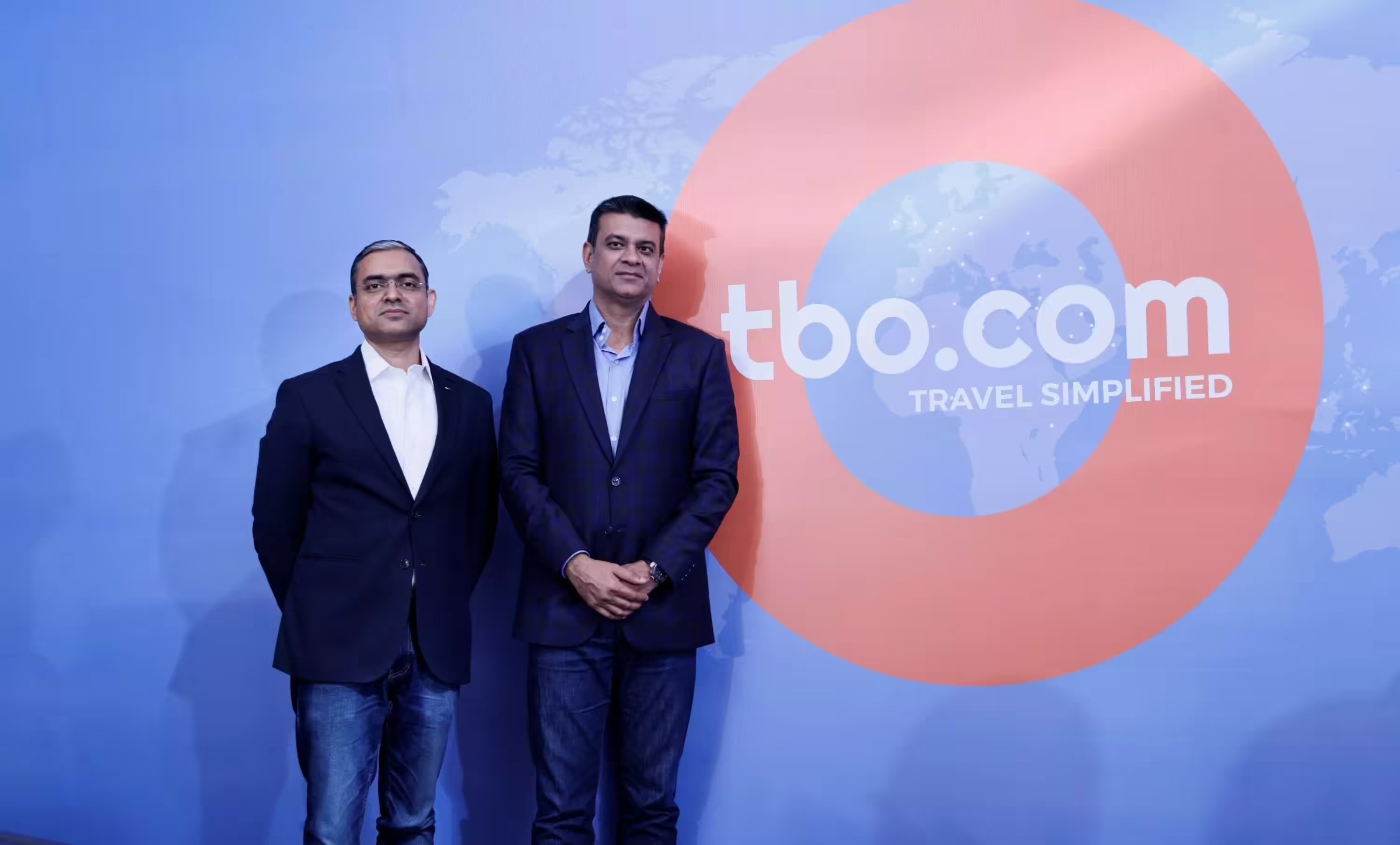
TBO Tek:
₹784 Cr Revenue. $125M Acquisition.
Now The Chaos Actually Begins.
They bought Classic Vacations for $125 million. Integration started in October 2025. Margins compressed. Take rates all over the place. Yet somehow, profitability grew 24%. The audacity. The confidence. The confusion.
When Your Travel Startup Accidentally Becomes a Global Beast
- 52-Week High / Low₹1,765 / ₹986
- Q3 FY26 Revenue (₹ Cr)784
- Q3 FY26 PAT (₹ Cr)58
- Q3 FY26 EPS (₹)4.94
- Annualised EPS (Q3×4)19.76
- Book Value128
- Price to Book9.69x
- Dividend Yield0.00%
- Debt / Equity0.52x
- Enterprise Value₹12,280 Cr
The B2B Travel Tech Company That Swallowed A Luxury Travel Broker 3x Its Size
TBO Tek Limited. Founded 2006. IATA ticketing agency. B2B online platform connecting travel agents to global airlines, hotels, and rail suppliers. Revenue model: 2–4% commission on air, 7–8% on hotels. Pretty straightforward, right?
Then in December 2024, they announced acquisition of Jumbonline (Spain). Six months later, October 2025, they acquired Classic Vacations LLC (USA) for USD 125 million — funded by a term loan of USD 70 million and internal cash. Classic Vacations is a US luxury travel broker with 10,000 annual active agents (vs TBO’s ~50,000 agents globally, but very different quality). Think: high-net-worth travel advisors booking bespoke luxury holidays. Commission rates north of 20%.
On paper, it’s brilliant. TBO gets access to North American high-value customers + consortium relationships (Virtuoso, Signature, Travel Leaders) + a completely different customer archetype. On paper, synergies everywhere. In reality? Integration chaos, accounting mismatch, margin compression, and a management team that is now simultaneously running two completely different business models under one roof.
Q3 FY26 was the first full quarter of Classic Vacations consolidation. CFO explicitly warned: “take rate is noisy due to CV’s structural economics.” Translation: our headline metrics are now garbage. Please ignore them. Look at Gross Profit instead. Don’t ask us what happens next quarter.
Two Companies. Two Business Models. One Balance Sheet.
TBO’s Core (Organic): B2B SaaS platform. ~50,000 travel agent customers globally. Earn 2–4% commission on airline sales, 6–8% on hotel sales. High volume, low take rate, negative working capital (collect upfront, pay suppliers over time). GTV of ~₹7.5 lakh crore in 9M FY26 but net revenues only 1.2–1.5% of GTV. Data centres in New Delhi, Dubai, Saudi Arabia. Publicly listed, heavily funded by FIIs (General Atlantic, Augusta, etc.).
Classic Vacations (Post-Acquisition): Luxury travel broker. 10,000 annual active travel advisors, but heavily consolidated — the top advisor is worth multiples of TBO’s average agent. Commission rates 15–25%. Works through consortiums (Virtuoso, Signature, Travel Leaders) and direct hotel relationships. Direct hotel sourcing at 80–85% (vs TBO’s 40%). Almost entirely North American + some international. Revenue recognition happens at check-in, not booking — because luxury itineraries take months to finalize. Margin profile: 19.6% Gross Profit-to-Adjusted EBITDA (vs TBO organic at 25.3%).
CFO’s guidance in Feb 2026: Anchor on Gross Profit as % of GTV, not take rate. Ignore headline take rates. EBITDA conversion is the real game. Translation: we messed up the acquisition accounting and now nothing reconciles.
Q3 FY26: The Numbers, Unraveled
Result type: Quarterly Results (Q3) | Q3 FY26 EPS: ₹4.94 | Annualised EPS (Q3×4): ₹19.76 | 9M FY26 EPS (Jan-Dec tracking): ~₹16.89
Source table
| Metric (₹ Cr) | Q3 FY26 Dec 2025 |
Q3 FY25 Dec 2024 |
Q2 FY26 Sep 2025 |
YoY % | QoQ % |
|---|---|---|---|---|---|
| Revenue | 784 | 422 | 568 | +85.8% | +38.0% |
| Operating Profit | 100 | 55 | 88 | +81.8% | +13.6% |
| OPM % | 13% | 13% | 16% | 0 bps | -300 bps |
| PAT | 54 | 50 | 68 | +8.0% | -20.6% |
| EPS (₹) | 4.94 | 4.60 | 6.22 | +7.4% | -20.6% |
What’s A Company Worth When Its Accounting is Mid-Integration?
Method 1: P/E Based
9M FY26 EPS ~₹16.89 (conservative). TTM EPS (annualized from Q3, adjusted for organic growth): ~₹18–20. Industry peer median P/E (travel/tourism): 40.8x. TBO premium/discount: 57.8x suggests 40% premium. Fair P/E band: 32x–48x (assuming gradual integration benefits).
Range: ₹540 – ₹960
Method 2: EV/EBITDA Based
9M FY26 Adj. EBITDA: ~₹327 Cr (TTM ~₹360 Cr). Current EV = ₹12,280 Cr → EV/EBITDA = 34.1x. Travel/tourism comps trade at 18x–28x. Premium justified only if synergies materialize fast (unlikely, given platform migration is “2–3 quarters away”). Conservative range: 20x–26x.
EV range (20x–26x): ₹7,200 Cr – ₹9,360 Cr → Per share (≈11 Cr shares):
Range: ₹655 – ₹853
Method 3: DCF (Integration Thesis)
Organic FCF: ~₹289 Cr (FY25). Conservative growth: 12% for 3 years, then 6%. CV adds ₹150–200 Cr post-integration (conservative). WACC: 12% (higher due to debt, higher risk).
→ Base Case: Terminal growth 4%, results ~₹8,200 Cr / share ₹745
→ Bull Case: Terminal growth 5%, results ~₹10,100 Cr / share ₹918
Range: ₹620 – ₹920
The Acquisition That Changed Everything (For Better or Worse)
🔴 The Elephant in the Room: FEMA Show-Cause Notice
April 8, 2025: RBI rejected TBO’s post-facto approval for alleged FEMA violation. Amount: ₹71.23 crore (~₹493.70 Mn). RBI declined compounding. Adjudication completed Nov 3, 2025. Outcome: TBD. This is not “maybe we pay a fine.” This is “RBI rejected our excuse and adjudication happened.” If the final order is harsh, TBO could face penalties, restrictions, or worse. Stock has priced this in as “resolved,” but it’s not. It’s just waiting for paperwork.
⚠️ Integration Chaos
- • Classic Vacations acquisition closed Oct 1, 2025 for USD 125 Mn
- • Term loan: USD 70 Mn; interest cost: ₹33 Cr/year (standalone)
- • Platform migration: “2–3 quarters away” (so Q4 FY26 at best)
- • Cost/synergy benefits: “probably H2 [FY26], not before that”
- • Two revenue recognition models cannot be harmonized
- • Management admits “take rate is noisy” — polite euphemism
✅ Silver Linings
- • TBO’s platform selling into CV: “already started, quite promising”
- • CV as TBO customer would rank “top 20” (internal purchase volume)
- • North America expansion thesis: double-digit growth over 3–4 years
- • Consortium access (Virtuoso, Signature) unlocks high-margin business
- • Air business: strong rebound, GP discipline maintained (not chasing volume)
How Debt-Free Became Debt-Loaded in One Acquisition
Source table
| Item (₹ Cr) | FY25 | Sep 2025 (Pre-CV) | Sep 2025 (Post-CV) |
|---|---|---|---|
| Total Assets | 6,206 | N/A | 7,272 |
| Net Worth (Eq + Reserves) | 1,194 | N/A | 1,386 |
| Borrowings | 214 | N/A | 719 |
| Other Liabilities | 4,798 | N/A | 5,167 |
| Total Liabilities | 6,206 | N/A | 7,272 |
Borrowings jumped from ₹214 Cr to ₹719 Cr (USD 70 Mn term loan). D/E ratio: 0.52x (vs 0.18x pre-acquisition). Still manageable, but leverage has entered the building.
Q3 FY26 interest: ₹15 Cr. Q3 FY25 interest: ₹5 Cr. CFO said this will stabilize, but FY26 will be a bloodbath compared to historical margins.
Book hotels/flights upfront, pay suppliers later. TBO organic is negative WC. CV is even more negative (3–6 month booking window). Net cash generation: ₹289 Cr (FY25), expected to grow. This is the only real positive.
Sab Number Game Hai, But OCF Is For Real
Source table
| Cash Flow (₹ Cr) | FY24 | FY25 | 9M FY26 |
|---|---|---|---|
| Operating CF | 226 | 289 | ~280 |
| Investing CF | -154 | -443 | -1,050 |
| Financing CF | 115 | 365 | +630 |
| Net Cash Flow | 188 | 210 | ~-140 |
Everything Looks Great Until You Read the Fine Print
Annual Trends — FY23 to 9M FY26
Source table
| Metric (₹ Cr) | FY24 | FY25 | 9M FY26 | 9M FY26 (TTM) |
|---|---|---|---|---|
| Revenue | 1,393 | 1,737 | 1,706 | 2,309 |
| Operating Profit | 267 | 285 | 263 | 327 |
| OPM % | 19% | 16% | 15% | 14% |
| PAT | 201 | 230 | 180 | 243 |
| EPS (₹) | 19.39 | 21.17 | 16.89 | 22.39 |
This is not high growth. This is inorganic growth masquerading as scale. Strip out CV, and you get 5–7% organic expansion in a market growing 3.5–4%. That’s beat, but nothing earth-shattering. The excitement is entirely pinned on CV’s future and synergies that are 2–3 quarters away.
TBO vs The Travel Economy (It’s Not Pretty)
Source table
| Company | Revenue (₹ Cr) | PAT (₹ Cr) | P/E | ROCE % | Div Yield |
|---|---|---|---|---|---|
| TBO Tek | 1,737 | 230 | 57.8x | 26.7% | 0% |
| IRCTC | 5,024 | 1,383 | 31.1x | 49.0% | 1.58% |
| BLS Intl. | 2,876 | 644 | 16.1x | 33.6% | 0.79% |
| Thomas Cook | 8,596 | 252 | 17.1x | 18.7% | 0.49% |
Sector median P/E: 40.8x. TBO at 57.8x: 41.5% premium. The premium is entirely justified if CV + organic = 15%+ CAGR. If not, this unwinds fast. IRCTC has better ROCE (49%), lower P/E (31x), and pays dividends. Thomas Cook has better revenue scale. BLS is boring and profitable. TBO is expensive and unprofitable on an absolute basis — it’s betting everything on M&A synergies.
Who Owns This Travel Empire?
- Promoters (LAP Travel PL, Gaurav Bhatnagar, Manish Dhingra)44.40%
- FIIs (General Atlantic, Augusta, TBO Korea, etc.)30.85%
- DIIs (Nippon Life, SBI Tech Opp., ICICI Prudential)19.01%
- Public + Others5.69%
Pledge: 0.00%. Shareholders: 38,109 (as of Dec 2025, up from 32,696 in June 2024). FIIs exiting: Augusta down from 13.47% to 5.05%. TBO Korea down from 7.62% to 2.86%. This is exit mode.
Founders: Ankush Nijhawan & Gaurav Bhatnagar
IIT Delhi grad + Boston University grad. Founded 2006. Bootstrapped initially. Took ₹400 Cr in IPO proceeds (May 2023). Now buying USD 125 Mn assets. This is founder-led empire building. Promoter holding steady at 44.4% — no dilution. Good sign of confidence or bad sign of ego. Probably both.
FIIs Quietly Exiting 👀
General Atlantic (investor since early days) holds 14.4%. But Augusta slashed from 13.47% to 5.05% in 18 months. TBO Korea reduced from 7.62% to 2.86%. Smart money is diversifying out. Why? Execution risk on integration is spooking them. Or they’re just rebalancing. Either way, the exit is real.
All Praise on Paper, All Trouble Under the Surface
✅ Clean Governance (On Paper)
- ✓ Independent board: 4 out of board members
- ✓ No promoter pledge (0.00%)
- ✓ Concalls on schedule (Feb 2026 done, Feb 28 CHRO resigned)
- ✓ BRSR filed (ESG reporting done)
- ✓ Rating agency: CARE A-; Stable (reaffirmed Dec 2025)
- ✓ Interest coverage: 9.11x (debt is manageable)
⚠️ Execution Red Flags
- ⚠ FEMA show-cause pending (₹71 Cr). Adjudication done, outcome TBD.
- ⚠ Management churn: CHRO resigned Feb 28, 2026 (personal reasons)
- ⚠ Registered office shifted to Aerocity (March 1, 2026) — restructuring signal
- ⚠ Anil Berera, President-Strategy, retired Sept 30, 2025
- ⚠ No clear successor plan for top strategy role post-acquisition
- ⚠ Accounting mismatch between CV & organic still unresolved
The Travel Tech Wars: Everyone’s Buying, Nobody Knows Why
Global online travel market: $1.7 trillion. India’s share: ~$30 billion (and growing 12–15% CAGR). Fragmented. Highly competitive. MakeMyTrip, Expedia dominate B2C. But B2B is different — less visible, but where the real money is.
🌐 The B2B Play: TBO’s Real Moat
TBO operates in B2B travel tech — connecting agents to suppliers at scale. GTV: ₹7.5 lakh crore in 9M FY26. That’s the firepower. The platform doesn’t book vacations; it powers 50,000 agents who do. This is a logistics play disguised as tech. Only 3–4 credible players globally. TBO is the Indian king. Margins are thin (2–4% on air, 6–8% on hotels), but volume is nuclear.
🎯 Classic Vacations: The Luxury Bet
CV flips the model. Ultra-high-net-worth customers. Bespoke luxury itineraries. Commission rates 15–25%. Lower volume, higher margins. Only 10,000 annual active agents, but each worth 10–50x of a TBO agent. The thesis: combine TBO’s B2B platform scale + CV’s luxury customer access = dominate global high-end travel. On paper, genius. In execution? Ask me in 24 months.
⚡ The Headwind: Leisure Traveller Is Broke
Post-pandemic, travel budgets are still recovering in developed markets. Inflation eating into disposable incomes. Corporate travel rebounding faster than leisure. TBO’s organic growth (5–7%) is slower than sector growth (12–15%) — they’re losing market share on price in the airline segment. CV is recession-resistant (rich people still vacation), but smaller TAM.
🚀 The Tailwind: Travel Insurance, Data Centres, Ancillaries
Management mentioned travel insurance as upside. Data centres (immersion cooling fluids for servers) as a long-term play. Ancillary revenue (baggage, seat selection, hotel upsells) growing 15–20% year-on-year. If TBO can migrate CV onto its platform and cross-sell ancillaries, margins could improve 200–300 bps. That’s the real upside hidden in the “integration story.”
Competitive dynamics: MakeMyTrip is bigger but focused on B2C (retail). Expedia is global but slow-moving. Web Travel Group (Australia), HBX (Spain) are smaller B2B players. TBO + CV combined is the only B2B player with both enterprise-scale (TBO) + luxury reach (CV). Monopoly potential, but only if integration succeeds.
Regulatory tailwinds: FEMA relaxation in forex management (show-cause issue aside) could help. GST rate stabilisation at 5% on travel services is settled. No surprises expected. FEMA adjudication is the only real sword of Damocles hanging.
The Integration Bet
TBO Tek is not a normal stock evaluation. It’s a binary bet: (a) management executes the Classic Vacations integration flawlessly, (b) synergies materialise in 2–3 quarters, (c) FEMA adjudication doesn’t blow up, (d) North America strategy delivers double-digit growth. If all four happen, fair value could be ₹1,500–1,800. If any breaks, fair value is ₹600–800.
Q3 FY26 Execution: Revenue +85.8% YoY, but 80%+ is inorganic (CV). Organic growth barely 5–7%. Margins compressed 300 bps (OPM 16% to 13%). Profitability +8% despite revenue growing 5x the pace. Why? Interest expense + integration costs. This is acquisition season, not earnings season.
The Integration: Platform migration is “2–3 quarters away.” Cost/synergy benefits come “probably in H2 [FY26], not before that.” Translation: Q4 FY26 or Q1/Q2 FY27. No near-term catalysts. The stock is priced for success, but success is 6–9 months away. Lots of time for things to go wrong.
The Valuation: Fair value ₹620–960. CMP ₹1,237 implies 28.8%–99.5% upside is already baked in. This premium is exclusively for the integration thesis. If integration takes longer than expected, or ROCE improvements are marginal, stock corrects 30–40% easily. This is a tournament stock — high risk, high reward, binary outcome.
Historical Context: Stock IPO’d at ₹440 in May 2023. Traded up to ₹1,765 (52-week high). Now at ₹1,237. FIIs have been quietly exiting (Augusta, TBO Korea). This might be telling you something.
✓ Strengths
- B2B travel platform with 50,000+ agent customers globally
- GTV scale: ₹7.5 lakh crore (9M FY26) — nuclear
- Negative working capital = free cash generation
- Founders own 44.4% — aligned incentives
- Classic Vacations access: 10,000 high-value HNWI agents
- Consortium relationships (Virtuoso, Signature, Travel Leaders)
✗ Weaknesses
- Organic growth: 5–7% (lagging industry 12–15%)
- Debt jumped 236%: ₹214 Cr → ₹719 Cr
- OPM compressed 500 bps: 19% → 14%
- No dividends, no buybacks (all cash reinvested in M&A)
- Integration risk: 2–3 quarters to full benefit realization
- Accounting mismatch: CV & organic models don’t reconcile
→ Opportunities
- CV platform migration: Cost synergies + TBO’s growth playbook
- Cross-sell: TBO → CV and CV → TBO revenue streams
- Ancillary monetization: Baggage, seat selection, hotel upsells
- North America expansion: High-double-digit growth potential
- Travel insurance & immersion cooling fluids: New revenue pools
- Geographic expansion: Middle East + EU consortium access
⚡ Threats
- FEMA adjudication: Outcome TBD (₹71 Cr show-cause)
- Integration delays: If 3 quarters → 5 quarters, valuation unwinds
- Macro slowdown in luxury travel (recession in developed markets)
- FII exit trend: Smart money reducing exposure
- Forex volatility: 60% of revenue is international
- Management churn: CHRO, President-Strategy both exited recently
TBO Tek is a company mid-pivot. It’s betting the farm on integrating a business 3x more complex than its own.
If you’re the type who loves binary outcomes, high execution risk, and the possibility of 50%+ upside if everything goes right — this is your stock. If you prefer steady compounder with clear visibility on earnings — look elsewhere. The stock is priced for perfection. Perfection in M&A integration happens maybe 30% of the time.