TBI Corn Ltd, FY26: Capacity Built, Cash Turns Positive, Margins In A Tight Band
Spotted a factual error — a wrong number, date, or fact? Tell us and we will check the source.
General information and entertainment, not investment advice. The author is not a SEBI-registered adviser or research analyst. No recommendation, no promised returns. Markets carry risk including loss of capital. Figures may not be current. Consult a registered adviser before acting.
1. At a Glance
A dry corn miller that built 390 TPD across three plants and flipped operating cash flow from minus ₹30 crore to plus ₹33 crore—yet trades at 6.48× earnings while peers sit at 16–17×.
The paradox: volume grew 44% YoY, net profit 35%, but operating margin stayed pinned at 11% because raw material volatility and customer power keep the ceiling low. Management said it plainly on the June call: “we don’t expect margins to increase much.”
The stock hit ₹131 in late 2024 (110% premium on a June ₹62 IPO). Now at ₹65.5, it’s down 47% in 12 months.
Two things to watch: can a 120-TPD export-focused SEZ unit in Mumbai unlock premium-market access, and does 18% ROCE justify the multiple when the playbook screams “commodity margin trap”?
2. Introduction
TBI Corn was founded in 2000 as a partnership (The Best India), converted to a closely held public company in 2022, and hit the NSE SME board in June 2024 with a ₹62 IPO price. The founder-promoter, Yogesh Rajhans, owns 54.5% and has two decades of corn-trading and sourcing know-how.
For years it was a Sangli-only player grinding maize into grits, meal, and flakes for snack/namkeen/animal feed makers. That changed fast. In FY25, it added a second 120-TPD unit in Sangli. In FY26, it operationalized a third 80-TPD unit in Malkapur (Buldhana, Maharashtra). The final 40 TPD came online at March-end 2026—so FY27 gets the full 390-TPD run rate.
In parallel, it set up a separate 100% export-oriented unit in JNPA SEZ, Mumbai, running a ₹32-crore Bühler-designed automated mill. That entity, TBI Maize Processors Pvt Ltd., began production in late FY26 but contributed only ₹12 crore (three months’ worth) because of a staggered operationalization. Management plans to fold it back into the listed company via share swap in FY27.
The balance sheet? Clean. Debt ₹69 crore on a ₹119 crore market cap; net worth ₹102 crore. Operating cash flow swung to positive ₹33.41 crore after three years of burns. That matters.
3. Business Model: WTF Do They Even Do?
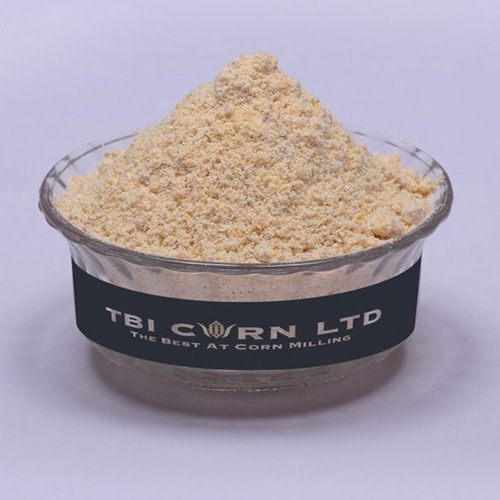
TBI is a dry miller, not a wet miller. It takes raw maize (37,000–40,000 MT/year sourced from Karnataka/Maharashtra), runs it through destoners, polishers, cookers, and flakers, and spits out customized grits/meal/flakes for large food companies.
The product list looks simple—corn grits (33% of FY26 revenue), corn bran (23%), broken maize (14%)—but the execution is relentless on customization. Customers specify granule size to 0.1mm. Some want “poha-quality thick flakes”; others want namkeen-grade thin ones. TBI invests in unit ops: destoners, magnetic separators, degermers, polishers, imported gyro sorters. The new Sangli mill is “semi-automated” with hygiene controls because large customers (cereal makers, snack producers) audit supply chains monthly.
The sourcing game is the real moat. Rajhans built a network across four-five states—Karnataka, Maharashtra, Madhya Pradesh, UP, Telangana. On the June call, he explained how the company procured at ₹20–24/MT in advance and supplied customers at flat rates even when ethanol-driven demand pushed maize to ₹28–29. Inventory buffers the customer from volatility; that reliability is worth a margin point or two.
Direct procurement jumped from 12% two years ago to 25% in FY26. Benefit: avoids broker commissions (1.0–1.2% savings). But management flagged that 25% is near a ceiling—contract farming faces enforcement risk and farmer incentive-shifting if prices spike.
Export is structurally not margin-favourable yet. GCC (Gulf Cooperation Council) buyers know India pricing because purchase managers are Indian expats; they benchmark aggressively. Premium upside is locked behind long audit cycles (3–6 months) in Japan/Korea markets, pending the Mumbai unit’s Full Occupancy Certificate from JNPA.
Corn germ (the oil-bearing fraction) is the emerging value lever. Extraction improved from 1–2% to 4–4.5% in FY26 after three years of R&D. FY27 target: 5.5%. Two-year target: 6–7%. Each 1% improvement yields ~25 bps of margin uplift vs. selling germ into cattle feed.
4. Financials Overview
Figures consolidated, in ₹ crore. Result type: Annual.
Metric
FY24
FY25
FY26
YoY%
Revenue
157.75
211.04
303.34
43.7
EBITDA
17.76
23.74
34.82
46.7
PAT
10.10
13.63
18.36
34.6
EPS (₹)
7.55
7.51
10.11
34.6
OPM (%)
11.3
11.3
11.5
—
Concall context (June 2026):
On the June call, management reported that the incremental 40 TPD Malkapur unit came online at FY-end, not mid-quarter, so benefit deferred to FY27. Volume growth for full FY26 was 44% YoY, but utilization sat at 72% (calculated on the then-operational 350 TPD, not the full 390). Sangli-I running at 96–97%, Sangli-II still ramping, Malkapur at 80 TPD for part of the year.
EBITDA margin stayed within 9–13.5% because of (a) depreciation step-up (new assets), (b) packaging cost inflation (PP bags), and (c) export volumes sitting in the separate entity (non-consolidation until swap). Management’s language was stark: “percentage margins kind of remain constant” because customer pricing formulas (raw material + processing cost + fixed margin %) lock the band.
Reported EPS of ₹10.11 for FY26 reflects the full-year weighted run, but the company issued stock in June 2024 (IPO), so share dilution occurred mid-year.
5. Market Expectations & Historical Multiples
This section describes how the market is currently pricing the company and how that compares with its own history and peer group. It is descriptive, not predictive.