1. At a Glance
Tata Chemicals Ltd — the OG of India’s inorganic chemistry game and part-time global soda ash influencer — has once again reminded Dalal Street that chemistry doesn’t always equal profits. In Q2 FY26, consolidated revenue stood at ₹ 3,877 crore, down 3% QoQ, while PAT nosedived 49% QoQ to ₹ 98 crore. EBITDA came in at ₹ 537 crore, implying an EBITDA margin of 13.9%, a level that makes soda bubbles look more energetic than the balance sheet.
At the current market price of ₹ 891, the company trades at a P/E of 69.6 x and EV/EBITDA ~ 12.1 x — valuations that would make even startup founders blush. Market cap hovers near ₹ 22,690 crore, and with a ROE of 1.2%, shareholders might be forgiven for asking: “Are we investing in chemistry or charity?”
Still, the Tata halo glows strong; the dividend yield of 1.24% is the lollipop offered to soothe the burn.
2. Introduction
Once upon a time (1939 to be exact), Tata Chemicals started making soda ash before soda ash became cool. Fast-forward 86 years, and it’s now the third-largest soda ash producer globally, with footprints across India, North America, Europe, and Africa. If soda ash had an Olympics, Tata Chemicals would probably win bronze, while blaming rising energy costs for missing gold.
But FY26 has been more “Breaking Bad” than “Breaking Records.” Margins are under pressure, profits have turned skinnier than a diet biscuit, and investors who once imagined a “green chemistry play” are now wondering whether the only thing green left is the Tata logo.
Let’s not forget — this is the company that once gave us Rallis India Ltd, a pesticide powerhouse, and the world’s most serious commitment to turning salt, sand, and soda into shareholder hope. Yet, the story now seems to be one of cyclical hangovers: inflation, global oversupply, and weak realisations.
The Q2 FY26 results read like a sad chemistry report card — every element is still present, but the reaction yields only half the expected product.
3. Business Model – WTF Do They Even Do?
Tata Chemicals basically takes earth’s most boring minerals — salt, limestone, and soda — and somehow makes them sexy enough for a ₹ 22,000-crore market cap.
a) Basic Chemistry
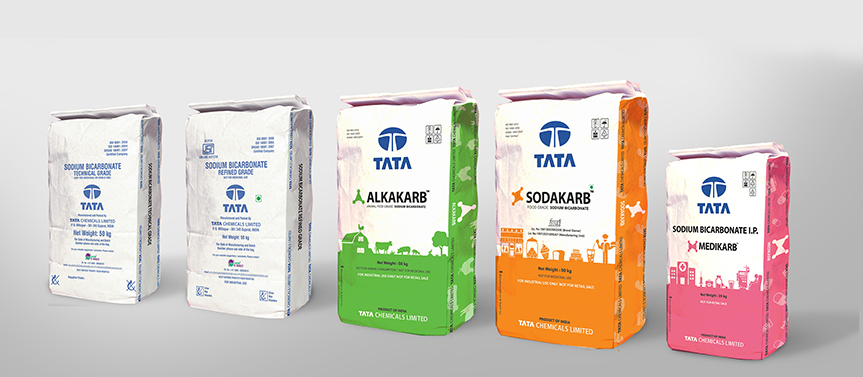
This is the bread-and-butter, or shall we say soda-and-salt, business. It accounts for ~77% of revenues and includes soda ash, sodium bicarbonate, cement, and salt. Think of it as the inorganic equivalent of a desi thali — everything looks dull, but you can’t live without it.
b) Specialty Chemistry
The “smart kid” segment — agro-sciences (via Rallis India), nutritional sciences, and material sciences (silica for tyres and rubbers). It’s the company’s long-term bet to escape the soda ash commodity trap.