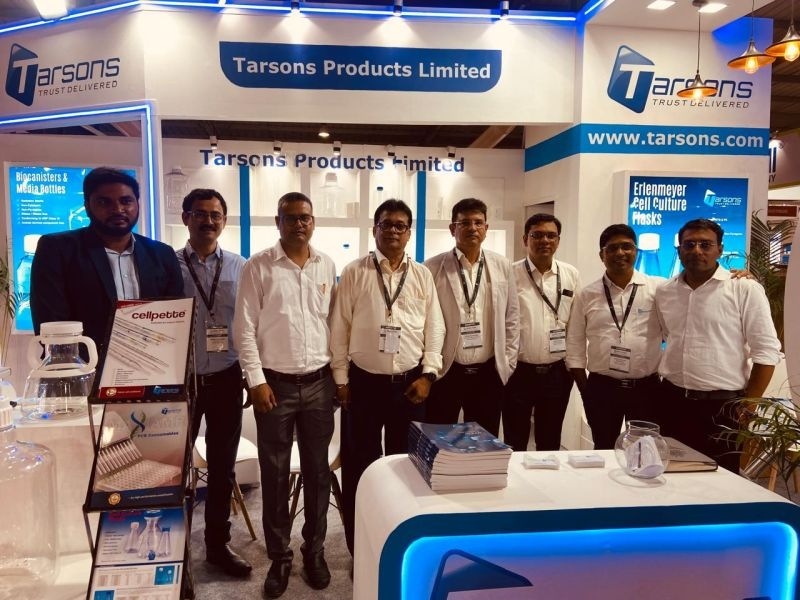
1. At a Glance
Tarsons Products Ltd is what happens when lab coats meet balance sheets. A ₹1,170 crore company selling pipette tips, petri dishes, centrifuge tubes and other “small plastic things that scientists can’t live without”, yet the stock has managed to fall ~40% in a year and still trade at 55× earnings. That’s not a typo.
Current price sits around ₹219, far away from the ₹458 high, with the market clearly asking: “Boss, growth kidhar hai?” Revenue is growing in single digits, profits are shrinking, debt has ballooned to ₹396 crore, and ROCE has collapsed from historical highs to 6.9%.
Yet—plot twist—operating margins are still a juicy ~29%, the company is adding new clean rooms, radiation sterilisation facilities, cell culture products, and expanding exports via a Germany-based acquisition. So are we looking at a temporarily messy capex phase… or a permanently dented return profile?
If you like companies where the products are boring, but the financials are dramatic, welcome. This one’s for you.
2. Introduction
Tarsons is not a startup. It’s not a fly-by-night SME either. Founded decades ago, it quietly became one of India’s largest indigenous labware manufacturers, supplying everyone from pharma giants to diagnostic labs to academic institutes. If India is doing science in a lab, chances are some Tarsons plastic is lying around.
The business model is simple: high-volume, repeat-use consumables, moderate pricing power, and sticky customers. Once a lab standardises on your pipette tips or centrifuge tubes, switching is annoying. That’s the theory.
The practice, however, has been less romantic over the last few years. Post-IPO, Tarsons went into aggressive expansion mode—new plants, new categories, overseas acquisitions, and debt-funded growth. Revenues grew, but profits said “main thak gaya hoon”.
So today, Tarsons sits at an awkward crossroads:
- Too expensive to be called a beaten-down value stock
- Too slow-growing (currently) to justify premium valuations
- Too strategic to ignore entirely
Basically, it’s that student who used to top the class, now scoring average marks, but promising they’re “preparing seriously for next semester”. Do we trust the comeback arc?
3. Business Model – WTF
Do They Even Do?
Imagine a laboratory without plasticware. No pipette tips, no petri dishes, no centrifuge tubes. Chaos. Scientists crying. Experiments cancelled. Grants wasted.
Tarsons sells that plasticware.
Product Buckets
- Consumables (55%): centrifuge ware, cryogenic ware, liquid handling, PCR consumables, petri dishes, transfer pipettes. High repeat usage, decent margins.
- Reusables (40%): bottles, carboys, beakers, measuring cylinders, tube racks. Longer replacement cycle, but still steady demand.
- Others (5%): benchtop instruments like vortex shakers and centrifuges. Low share, but higher ticket size.
Over 1,700 SKUs, 300+ products. This is not a one-product risk story. It’s more like a plastic buffet.
Branded vs ODM
- Branded: 35%
- ODM (private label): 65%
ODM is volume-friendly but margin-slim. Branded is margin-rich but harder to scale globally. Tarsons wants to push branded exports in emerging markets and remain ODM-heavy in developed markets. Sensible… but execution is everything.
Does this sound like a moat? Yes. Does it automatically convert to high ROCE? Apparently not.
4. Financials Overview
Quarterly Comparison (Q3 FY26)
| Metric | Latest Qtr | YoY Qtr | Prev Qtr | YoY % | QoQ % |
|---|---|---|---|---|---|
| Revenue (₹ Cr) | 107.9 | 95.7 | 102.3 | ~12.8% | ~5.4% |
| EBITDA (₹ Cr) | 31.5 | 29.6 | 27.5 | ~6.4% | ~14.5% |
| PAT (₹ Cr) | 5.0 | 4.4 | 3.3 | ~12.9% | ~51% |
| EPS (₹) | 0.95 | 0.83 | 0.62 | ~14% | ~53% |
Yes, quarterly numbers look “okay-ish”. Growth is back in double digits. But zoom out.
Full-Year / TTM Reality Check
- Sales: ₹414 Cr
- PAT: ₹21.2 Cr
- EPS (TTM): ₹3.82
At ₹219, that’s a 55× trailing multiple. For a company with profit CAGR of -34% over 3 years.
Question for you: Would you pay 55×
