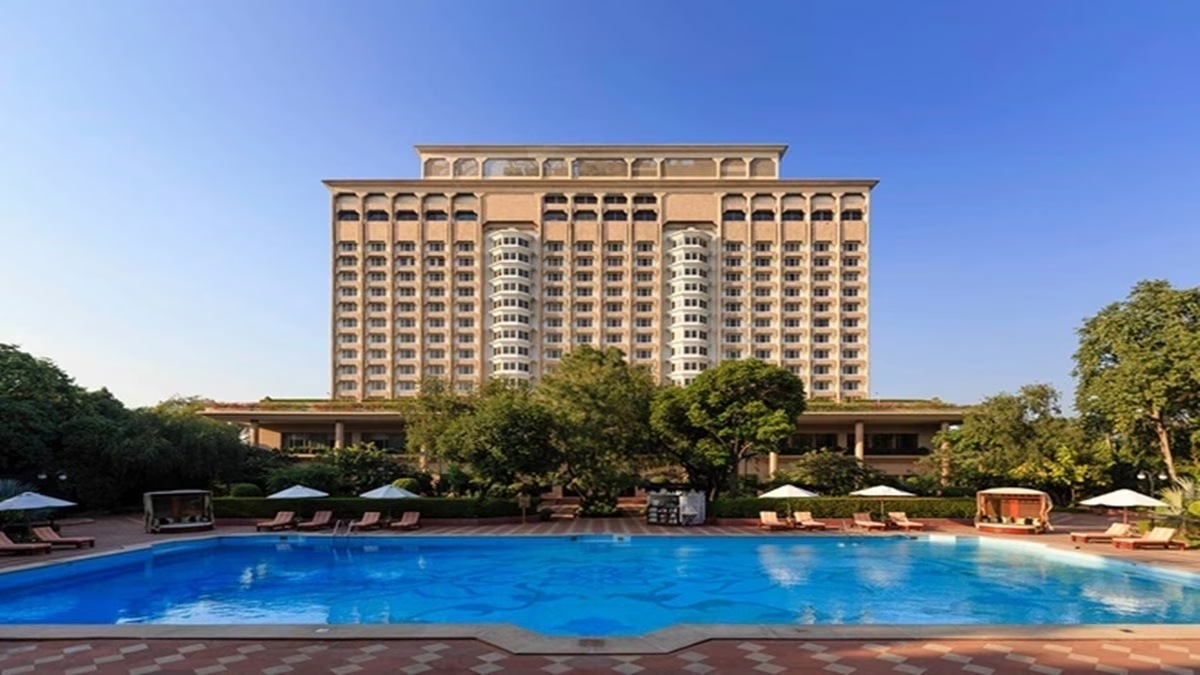
TajGVK Hotels — six premium properties, Hyderabad’s favourite luxury address, and a stock that has been politely losing 27% of investors’ money over the last three months while simultaneously posting quarterly profits. Q3 FY26 PAT came in at ₹37 crore on revenues of ₹136 crore, occupancy is a stunning 82%, and everything looks peachy — until you read the December 2025 announcements and realise IHCL (Tata’s crown jewel hotel chain) just sold its entire 25.52% stake in TajGVK, walked out of the board, terminated the Taj brand license, and the GVK-Bhupal family immediately pledged 30% of their holding for a ₹250 crore loan. All between Christmas and New Year. The festive season hit differently at Taj Krishna this year.
Imagine you’re a shareholder in a perfectly decent hotel chain — occupancy running at 82%, rooms charging ₹9,633 average rate, and profits growing nicely. Life is good. You’re mentally spending the dividends. And then December 2025 happened.
In the space of two weeks, the Tata group (IHCL) decided it wanted absolutely nothing to do with TajGVK anymore. They sold 25.52% stake to Shalini Bhupal of the GVK family at ₹370 per share. Tata directors stepped down from the board. The Taj brand licensing agreement — the entire reason this company gets to charge ₹9,000 per night — was terminated. The GVK-Bhupal family, now fully in charge, immediately pledged 30% of their shareholding to 360 ONE PRIME for a ₹250 crore term loan.
So let’s recap: Brand gone. Tata gone. Pledge at 30%. Stock down 27% in three months.
To be fair to the management, Q3 FY26 results are actually decent — revenues up 7%, PAT at ₹37 crore, and there’s a new Bengaluru hotel coming. India Ratings even upgraded TajGVK to IND A+ in December 2025. But as every hotel guest knows, sometimes the lobby looks spectacular and the pipes in room 407 are having a crisis.
The real twist within the twist: after selling its 25.52% stake, IHCL simultaneously signed a long-term management agreement with TajGVK. So they sold the stake, exited the board, terminated the brand license — and then said they’ll still manage the hotels. Classic move: emotionally unavailable but professionally present. Very Hyderabad corporate romance.
03 — Business Model: WTF Do They Even Do?
TajGVK owns and operates six premium hotel properties — total approximately 1,240 rooms — under brands like Taj and Vivanta, and now, confusingly, soon-to-be-renamed-something properties. Their real estate includes:
The Hyderabad Cluster (the crown jewels): Taj Krishna, Taj Deccan, and Vivanta Begumpet — 601 rooms in total. This is the core revenue engine. Hyderabad’s tech boom plus political events plus wedding season equals near-permanent high occupancy. The company holds about 10% of Hyderabad’s premium room inventory. Not technically a monopoly, but close enough to charge like one.
The outstation properties: Taj Chandigarh (149 rooms), Taj Club House Chennai (220 rooms), and Taj Santacruz Mumbai through a JV with approximately 49% stake (279 rooms). The Mumbai property is the wild card — once the 51% acquisition of the JV completes, it becomes a subsidiary and the numbers consolidate more cleanly. More rooms, more revenue, more depreciation. The full hotel lifecycle experience.
Revenue mix is refreshingly simple: 97% from rooms, food, and F&B. 2% memberships. 1% shop rentals. No crypto treasury. No metaverse hotel rooms. No NFT check-in experiences. Just beds, butlers, and biryani.
The Bengaluru wildcard: a 253-room hotel in Yelahanka, Bengaluru is under construction at approximately ₹326 crore project cost. Federal Bank is financing ₹200 crore. As of FY24, 75% of work was complete, with opening expected in Q4 FY26. When this opens, TajGVK goes from 6 to 7 properties and from roughly 1,240 to 1,493 rooms — a 20% room capacity jump. That is either going to look very smart or very expensive depending on when exactly “Q4 FY26” means in Indian construction time.
Why did PAT fall YoY when revenue actually grew? Q3 FY25 was a freak quarter — OPM hit 39%, the hospitality equivalent of finding a parking spot in Banjara Hills on a Saturday evening. Q3 FY26’s OPM at 31% is perfectly normal. Expenses jumped to ₹94 crore versus ₹77 crore in the same quarter last year — higher staff costs, F&B costs, and renovation-related overheads all ganged up at once.
The good news: QoQ, both revenue and PAT improved significantly. Revenue grew 27% and PAT grew 32% over the previous quarter. The business is not sick. It just had a tough comparison because last year was unsustainably good. Like scoring 95 in an exam and then getting 80 the next time — the 80 is fine, but your parents are still disappointed.
05 — Valuation: Fair Value Range
Method 1: P/E Based
TTM EPS = ₹19.98. Industry P/E = 26.8x. TajGVK is a smaller, Hyderabad-concentrated, brand-transitioning company. A 30–40% discount to sector is justified given concentration risk and current corporate uncertainty.
Reasonable P/E band: 16x to 20x
→ 16 × ₹19.98 = ₹319.6 → 20 × ₹19.98 = ₹399.6
P/E Range: ₹320 – ₹400
Method 2: EV/EBITDA
Enterprise Value = ₹1,965 Cr. TTM Operating Profit = ₹141 Cr. Current EV/EBITDA = 13.9x. Sector comparables like EIH and Chalet trade at 15x–25x. With brand uncertainty, a 13x–17x range is fair.
→ At 13x EBITDA: implied equity value ~₹270 per share → At 17x EBITDA: implied equity value ~₹370 per share
EV/EBITDA Range: ₹270 – ₹370
Method 3: Price-to-Book Value
Book Value = ₹110. Current P/BV = 2.84x. For a hotel company with 19.5% ROE and substantial hard assets, 2.5x–3.5x P/BV is reasonable, especially with a new property about to come online.
→ 2.5 × ₹110 = ₹275 → 3.5 × ₹110 = ₹385
P/BV Range: ₹275 – ₹385
All three methods converge around ₹270–₹400. At CMP ₹313, the stock sits roughly in the middle of the fair value range — neither screaming cheap nor obviously overpriced. The brand transition risk is the joker in the deck. If the new brand resonates and Bengaluru opens profitably, the upper end becomes achievable. If brand transition causes ARR to fall meaningfully, the