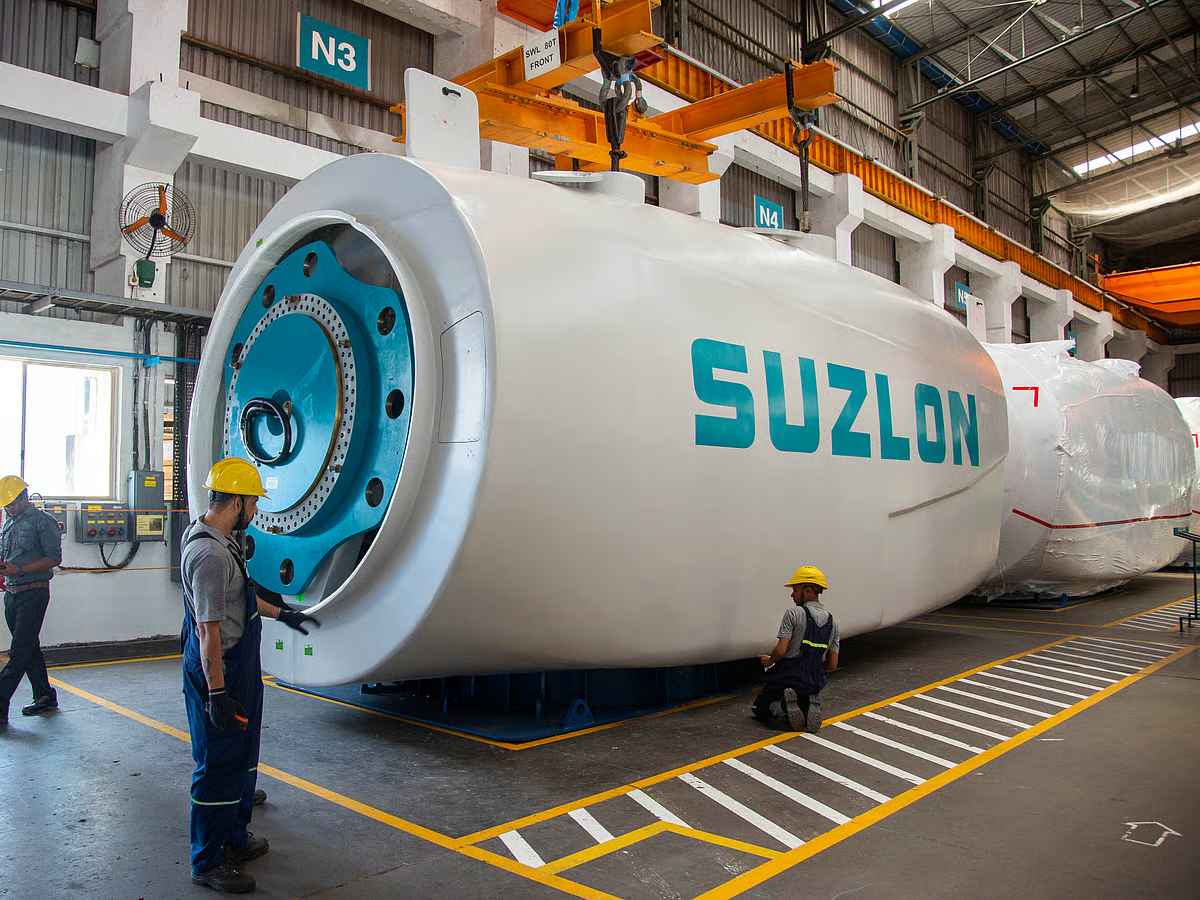
Suzlon Energy, once the poster child of Indian corporate “how to destroy wealth in one decade”, has staged a comeback that even Bollywood scriptwriters would reject as “too filmy.” From 95% wealth destruction in 2008 to now commanding a ₹79,000+ Cr market cap, Suzlon has become the Ranbir Kapoor of Dalal Street—down, broken, but back with a hit. The company is riding the renewable energy wave with wind turbines taller than most Delhi skyscrapers and an order book fatter than Ambani’s wedding guest list.
2. Introduction
Suzlon is India’s OG wind energy company. Incorporated in 1995, it went global faster than any chaiwala opening franchises—buying companies in Europe at the peak of the 2008 credit bubble. Result? Debt so high it could compete with Mount Everest. Market cap evaporated, Tulsi Tanti (founder) became the poster boy of “too big, too soon,” and the company was practically written off by 2013.
But Suzlon didn’t just survive—it pulled a phoenix act. Debt restructuring, rights issues, asset sales, and that sweet, sweet renewable energy hype gave it another shot at glory. Today, it controls over 20 GW of installed capacity worldwide, commands a 30%+ market share in India, and somehow managed to reduce its debt to a laughable ₹323 Cr (down from ₹17,000 Cr a decade ago).
So the question is—has Suzlon really transformed into a disciplined renewable giant, or is it just a well-rehearsed encore of its old drama?
3. Business Model – WTF Do They Even Do?
Suzlon is a vertically integrated wind energy solutions provider. Translation: they make everything from rotor blades to towers, install them, and then babysit those turbines for 20 years under O&M contracts.
Products: Latest S144 and S133 turbines (2.6 MW to 3.x MW range) optimized for India’s “low wind regimes”—basically areas where even ceiling fans rotate faster.
Services: Full turnkey EPC—site selection, execution, power evacuation, and lifetime maintenance. Think of them as the IKEA of wind power: they sell, deliver, install, and assemble.
Revenue Split (FY22): 73% from turbine sales, 27% from O&M services. That O&M is the recurring Netflix subscription of their business model—boring but steady.
Clients: A who’s-who of corporate India—Adani, Tata, NTPC, Vedanta, ITC, SBI, and even ONGC (because why not burn oil and build wind farms at the same time).
Suzlon’s moat? Deep EPC expertise, huge installed base, and “atma-nirbhar” production of every single part. Its risk? If turbine tech changes rapidly, they could go from wind champion to wind chime.
4. Financials Overview
Metric
Latest Qtr (Q1 FY26)
YoY Qtr (Q1 FY25)
Prev Qtr (Q4 FY25)
YoY %
QoQ %
Revenue
₹3,117 Cr
₹2,013 Cr
₹3,790 Cr
54.9%
-17.7%
EBITDA
₹599 Cr
₹370 Cr
₹693 Cr
62.0%
-13.6%
PAT
₹324 Cr
₹302 Cr
₹1,181 Cr*
7.3%
-72.6%
EPS (₹)
0.95
0.22
3.60
332%
-73.6%
*Q4 FY25 PAT was boosted by one-offs.
Commentary: Suzlon’s quarterly revenue growth looks like an IPL team scoreboard—volatile but exciting. PAT in Q1 looks modest compared to last quarter, but strip out the one-offs and it’s still a steady 7% YoY bump. EPS annualized is ₹3.8, giving a P/E of ~15x on normalized earnings, but the stock trades at 38x reported EPS—Dalal Street clearly loves a good comeback story more than rational math.
DCF (simplified): Assume FCF growth 15% CAGR for 5 years, WACC 10%, terminal growth 3%. Fair value ~₹70–110.
Fair Value Range:₹45 – ₹125 (educational purposes only). Disclaimer: This is not investment advice. It’s math mixed with sarcasm.
6. What’s Cooking – News, Triggers, Drama
Order Book Binge: Suzlon bagged NTPC (378 MW), Torrent Power (300 MW), Serentica (204 MW), and Zelestra (381 MW). Order book now >5.5 GW—enough turbines to power half of Tamil Nadu’s ceiling fans.
Management Shuffle: CEO Ashwani Kumar quit in 2023, replaced by J.P. Chalasani. Founder Tulsi Tanti passed away in 2022,