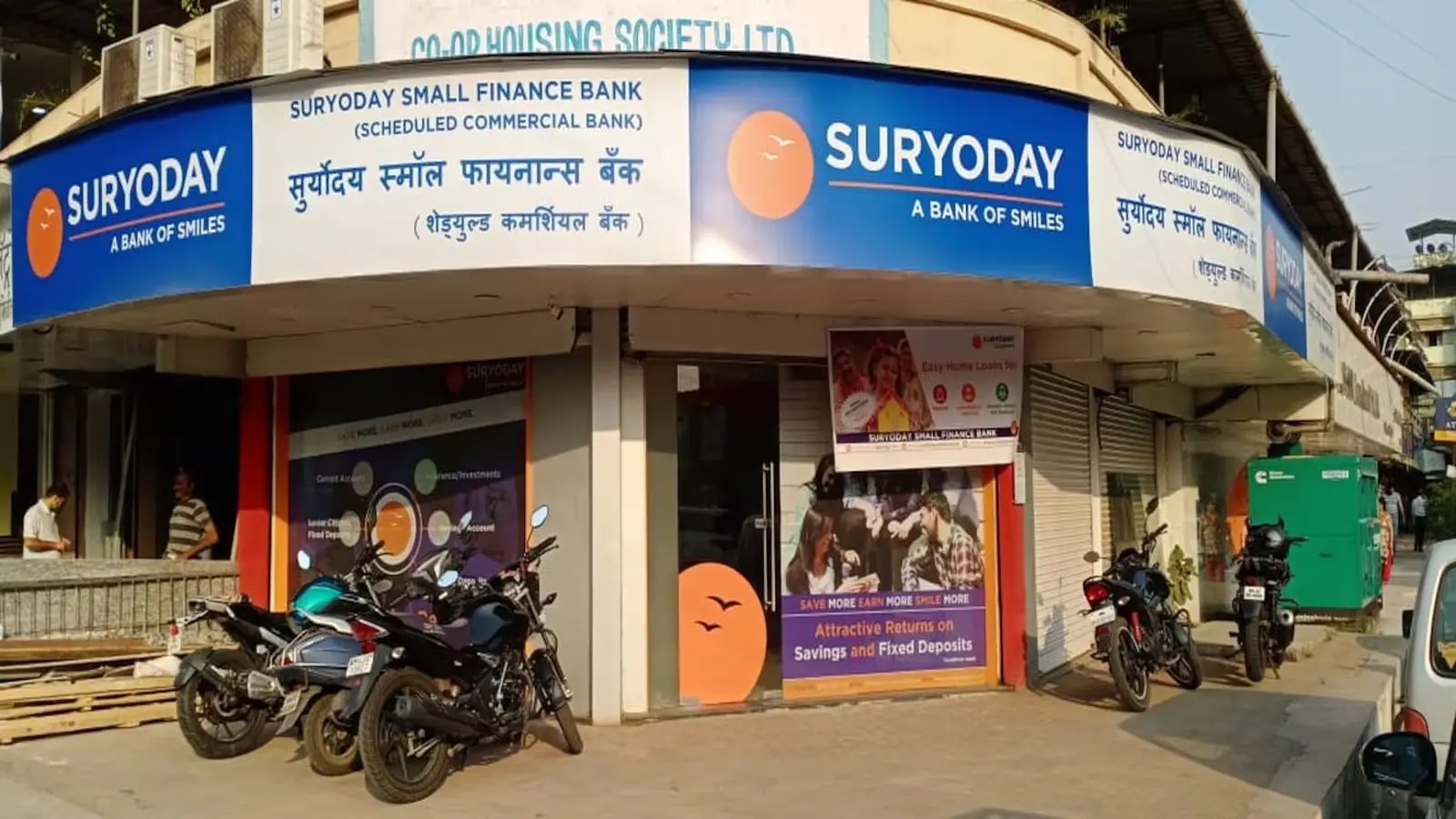
1. At a Glance
The Executive Summary
Listen, if Suryoday Small Finance Bank was a student, it would be that kid who shows up to class with messy notes, half-finished homework, and one brilliant idea—then spends the next hour explaining why the notebook fell in the toilet.
The bank’s gross advances jumped 24.3% YoY to ₹11,885 crore (from ₹9,563 cr), deposits grew 32.5% to ₹12,865 crore (from ₹9,708 cr), and they’re running deposits like a juggler who just added one extra ball—things are moving fast but slightly chaotic. Q3 FY26 saw net profit of ₹36.6 crore versus ₹33.3 crore in Q3 FY25 (+9.79%), while revenues hit ₹544 crore (+11.5% YoY).
But here’s the spicy part: asset quality numbers look like they went through a mixer-grinder. GNPA spiked to 6.6% (Dec 2025) from 5.5% (Dec 2024)—that’s not a typo, and that’s definitely not a feature.
The bank’s getting covered under a credit guarantee scheme (CGFMU) that’s protecting ~98% of its microfinance book like an overprotective mother-in-law. Sounds great? Well, yes and no. Management’s playing 4D chess with write-offs and claims timing, making balance sheets look more dramatic than a Hindi TV serial cliffhanger.
ROE tanked to 6.16% (from 8% three-year average), ROCE is stuck at 7.28%, and the cost-to-income ratio is inflated like a roti in a tandoor (73.6% in 9M). But—and this is the important “but”—the bank’s capital position is fortress-like at 21.9% CAR, way above the regulatory 15% requirement.
2. Introduction
Meet the Messiest Lender in Town
Suryoday Small Finance Bank is what happens when you take a microfinance NBFC (which it was until 2017) and hand it banking licenses. It’s like giving your college friend who used to lend money to roommates a seat at the RBI table. Dramatic? Absolutely. Earned? Somewhat.
The bank’s DNA is microfinance (inclusive finance makes up ~45% of its advances as of Dec 2025, down from 60% a year ago). It operates across 16 states, 712 banking outlets, and serves ~3.8 million customers. The whole pitch is: “We lend to India’s unbanked and underbanked.” Noble, absolutely. Profitable? That’s where it gets spicy.
Here’s the thing—the entire microfinance industry hit a pothole the size of Delhi in 2024-2025. Over-leverage in borrower households, collections stress, and an industry-wide reckoning. Most small finance banks got clubbed in this drama. Suryoday did too.
But unlike peers who silently prayed, Suryoday said: “Let’s hedge 98% of our MFI book under a government-backed CGFMU guarantee scheme.” Smart move? Let’s see. The downside: GNPA ratios look scarier than your mother-in-law’s expression when you say the biryani was overcooked. The upside: you’re basically getting free insurance.
Management’s messaging in recent concalls is essentially: “We’re in pain now, but we’re fixing it systematically.” Slippages are coming down (they’re aiming for <₹20 crore/month from ₹25–30 in Q3). Collections efficiency in microfinance is improving toward 99.5%. And the kicker? They're shifting from group lending to individual lending (72% of inclusive finance portfolio now), which is structurally safer.
Is this a turnaround story? Maybe. Is it risky? Absolutely. Let’s dig into the numbers like a Delhi uncle dissecting cricket statistics.