Suraj Products Ltd Q2 FY26 – Steel, Power & a ₹7.46 Cr Arbitration Win: Iron Turns Golden (Almost)
1. At a Glance
Suraj Products Ltd, the Sundargarh-based iron alchemist, just turned in a quarter that can only be described as “rusty but resilient.” The stock now lounges at ₹269, a far cry from its 52-week high of ₹554 — almost like an iron ore chunk rolling downhill. With a market cap of ₹307 crore, a P/E of 19.2, and ROE at 15.3%, it’s small but sturdy — like a steel rod you don’t notice until it dents your balance sheet.
Quarterly sales slumped to ₹58.7 crore (down 22.4% YoY), and PAT tumbled 50.7% to ₹3.2 crore, yet the management smiled through it, possibly thanks to the recent ₹7.46 crore arbitration award against Everllence India — sweet legal ironies are better than sweet iron billets. Debt stands at a modest ₹12.8 crore, with a debt-to-equity ratio of 0.08, practically debt-free for a secondary steel producer.
Dividend yield is a cute 0.78%, enough to buy a vada pav or two, but not a TMT bar. Despite weak sales, the ROCE remains at 17.4%, which is like saying the engine still revs, even if the tyres are bald.
So here’s the hook: declining revenue, halved profit, but an arbitration windfall, expanded power capacity, and a UAE venture on the horizon. Suraj Products is either forging the future or getting smelted by market pressure. Ready to dive in?
2. Introduction
Suraj Products Ltd (SPL) is the kind of company you’d describe as “a small-town overachiever with iron lungs.” Born in 1991 and headquartered in Odisha, it quietly transforms iron ore into sponge iron, pig iron, billets, and TMT bars, and even throws in a 9 MW captive power plant for good measure.
Now, while other steel players like JSW and Tata chase global green steel headlines, Suraj Products is doing what small-town legends do best — grinding quietly, supplying semi-urban India with the bars that literally hold up half the country’s construction.
In FY25, it made around ₹297 crore in sales, and ₹16 crore in PAT, down from ₹29 crore the previous year. But before you dismiss it as a “melting business,” remember this — it’s almost debt-free, operates at a double-digit OPM (9.7%), and just bagged a ₹7.46 crore arbitration victory. That’s equivalent to nearly 50% of one quarter’s profit magically arriving by courier.
Also, in a rare steel story twist, they’ve gone global — acquiring land in Abu Dhabi through their subsidiary to start a green iron project. Odisha to UAE — this company is literally exporting ambition.
So, what happens when a small iron player starts dreaming big? Let’s put this in the furnace.
3. Business Model – WTF Do They Even Do?
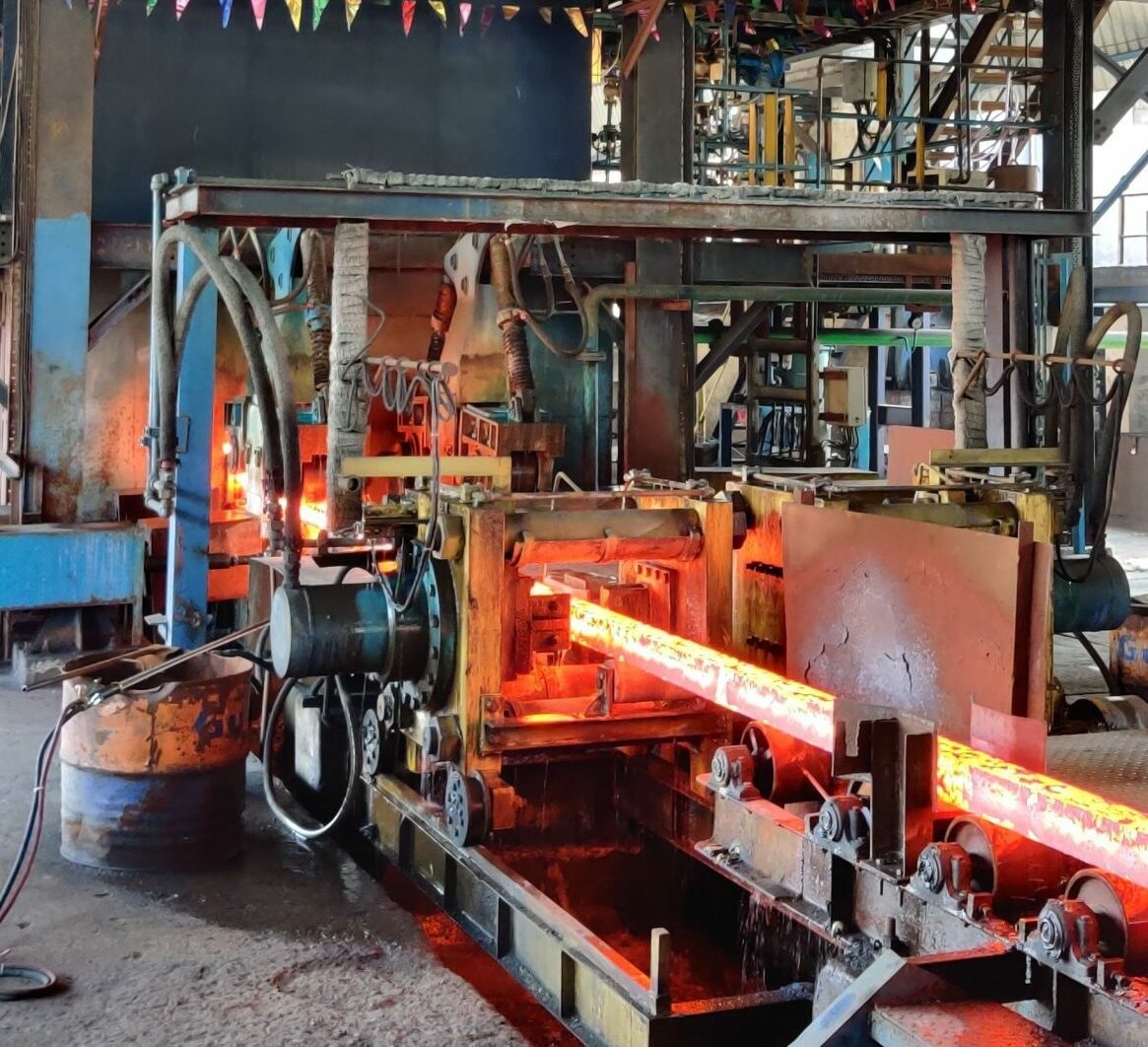
At its core, Suraj Products is a vertically integrated mini steelmaker. From mining iron ore to producing sponge iron, pig iron, billets, and TMT bars, it owns almost every part of its value chain.
Here’s how the process flows:
Iron Ore → Sponge Iron (36,000 MTPA capacity)
Sponge Iron + Pig Iron → Billets (72,000 MTPA)
Billets → TMT Bars (72,000 MTPA)
And because electricity bills can knock the life out of any steel margin, SPL smartly powers its furnaces using its own 9 MW captive power plant — split into 3 MW each from waste heat recovery, fluidized bed combustion, and gas from the blast furnace.
In FY23, the production looked like this:
Sponge Iron: 32,688 MT
Pig Iron: 33,682 MT
Billets: 35,100 MT
TMT Bars: 29,180 MT
Their revenue mix tells the real story — TMT bars (49%) and pig iron (37%) do the heavy lifting, while sponge iron contributes only 6%. Essentially, they make their own inputs, melt them, roll them, and sell them — it’s the steel version of farm-to-table dining.
But here’s the catch: secondary steel players like Suraj Products are at the mercy of iron ore and coal prices. So when input costs rise, OPMs melt faster than a dosa on an overheated tawa.
Still, SPL’s integration, power plant, and local market focus have made it surprisingly durable. The company may not roar like JSW Steel, but it hums along like a diesel generator that just refuses to die.