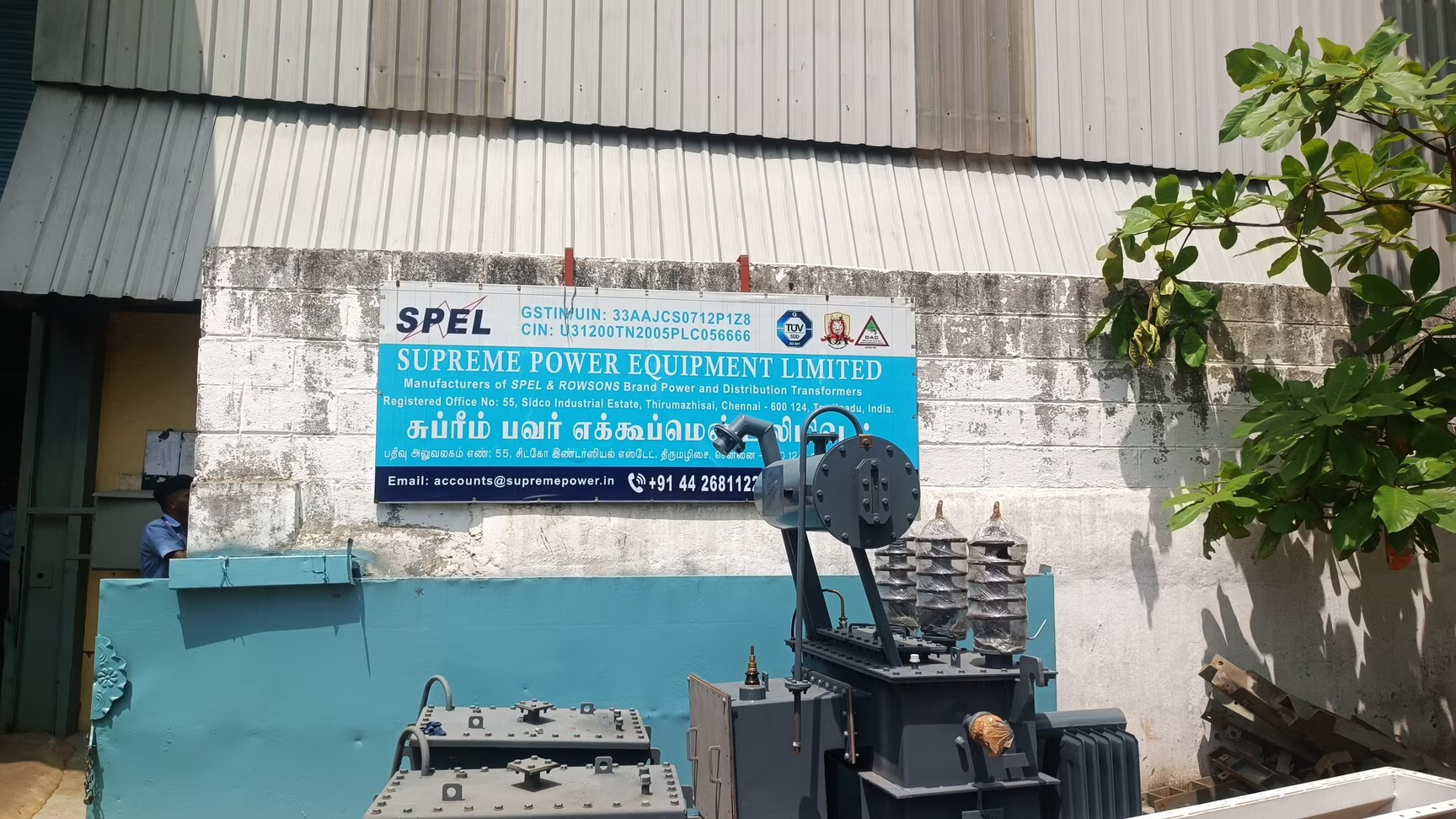
Supreme Power Equipment Ltd H1 FY26 Results: Transformers Lighting Up Profits, Expansion Sparks ₹500 Cr Ambition
1. At a Glance
Supreme Power Equipment Ltd (SPEL) just pulled off the kind of half-yearly results that make even the transformers blush. The Chennai-based manufacturer of power, generator, windmill, and solar transformers has delivered H1 FY26 revenue of ₹75.36 crore and a net profit of ₹9.41 crore, up 32% YoY. At a current market cap of ₹523 crore and P/E of 25x, this transformer maker is literally electrifying the SME segment. With ROE at 22.4% and ROCE at 27.5%, SPEL’s balance sheet hums louder than the power stations it serves. The company’s ambitious expansion — a new 9,000 MVA facility costing about ₹100 crore — is set to start production by January 2026. And once operational, management expects this beast to generate ₹500–550 crore in revenue annually.
The order book currently sits at a robust ₹230 crore, with marquee wins from NLCIL (₹60.9 crore), KSEBL, and Telangana EPC projects. At ₹209 per share, SPEL trades just below its highs, and if transformers had egos, these numbers would be a flex.
2. Introduction
Every bull market needs its own “power story,” and Supreme Power Equipment Ltd seems to have charged itself up to full voltage. Founded in 1994, the company quietly spent decades building transformers while most investors couldn’t tell a step-up from a step-down. Fast forward to FY26 — it’s now shocking everyone with growth rates and margins that could give even large-cap industrials a jolt.
SPEL’s half-yearly performance reads like a comeback movie: order inflows of ₹175+ crore in six months, capacity expansion nearing completion, and profitability growing faster than its wiring diagrams. In an industry dominated by old-school giants, this SME is playing the agility card — executing faster, customizing better, and managing working capital like a pro.
The company’s EPS for H1 FY26 is ₹3.77, annualizing to roughly ₹7.54, translating to an earnings yield of 5.01% — not bad for a firm still in hypergrowth mode. Meanwhile, with zero promoter pledging and improving debtor days (now down to 110 from 195), Supreme Power looks less like a short-circuit risk and more like a well-grounded growth engine.
The only thing missing? Dividends. Because, apparently, management believes every rupee should be reinvested into metal, oil, and ambition.
3. Business Model – WTF Do They Even Do?
Alright, let’s decode the transformers. Supreme Power Equipment Ltd doesn’t sell electricity — it builds the metallic beasts that move electricity from generation to consumption. Think of it as the courier company of the power world, but instead of parcels, it delivers megawatts.
The company designs and manufactures a wide range of transformers:
Power Transformers (up to 25 MVA, soon to be 160 MVA)
Distribution Transformers
Windmill Transformers
Solar / Inverter Duty Transformers
Generator & Rectifier Transformers
Isolation Transformers
Its customers range from state power utilities (KSEB, TNEB) to private renewable players. The company’s revenue mix tells a story of transition — 40% from distribution transformers, 28% from power units, and 18% from solar transformers.
And here’s the real juice: SPEL is moving up the value chain — shifting from standard 25 MVA transformers to extra-high-voltage 160 MVA units. That’s not just a new product; it’s a full-on metamorphosis. Bigger transformers mean fatter margins, longer contracts, and higher technical entry barriers.
So yes, while others in the industry debate megawatt-hour rates, SPEL is busy building the muscle to play with the big boys — Apar, Genus, and Waaree.
4. Financials Overview
Let’s look at the hard data — the kind that makes analysts smile and short-sellers cry.