The kitchen is screaming, but is it the sound of a whistle or a fire alarm? Stove Kraft Ltd has just served a Q4 FY26 result that looks, on the surface, like a five-star meal. With a staggering 317.8% YoY Net Profit growth and a 32.4% jump in revenue, the quantitative bulls are out in full force. But beneath the sizzling top line, there is a thick smoke of executive exits—CFO, COO, CHRO, and CTO have all checked out of the kitchen in the last 24 months.
Investors are currently mesmerized by the debt reduction, which has plummeted from ₹1,929 million to a mere ₹274 million (excluding leases) in two years. The company is effectively pivoting from a high-leverage growth story to a lean, mean, manufacturing machine. However, the export vertical—once the crown jewel of the growth thesis—collapsed by 65% this quarter, leaving the domestic “Pigeon” brand to carry the entire weight of the house. Is this a turnaround for the ages or a desperate scramble to fix the plumbing while the master chefs flee?
1. At a Glance – The Sizzle and the Sting
Stove Kraft is currently the darling of the “Value for Money” (VFM) segment, but the internal temperature is rising. If you only look at the ₹414.5 crore revenue for Q4 FY26, you might miss the chaos in the boardroom. The company is gaining massive investor attention because it has managed to squeeze out growth in a high-inflation environment, but at what cost?
The Gross Margin is holding steady at 38.6%, yet the Net Profit Margin is a razor-thin 1.5%. Let that sink in. For every ₹100 they sell, they keep barely ₹1.50 after the taxman and the bankers take their cut. The management’s primary defense is a massive ₹5.67 crore unrealized forex loss this quarter, which acted as a direct hit to the bottom line. Without these “one-offs,” the profit would look even better, but in the world of high-stakes finance, “one-offs” have a nasty habit of becoming “every-offs.”
The red flags are flying high in the HR department. When the Chief Financial Officer (CFO) resigns on the very day the audited results are approved, it doesn’t just raise eyebrows—it triggers an audit-level investigation in the minds of serious investors. This follows a string of high-profile departures including the Chief Growth Officer in February 2026 and the Chief Revenue Officer in late 2025.
Financial Wisdom: A company can survive a bad quarter, but it rarely survives a leadership vacuum. When the people who know where the bodies are buried start leaving, it’s time to look at the “Other Expenses” line item very, very closely.
The curiosity here lies in the IKEA partnership. Stove Kraft has built a massive 180,000 sq ft facility dedicated to the Swedish giant, but the revenue has been delayed due to “testing protocols.” We are told the “meaningful ramp” is now shifted to FY27. Investors are being asked to wait for the main course while snacking on volatile domestic earnings.
2. Introduction: The Brand That Refuses to Dim
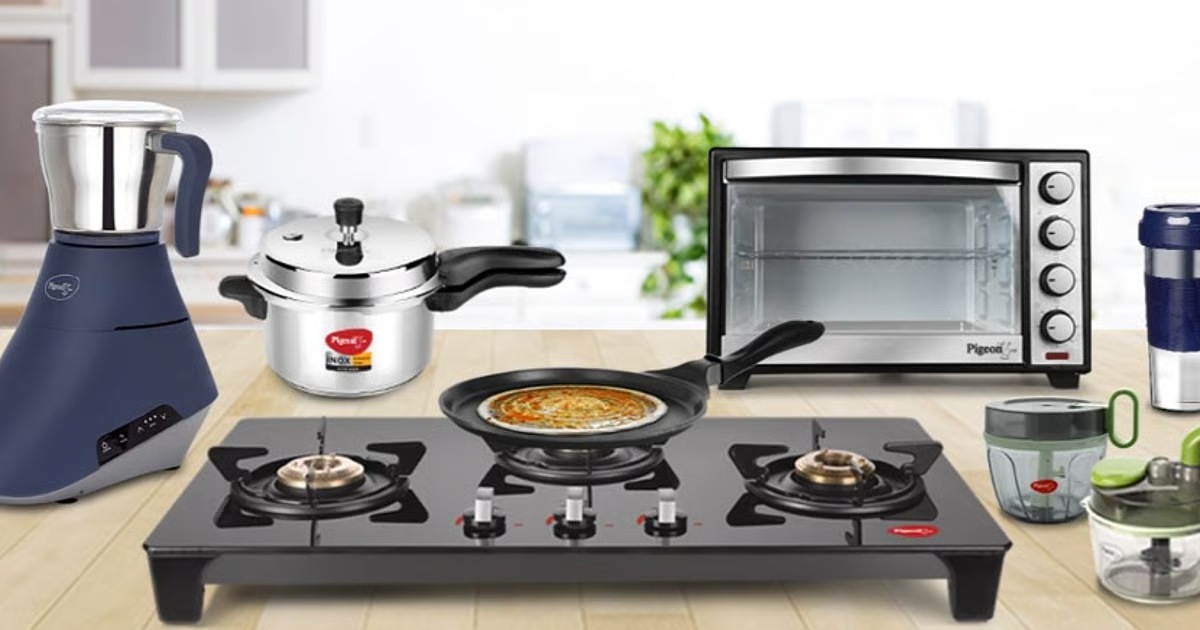
Stove Kraft isn’t just a company; it’s a household name in the Indian middle-class kitchen. Founded in 1999 by Rajendra Gandhi, the man has turned “Pigeon” into a dominant force in pressure cookers and non-stick cookware. They operate a multi-brand strategy: Pigeon for the masses, Gilma for the semi-premium, and Black + Decker for the elites who want to feel fancy while making toast.
The company is currently in the middle of a massive identity shift. They are moving away from being just a “cookware” brand to a “small appliance” powerhouse. In Q4 FY26 alone, Induction Cooktops grew by 89% in value. People are moving from gas to electric, and Stove Kraft is riding that wave like a pro.
They have a massive manufacturing footprint in Harohalli (Bengaluru) and Baddi (Himachal Pradesh). We are talking about a capacity of 70 million units. They aren’t just assembling parts; they are backward integrated. They make their own glass, they have their own cast iron plant, and they even have a solar power plant on the roof. They are trying to own the entire value chain to protect those fragile margins.
But let’s be real—the stock price has been a rollercoaster. Over the last year, it’s down about 12.6%. While the broader market was partying, Stove Kraft was doing the dishes. The question is, has the market already priced in the management exits, or is there another shoe left to drop?