Sterling Tools Q4 FY26: The Curious Case of the EV Accelerator Stalling While Bolts Keep Holding the Engine Together
1. At a Glance
When an auto-component manufacturer shifts from humble steel bolts to high-tech electric vehicle powertrains, the market tends to cheer wildly. But financial reality is a brutal master. Standing firmly at a current market price of ₹235, with a massive contraction from its 52-week high of ₹393 down to its low of ₹155, Sterling Tools Limited presents a bizarre paradox that demands a deep analytical probe.
The standalone performance tells a tale of growth. Total standalone income surged to ₹725.9 crore in FY26 compared to ₹651.6 crore in FY25, showcasing a robust 11.4% increase. Standalone profit after tax jumped an impressive 49.8% to reach ₹64.2 crore.
Yet, looking at the consolidated picture exposes a completely different reality. The consolidated numbers reveal a massive revenue drop, shrinking from ₹1,038.0 crore in FY25 down to ₹839.5 crore in FY26. Consolidated profit after tax plummeted from ₹58.3 crore to ₹29.3 crore, registering an alarming drop of nearly 50%.
This clear disparity forces a deeper inspection. Why is the core business thriving while the group entity bleeds value? The corporate presentation attributes the decline to a massive structural shift in its key electric vehicle subsidiary, Sterling E-Mobility Solutions Limited. A massive event occurred when its key anchor customer, Ola Electric, decided to insource its motor control unit production for its new Gen 3 vehicle platform. This strategic move wiped out a huge chunk of sub-assembly volumes and dragged subsidiary margins down from a healthy 8% to a measly 1.2% in early FY26.
At the same time, the company continues to aggressively commit capital. It approved a dividend payout of 137.5%, amounting to ₹2.75 per share, and greenlit an investment of up to ₹20 crore into its subsidiary via a rights issue. The business is also undergoing a management shuffle, with Anish Agarwal stepping in as Chief Financial Officer and Whole Time Director following the exit of the group CFO Pankaj Gupta.
Investors now face a striking puzzle. Can the core fastener business carry the weight of these capital-heavy EV expansions, or will these high-voltage technology bets permanently damage the balance sheet?
2. Introduction
To truly understand Sterling Tools Limited, one must look closely at its structural setup. The business functions through two distinct units: the legacy standalone automotive fastener division and its newer high-growth subsidiaries focused on electric mobility component manufacturing.
The parent company has built an established market position over nearly five decades as the second-largest automotive fastener manufacturer in India. It handles cold forging and produces high-tensile fasteners, positioning itself as a key supplier across multiple sectors, including passenger vehicles, commercial vehicles, two-wheelers, and agricultural equipment.
However, the major narrative driving market interest in recent years centers on its wholly owned subsidiary, Sterling E-Mobility Solutions Limited, formerly known as Sterling Gtake E-Mobility Limited. This subsidiary was created to capture the growing EV component demand by offering motor control units, integrated drivetrains, and advanced power electronics.
The stock current market price of ₹235 puts its total market capitalization at ₹853 crore. With a trailing price-to-earnings ratio of 35.5, the valuation multiple sits comfortably higher than the broader industry median P/E of 26.5. This premium multiple shows that the market is pricing in significant future growth from the EV tech platform, despite the recent operational disruptions.
3. Business Model – WTF Do They Even Do?
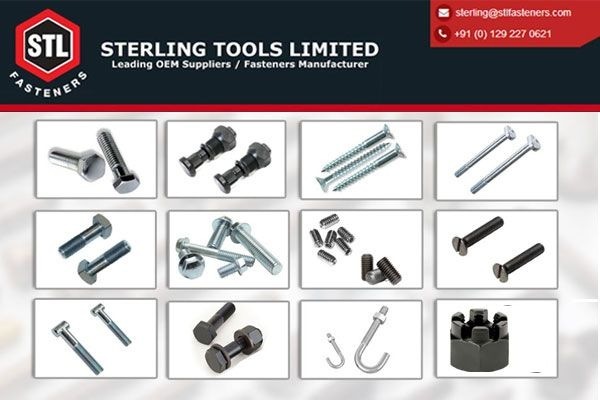
The core business operations are straightforward: taking raw steel wire, drawing it down, cold-forging it under intense pressure, heat-treating it, and turning it into structural fasteners. These are not standard hardware store screws. They are critical, high-tensile components like axle bolts, engine bolts, and specialized transmission fasteners designed to handle extreme stress inside an engine block.
The distribution network spans all major domestic original equipment manufacturers. The customer roster includes major automotive brands like Maruti Suzuki, Honda, Hyundai, Tata Motors, Ashok Leyland, and Mahindra & Mahindra. The revenue mix highlights its deep ties to the domestic manufacturing space, with OEMs picking up 87% of production, the replacement aftermarket absorbing 11%, and direct exports accounting for a tiny 2%.
On the flip side, the electric vehicle powertrain division operates on an entirely different asset-light, technology-licensed model. Instead of designing electronic components from scratch, the company secures exclusive technical collaborations and licensing agreements with global component designers, primarily based in China and the UK.
For its core Motor Control Units, the company relies on its long-standing arrangement with Jiangsu Gtake Electric. For its newer high-voltage direct current contactors and safety relays, it operates under its newer subsidiary, Sterling Tech-Mobility Limited, partnering with Kunshan GLVAC Yuantong.
The manufacturing process for these electronic units follows an assembly-and-test setup. The subsidiary imports specialized electronic components and child parts, runs them through automated surface-mount technology lines at its Bengaluru facility, and houses them in localized castings.
While this structure allows the company to rapidly introduce new product variations to the market, it leaves margins vulnerable to external shocks. When a major customer decides to assemble these electronic modules in-house, the local assembly operation loses its scale advantages instantly.
Can an industrial manufacturing company successfully pivot into electronic component assembly, or will it remain entirely dependent on foreign technology licensors?
4. Financials Overview
Evaluating the absolute financial results requires keeping standalone and consolidated figures separate to avoid distorting the base data. The newest quarterly reporting shows a sharp divergence in operating performance.