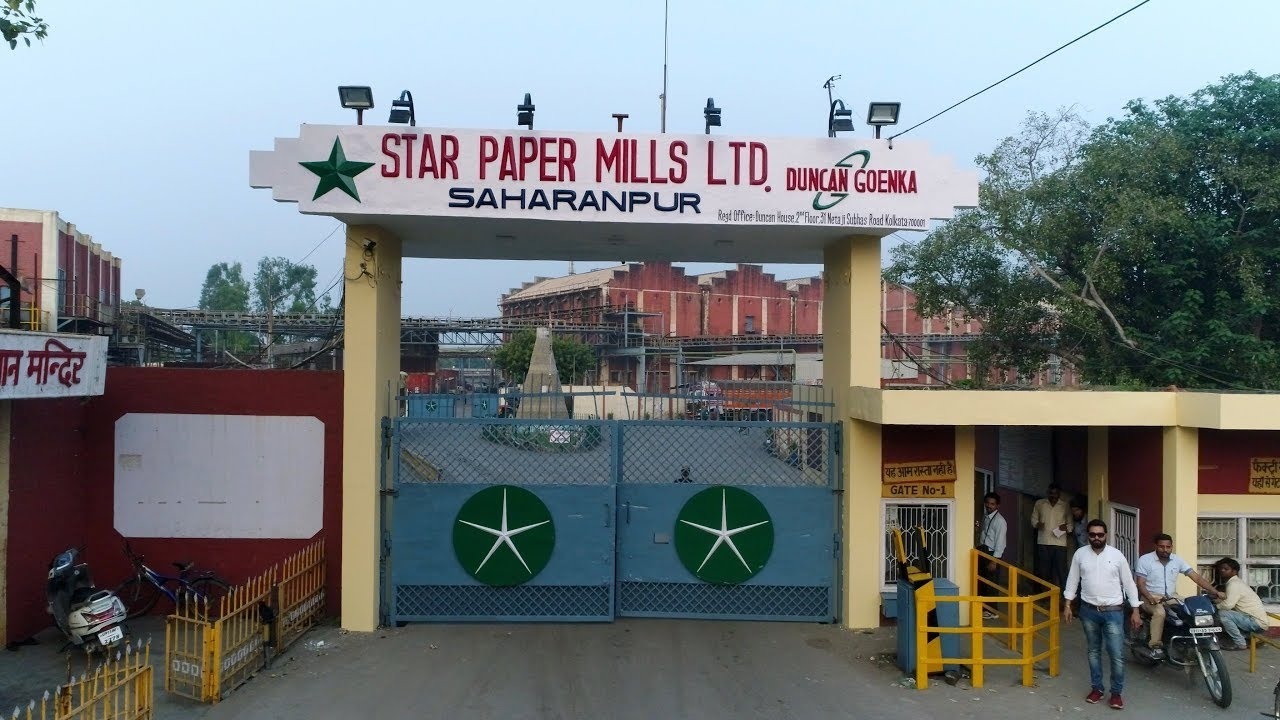
Star Paper Mills FY26: A ₹708 Crore Net Worth Wrapped in a ₹218 Crore Price Tag — and a March Quarter That Slipped Into the Red
Spotted a factual error — a wrong number, date, or fact? Tell us and we will check the source.
General information and entertainment, not investment advice. The author is not a SEBI-registered adviser or research analyst. No recommendation, no promised returns. Markets carry risk including loss of capital. Figures may not be current. Consult a registered adviser before acting.
1. At a Glance
Star Paper Mills closed FY26 with revenue of ₹410 crore, down from ₹436 crore the year before, and net profit of ₹33 crore against ₹41 crore in FY25. The headline that draws attention is the March 2026 quarter: a net loss of ₹1.29 crore, the company’s first quarterly loss in the visible record, against a ₹5.01 crore profit in the same quarter a year earlier.
Underneath that loss sits a balance sheet that looks almost untroubled. Net worth stands at ₹708 crore, borrowings at ₹4.31 crore, and the company carries investments of ₹247 crore on its books — more than its entire ₹218 crore market capitalisation. The market currently pays 6.68x earnings here, against a peer median near 18x, and prices the equity at 0.31 times its stated book value.
The worry signals are quieter but present: operating margin compressed to roughly 4.5% in FY26 from 13% two years earlier, working-capital days stretched to 285 from 143, and promoters have pledged 47.2% of their holding. ROE sits at 4.71%.
A company can hold more in liquid investments than its own market value and still post a quarterly loss in its operating engine. Both facts are true at once here, and the gap between them is the whole story of this period.
2. Introduction
Incorporated in 1938 and run from Saharanpur, Uttar Pradesh, Star Paper Mills is part of the Kolkata-based Duncan Goenka Group, with the Goenka family at the helm since 1979. It is an integrated pulp and paper mill — ISO-certified across quality, environment and safety standards — with an R&D unit recognised by the Ministry of Science & Technology.
The recent record is mostly procedural. On 25 May 2026 the board approved audited FY26 results with an unmodified audit opinion, recommended a final dividend of ₹2.50 per share, and appointed PKMB & Co as internal auditor and K.B. Saxena & Associates as cost auditor for FY27. In May 2026, Acuité reaffirmed its long-term rating of ACUITE A+ (Stable) on the company’s ₹100 crore bank facilities.
The company also reminded shareholders to claim unclaimed dividends spanning FY2018-19 to FY2024-25 by 25 September 2026, after which the relevant shares transfer to the IEPF. Two fire incidents sit in the longer history — a November 2022 event with a reported ₹9 crore loss and a December 2023 stock-yard fire with ₹2 crore damage; FY26 carried a ₹3.84 crore insurance claim received against the earlier loss.
3. Business Model: WTF Do They Even Do?
They make paper. Specifically, three families of it: cultural papers (printing, maplitho, envelope and security stock), industrial papers (kraft, cup stock, soap-packaging and bidi-wrapper grades), and a long tail of speciality grades with names like Star Azurlaid and Col Multi Purpose BBY Pink. The mill at Saharanpur runs four paper machines with an installed capacity of 75,000 MTPA.
This is, structurally, the least glamorous corner of manufacturing. You buy fibre, you apply power and fuel, you press it into sheets, and you sell those sheets to printers and packagers who treat your product as a commodity input. The FY23 revenue split — products ~94%, scrap ~2%, other income ~4% — tells you there is no hidden software business here; it is paper, scrap from making paper, and money earned on the cash that paper generated.
The cost structure is where the model shows its teeth. Raw material cost ran ₹202 crore in FY26 against revenue of ₹410 crore, and power and fuel added ₹67 crore. When fibre and energy together eat well over half your top line and your customers can switch suppliers on price, margin is not something you set — it is something the input market hands you. Acuité’s read on FY25 was that revenue slipped because paper price realisation fell even as sales volumes rose, which is the commodity producer’s recurring indignity: sell more, earn less.
So the business is a capable, certified, eighty-seven-year-old machine for converting pulp into paper at whatever spread the market currently allows. In good years that spread is generous. FY26 was not a good year for the spread.