At a Glance
The financial landscape of private banking in Southern India is witnessing a quiet but violent shift. While the giants struggle with compressed margins and credit cost spikes, a ninety-seven-year-old institution from Kerala is staging a masterclass in balance sheet reconstruction.
We are looking at a bank that has effectively deleted its past. Since September 2020, this lender has churned 88% of its entire loan book, replacing legacy baggage with a high-octane portfolio that is delivering numbers the street didn’t see coming.
The headline figures are staggering. We are talking about a Net Profit of ₹1,455 crore for the full financial year 2025-26. To put that in perspective, this is a bank where the Net NPA has crashed to an incredible 0.29%. That isn’t just a “good” number—it is a “fortress” number.
The market has noticed. The stock has delivered a 72.4% return over the last 12 months, yet it continues to trade at a Price to Book Value of 0.98. It is essentially being priced at less than the sum of its assets, despite delivering a 13.5% Return on Equity (ROE).
The transformation is driven by a ruthless pivot from unpredictable large corporate lending to a granular, retail-focused engine. Gold loans now command ₹24,729 crore of the books, growing at a massive 46% year-on-year.
Management has achieved positive operating leverage for the second consecutive year, a feat that requires surgical precision in cost management while scaling revenue. But is this growth sustainable, or is the bank over-relying on the yellow metal to mask underlying pressures?
Introduction
South Indian Bank (SIB) is no longer the conservative, regional lender of the early 2000s. Established in 1929 and based in Thrissur, Kerala, it was the first ‘scheduled bank’ among private lenders in the state. For decades, it remained a steady, albeit unexciting, player in the southern circuit.
That changed in the last five years. The bank initiated a “Business Transformation” that was essentially a heart transplant. They stopped chasing low-yield, high-risk corporate dreams and started focusing on the “RAM” (Retail, Agri, MSME) segment.
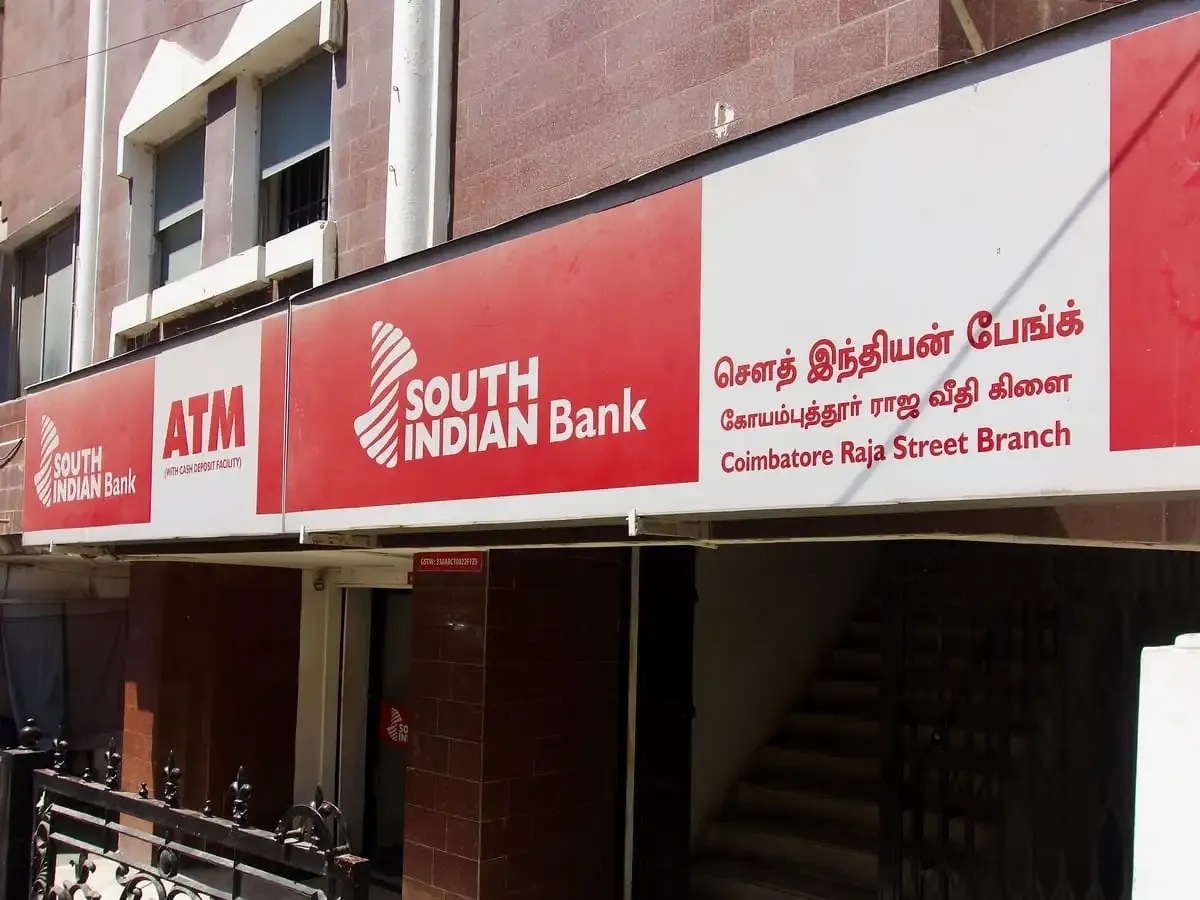
Today, SIB operates 948 branches and 1,273 ATMs across India. While its roots are deep in Kerala (accounting for 30% of the loan book), it has successfully diversified, with 70% of its advances now coming from outside the home state.
The leadership transition has been handled with corporate precision. With Mr. P R Seshadri at the helm—a veteran with three decades of experience at Citibank and Karur Vysya—the bank has focused on “frictionless processes.”
As of March 2026, the digital adoption is nearly absolute, with 98.5% of all transactions happening through digital channels. The bank is even deploying an in-house AI framework, “Zeni,” to automate day-book audits and IT governance.
Business Model – WTF Do They Even Do?
At its core, SIB is a liability-gathering machine that is getting very smart about where it parks its money. They take deposits from a loyal customer base (8.3 million strong) and lend it out across four main verticals:
- Corporate (38%): They have moved away from “junk” corporate debt. Now, 99.1% of their large corporate advances are rated ‘A’ and above.
- Personal