01 — At a Glance
The Overlooked Bank That’s Actually Cleaning Up Its Act
- 52-Week High / Low₹46.8 / ₹22.1
- FY25 Revenue (Full Year)₹9,660 Cr
- FY25 PAT (Full Year)₹1,390 Cr
- Full-Year FY25 EPS₹5.31
- Q3 FY26 EPS (Latest Qtr)₹1.43
- Book Value₹42.1
- Price to Book0.90x
- Dividend Yield1.05%
- GNPA (Dec 2025)2.67%
- CASA Ratio32.06%
Auditor’s Opening Note: South Indian Bank closed Q3 FY26 with ₹374 crore net profit (+9% YoY), advances at ₹96,764 crore (+11.3% YoY), and GNPA plummeting to 2.67%. But here’s the real story: at 7.15x P/E, trading 0.90x book value, this sleepy 96-year-old bank is either the most underappreciated turnaround or the market knows something. Gold loans now ₹21,303 crore. Slippage ratio at 0.16%. Credit costs at 7–8 bps quarterly. This is either a value-trap waiting to explode, or a hidden gem buried in the south. Let’s find out which.
02 — Introduction
When Your Sleepy Bank Suddenly Stops Looking So Sleepy
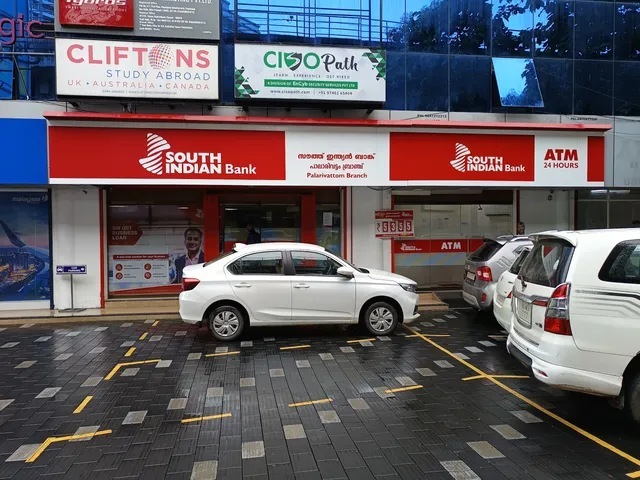
South Indian Bank. Founded 1929. Established in Kerala. Has exactly zero identifiable promoters (yes, really—it’s a free-float bank). If you’ve never heard of it, congratulations—you’re in good company. Institutional investors? Also mostly absent. The stock trades in whispers because the market has collectively decided: “It’s a regional bank. Next.”
Except, lately, the whispers are getting louder. In 10 calendar years, the stock has delivered 60% returns. In the past 5 years, 34% CAGR. In the past 1 year, a whopping 60% annual return. And yet the P/E sits at 7.15x. At book value of ₹42.1 with the CMP at ₹38, you’re buying it at a 10% discount to what the accountant says it’s worth. If you bought it five years ago at ₹22, you’re up 73%. But the Dalal Street consensus is still: “It’s a Kerala bank. What could go wrong?”
Everything, apparently, went right. Q3 FY26 results dropped ₹374 crore in net profit, up 9% YoY. Advances at ₹96,764 crore, up 11.3% YoY (would be 12.4% if you exclude the ₹900 crore technical write-off from last March). GNPA at 2.67%—the lowest in a decade. The bank has systematically churned over 80% of its portfolio in the past five years, dumped legacy garbage, rebuilt asset quality, scaled gold loans to ₹21,303 crore (26% annualized growth), and quietly become one of the highest-return businesses in Indian banking. Management says 12% growth ahead. Rating agencies just upgraded it to IVR AA/Stable. The stock is still trading like it’s 2005.
This is the story of a bank that did everything right and got absolutely no credit for it. Let’s change that.
Jan 2026 Concall Surprise: When asked if there’s a cap on gold loan growth, management said: “We have not imposed any caps.” Translation: they’re just getting started. The 22% of total advances currently in gold loans? That number is going north.
03 — Business Model: Gold Loans & MSME, Basically
How a 96-Year-Old Bank Became a 21st-Century Lender
South Indian Bank does two things extraordinarily well: it lends against gold, and it lends to small businesses. Everything else is just noise and portfolio management.
Gold Loans: The Elephant in the Room (in a Good Way) At ₹21,303 crore, gold loans are now ~22% of total advances and growing at 26% annualized. Average ticket is ₹2.46 lakh. Average LTV is ~55%. This is a relationship product—the rural customer walks in with her grandmother’s jewelry, the bank lends her money at ~10–11% annualized, she gets working capital, everybody’s happy. The bank is structured to do “3,000 to 4,000 gold loans a day.” Competition? Moneylenders, shadow finance companies, and a handful of other banks. All losers in terms of execution. SIB’s franchise advantage is that it has 948 branches, mostly in south India, where gold is literally cultural currency. Management explicitly said on the Jan 2026 concall: “we are monitoring it very closely, but we have not imposed caps.” Translation: this engine is running and they’re not hitting the brakes.
MSME: The Quiet Juggernaut Branch-originated small business loans are now ₹14,019 crore, with management aiming to double monthly disbursals from the December peak of ₹300 crore. The model is beautiful: small-ticket GST-backed lending, digital underwriting, 400–500 bps NIM. The bank is literally hiring and retraining staff to scale this. Competing on price with big banks? No. Competing on service and underwriting speed to the unorganized sector? Absolutely.
Retail (ex-gold): Housing Under Strategic Retreat Home loans are intentionally being de-emphasized because market yields have crashed to 7.1% or lower. The bank is “deciding at what levels we wish to participate.” Translation: they’re not in a race to lose money on mortgages. Personal loans, auto loans, and against-deposits continue to scale healthily.
Gold Loans22%Of Advances
MSME/SME14.5%Of Advances
Retail Growth+23%YoY Q3
Advances Growth+11.3%YoY Q3
Strategic Note: Housing finance was the growth pin-up for Indian banks in 2020–2023. SIB consciously abandoned it because pricing got stupid. That’s not a weakness—it’s discipline. Most banks chase volume, bleed NIMs, and then wonder why returns are terrible. This bank does the opposite.
💬 Gold loans at 26% annualized growth. MSME at 12%. Neither are sexy to institutional investors. Does that make them better opportunities? Drop your view!
04 — Financials Overview
Q3 FY26: The Numbers Nobody’s Paying Attention To
Continue reading with a premium membership.