Solarworld Energy Solutions Mar 2026: A 153% Revenue Surge and a ₹3,000 Cr Battery Dream
Date of Publishing -
Spotted a factual error — a wrong number, date, or fact? Tell us and we will check the source.
1. At a Glance
Solarworld Energy Solutions closed FY26 with staggering topline velocity. Revenue printed at ₹1,376.16 Cr, a 153% jump year-on-year, while net profit scaled 56% to reach ₹120.47 Cr. On the surface, this is the profile of a hyper-growth execution machine. The company currently sits on an unexecuted order book of ₹2,813 Cr, heavily tilted toward the fast-expanding Battery Energy Storage Systems (BESS) space.
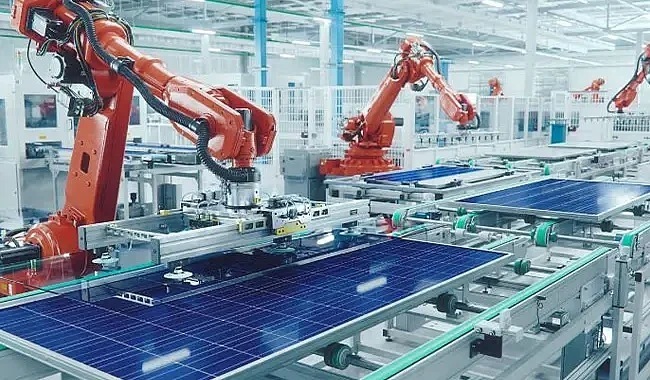
However, beneath the headline doubling of revenues, capital intensity is shifting violently. The company recently commissioned a 1.55 GW ALMM-approved solar module manufacturing facility in Roorkee and is actively running trials for a 3.4 GW BESS line. Consequently, the balance sheet absorbed a massive surge in both working capital and capital expenditure. Despite the record ₹120.47 Cr profit, cash flow from operations for FY26 turned negative at -₹4.85 Cr. Furthermore, management explicitly flagged severe raw material inflation in Q4, warning of compressed margins ahead. When an asset-light EPC contractor starts pouring capex into manufacturing, the margin profile permanently changes—for better or worse. The order book is swelling, but the cash generation is visibly straining under the weight of this aggressive pivot.
2. Introduction
Solarworld Energy Solutions went public in September 2025, successfully raising ₹490 Cr. The market clearly liked the pitch: an established solar Engineering, Procurement, and Construction (EPC) player catering primarily to heavy-hitting public sector utilities.
For the first decade of its life, the company was perfectly content being the middleman who assembled solar parks. Now, armed with fresh public capital, they are expanding their mandate. Promoter holding stands at a commanding 65.77%, with institutional investors holding a respectable 12.64% combined. The transition from pure contractor to integrated manufacturer is the defining narrative here.
3. Business Model: WTF Do They Even Do?
Solarworld operates primarily under the CAPEX model, where they design, procure, and install solar plants for clients who retain ownership. EPC projects constitute an overwhelming 88% of their revenue.
But simply bolting panels to the ground wasn’t dramatic enough. The company is currently executing a textbook backward integration play. They just commissioned a 1.55 GW TopCon solar module line and have signed an MoU to set up a 1.2 GW cell manufacturing unit by June 2027. Management explicitly notes these facilities exist to “support internal EPC needs.” Building a massive factory to ensure you can sell components to yourself is the corporate equivalent of buying a farm because you like omelettes. Furthermore, they are pushing aggressively into Battery Energy Storage Systems (BESS), targeting a 60:40 revenue mix between BESS and Solar EPC.
4. Financials Overview
Figures are consolidated, in ₹ crore.
Metric
Latest Quarter (Mar 2026)
YoY (Mar 2025)
QoQ (Dec 2025)
Revenue
591.81
68.24
578.23
Operating Profit
58.14
8.63
64.70
PAT
49.06
12.91
49.22
EPS
5.66
1.74
5.68
Let’s address the elephant in the spreadsheet: a 767% YoY quarterly revenue jump looks incredible until you realize Q4 FY25 was a bizarrely depressed base. The QoQ numbers tell the real story—topline grew a microscopic 2%, while operating profit actively declined. Earnings quality is tested not when revenues are flat, but when topline explodes and margins refuse to follow.
Did Management Walk the Talk? & What is Management Promising?
Management previously celebrated their EPC margins, but the latest concall struck a decidedly defensive posture. The CEO noted that Q4 was “very, very challenging” owing to raw material prices rising significantly. Copper was up 40%, and aluminum climbed 50%. Looking ahead, management expects FY27 overall margins to land “somewhere between 8% to 11%.” When a company gives you a 300-basis-point margin variance on an EPC order book,