1. At a Glance – The Stock That Loves Metal More Than Money
Sintercom India Ltd is that one auto ancillary stock which looks like it should be doing well just by reading its client list, but then you open the financials and reality hits harder than a crankshaft. As of the latest close, the company sits at a market cap of ₹291 crore with a stock price of around ₹106, which is almost hugging its 52-week low and miles away from its ₹185 high. In the last three months, the stock has politely punished shareholders with a ~12% decline, and over one year, it has delivered a brutal ~40% drawdown.
Now here’s the fun part. The company reported quarterly sales of ₹23.49 crore and quarterly PAT of ₹0.27 crore, translating into an EPS of ₹0.10 for the latest quarter. Annualise that (because yes, these are Quarterly Results, lock it right here), and you get an annualised EPS of ₹0.40. Against a price of ₹106, the P/E works out to a majestic ~265–290x, depending on rounding. That’s not premium valuation; that’s luxury brand pricing for a company with ROE of 0.66% and ROCE of 5.08%.
Debt stands at ₹47.82 crore, debt-to-equity at 0.47, interest coverage at 1.40, and working capital days have ballooned to 164 days. The business is profitable, yes, but just barely breathing. This is not a loss-making disaster, but it is definitely not a financial Ferrari either. So the question is obvious: is Sintercom a precision-engineered turnaround candidate or just another auto ancillary stuck in neutral?
2. Introduction – When Global OEMs Call You, But Profits Ghost You
Sintercom India Ltd was incorporated in 2007 and operates in a niche that sounds extremely fancy at investor parties: sintered metal components. The kind of parts you don’t see, don’t touch, but without which your car won’t move an inch. Engine components, transmission parts, ABS rings, sensor bosses – basically the unsung heroes of mobility.
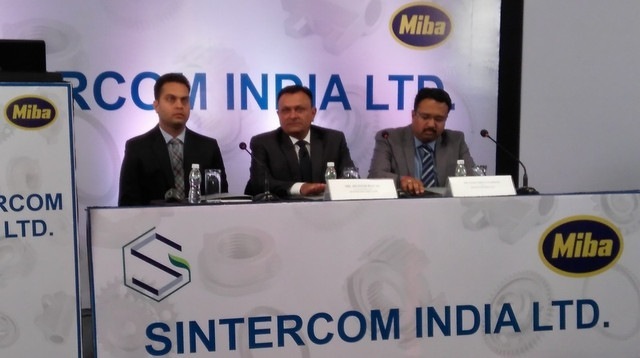
On paper, Sintercom looks like a dream. Clients include Bajaj, Hyundai, Tata, Mahindra, Maruti, Stellantis, Suzuki, and even Tier-1 suppliers like BorgWarner, Dana, Eaton, and Faurecia. There’s also aerospace, defence, medical equipment, and consumer goods exposure. Add to that a strategic joint venture with Miba Sinter, a global sintering giant, which now owns ~26% and sits as co-promoter.
So what’s the problem? The problem is that despite all this industrial muscle, the financial results behave like they skipped leg day. Revenues are stable, margins are decent at ~16–18% OPM, but depreciation and interest chew through operating profits like termites in a wooden cupboard. The company earns money operationally, but by the time it pays banks and writes off machines, very little is left for shareholders.
This is a classic case of a manufacturing company that looks solid operationally but struggles financially due to capital intensity, high working capital, and debt drag. If you’re an investor who believes “client list = guaranteed profits,” Sintercom is here to teach you humility.
3. Business Model – WTF Do They Even Do? (Explained Without a PhD)
Sintercom manufactures sintered metal components. In simple terms, they take metal powder, compress it into shape, heat it below melting point, and create high-strength, precision components. This process is ideal for mass production of complex shapes with tight tolerances.
Their product portfolio spans:
- Engine components like mass balancer systems, bearing caps, and damper gears
- Transmission components such as synchro rings and hubs