Sindhu Trade Links FY26: Revenue Collapsed 70%, Profit Bounced off the Floor
General information and entertainment, not investment advice. The author is not a SEBI-registered adviser or research analyst. No recommendation, no promised returns. Markets carry risk including loss of capital. Figures may not be current. Consult a registered adviser before acting.
1 — At a Glance
The company’s core business is shrinking hard. FY26 revenue fell 70% year-on-year to ₹524 crore—the lowest in at least a decade.
Yet net profit rebounded to ₹57.4 crore from ₹25.7 crore in FY25, a swing driven not by operational skill but by a ₹110 crore hit of “other income,” a catch-all for gains from assets the company is shedding or revaluing.
The logistics and coal-related operations that built this company are now producing negative operating profit in recent quarters. What remains is a finance business stuffed with equity holdings and loans to group companies—a holding company more than an operator.
Work capital days bloated to 395 from 100 in a single year. The company holds ₹45 crore in cash against ₹463 crore in debt. Promoters own 75%, institutions own 3%, and the public holds 21%—though recent equity placements hint at dilution ahead.
Question for you: Is survival through asset sales a strategy, or the clock running out?
2 — Introduction
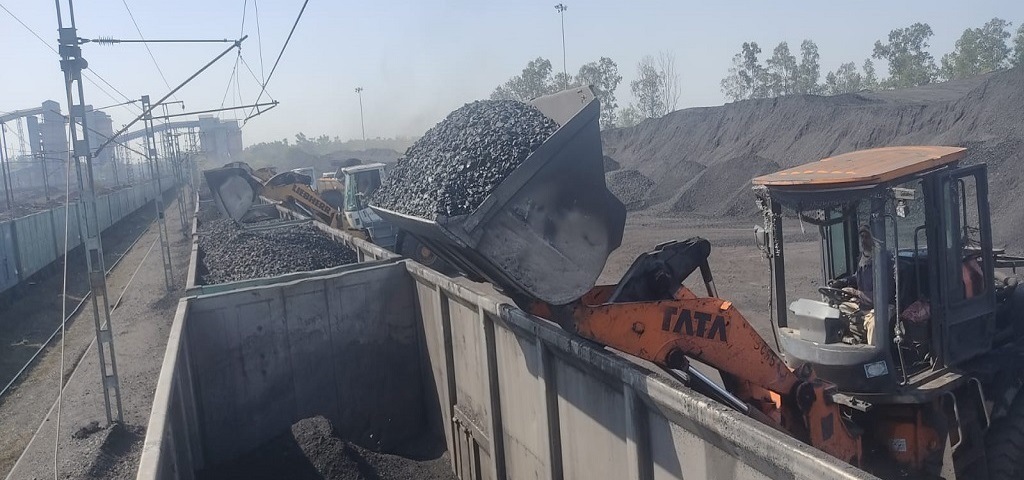
Sindhu Trade was born in logistics—tippers, loaders, coal haulage, fuel distribution. It diversified into power generation, media, petrol pumps, and coal mining overseas. That diversification worked, once. By FY16, the company shipped ₹966 crore in revenue.
Since then, almost everything has contracted. Revenue in FY26 is 46% of FY16. The logistics fleet shrunk from thousands of trucks to a dwindling roster. Coal mining subsidiaries were sold off or placed into voluntary administration. Management pivoted from transportation to finance—lending to promoter entities, holding equity stakes in related companies, collecting interest.
The FY26 results filed in May 2026 show a company in transition, or maybe in triage. A CEO resigned in January. An extraordinary general meeting looms in June to greenlight acquisitions of coal mining stakes held by promoters—essentially pulling assets into the parent to crystallize gains or dodge losses.
Auditors issued clean opinions. The company reports no exceptional items. But the shape of the income statement says: infrastructure business is broken, finance business is propping up reported profit, and cash is trickling away.
3 — Business Model: WTF Do They Even Do?
Start with the narrative claim: transportation and logistics, with subsidiaries in media, coal mining, and power.
The reality is messier. Core logistics revenue in FY26 was ₹37.7 crore from consolidated operations—a rounding error. The transportation segment still showed ₹5.8 crore segment profit, but that’s noise in a ₹524 crore revenue base.
Oil and lubricants trading contributed ₹3.2 crore revenue and ₹75 lakh profit. Petrol pump operations were bundled in. Power generation—biomass and wind—brought ₹5.0 crore revenue and lost ₹2.6 crore. So the capital tied up in turbines is bleeding.
Finance operations—the real trunk now—posted ₹425 lakh revenue (mostly interest and dividend income) against a ₹9.3 crore operating loss. That is, the company lent money to group entities and other parties, collected interest, but the portfolio is underwater or toxic.
The consolidated balance sheet shows ₹200 crore in “investments”—mostly equity stakes and loans to subsidiaries. Of the ₹52.4 crore total consolidated revenue, ₹5.6 crore came from “other income”—asset sales, revaluations, FX gains. Strip that out, and you have ₹46.8 crore of actual trading revenue.
The joke: The company is a portfolio of failing subsidiaries held together by Scotch tape and hope that something will crystallize value. Logistics didn’t work. Power didn’t work. So now it’s trying to acquire stakes in coal mining from related parties—using equity dilution to pay for it.
Quarterly snapshot (Q4 FY26): Revenue collapsed in the final quarter to ₹11.5 crore, down 61% year-on-year from ₹29.7 crore. Operating profit swung negative. Net profit of ₹1.4 crore came from equity gains and FX movements, not operations. EPS was ₹0.08.
The company’s own audited standalone P&L shows similar pain. Standalone revenue was ₹42.4 crore (FY26 full year), down 13% from FY25’s ₹48.6 crore. Standalone net profit was ₹2.5 crore, down 36% from ₹3.8 crore.
The gap between standalone and consolidated is the subsidiaries—some still operating (coal mining JVs), others dead weight.
5 — Market Expectations & Historical Multiples
This section describes how the market is currently pricing the company and how that compares with its own