1. At a Glance – Small Cap, Big Confidence
Sihora Industries Ltd is that kid who just entered the classroom in 2023 and already raised his hand before the teacher finished the question. Market cap of roughly ₹32.5 crore, current price hovering around ₹61, ROCE flexing at a spicy 36%, ROE doing bhangra at 43%, and operating margins north of 20%—all this from a company that barely finished tying its IPO shoelaces in October 2025.
In the latest half-yearly results, Sihora clocked sales of ₹8.38 crore and PAT of ₹0.64 crore. Yes, profits declined YoY for the quarter, but sales grew 26%. This is a classic Surat textile story: high churn, high energy, and zero patience for slow growth.
Debt sits at about ₹5.88 crore with a debt-to-equity ratio of 1.0, which means the company is not allergic to borrowing, but not drunk on it either. Add promoter holding of ~70% and zero pledge, and you get promoters who still believe in their own factory machines more than the stock market gods.
The stock trades at a P/E of ~19.4, roughly in line with the industry median. For a company incorporated in 2023, that’s bold. Or confident. Or both. The real question: is this confidence earned or borrowed—just like the balance sheet?
2. Introduction – Surat Textile Meets SME Stock Market
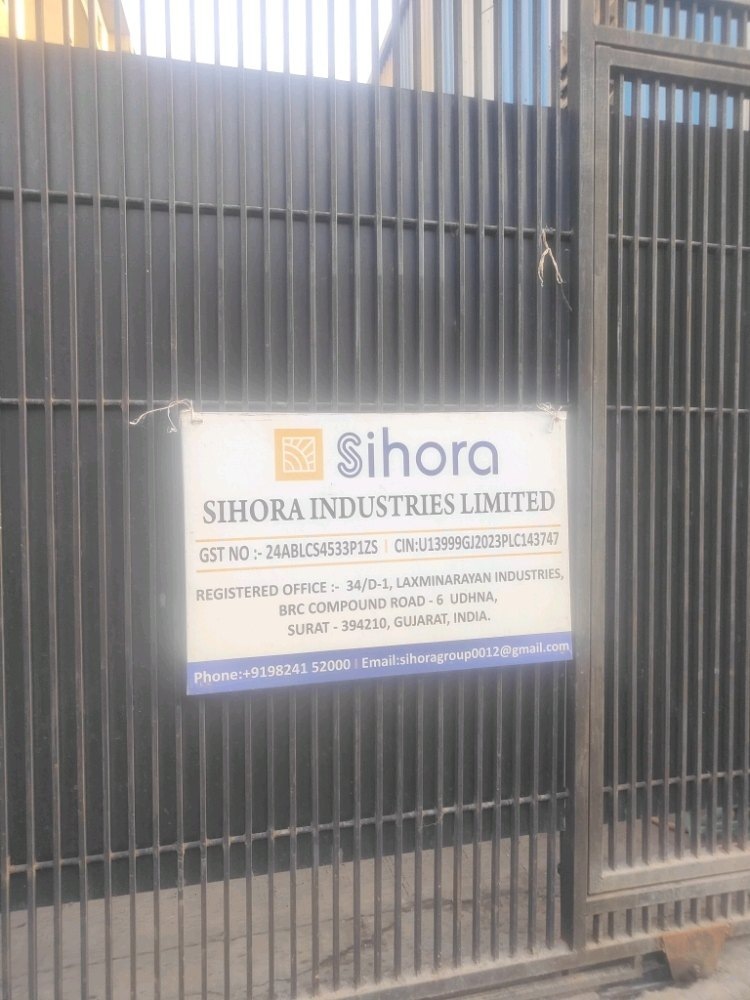
If Surat had a Tinder bio, it would say: “Into textiles, weaving, printing, dyeing, exporting, hustling, and occasional chaos.” Sihora Industries Ltd is a product of that ecosystem—born straight into looms, elastics, zippers, lace, and labels.
Incorporated in 2023, Sihora didn’t waste time writing long vision statements. It went straight to manufacturing. Narrow woven fabrics, laces, zippers, elastics—basically all those things you never notice in clothes until they fail. And when they fail, you curse loudly.
The company raised ₹10 crore through its IPO and listed in October 2025. Instead of splurging on brand ambassadors or glass offices, the money was earmarked for plant & machinery, debt repayment, and working capital. Boring? Yes. Sensible? Also yes.
But here’s where it gets interesting: despite being so young, Sihora already shows profitability, healthy margins, and a surprisingly high return profile. That’s either operational excellence—or the honeymoon phase. Textile investors know this movie well. First half is romance, second half decides the genre.
So, is Sihora a long-term fabric story or just a well-stitched IPO suit worn for one season?
3. Business Model – WTF Do They Even Do?
Imagine explaining Sihora to a lazy but smart investor over chai.
They make narrow woven fabrics. Not shirts. Not jeans. Not sarees. The supporting actors of garments—lace, borders, labels, elastics, zipper tapes, niwar tapes. Without these, fashion collapses like a badly stitched kurta.
Sihora operates an integrated manufacturing facility in Surat, meaning yarn processing, weaving (rapier & needle looms), digital printing, dyeing, embroidery, and finishing—all under one roof. In textile language, that’s vertical integration. In desi language, that’s “bhai ke ghar mein sab kaam ho jata hai.”
Their product mix is diversified:
- Lace & borders for fashion
- Rapier loom labels for branding and compliance
- Needle loom tapes for elastics and zippers
- Nylon zipper coils
- Elastics for garments, medical, and industrial use
Revenue-wise, viscose suit & rapier lace dominate (~55%), followed by zippers (~28.5%). Elastics are barely 0.5%, which tells you two things: either it’s a test product or management hasn’t fallen in love with it yet.
They also talk about new product development—PP-FDY niwar tapes, industrial slings, and water-resistant technical zippers. Translation: higher-margin, more industrial, less fashion-dependent products. That’s smart… if executed well.
But remember: Surat is full of people who can make everything. The real edge is not capability, it’s consistency.
4. Financials Overview – Numbers Don’t Lie, But They Smirk
Important lock: The latest results are Half-Yearly Results, not quarterly. EPS annualisation