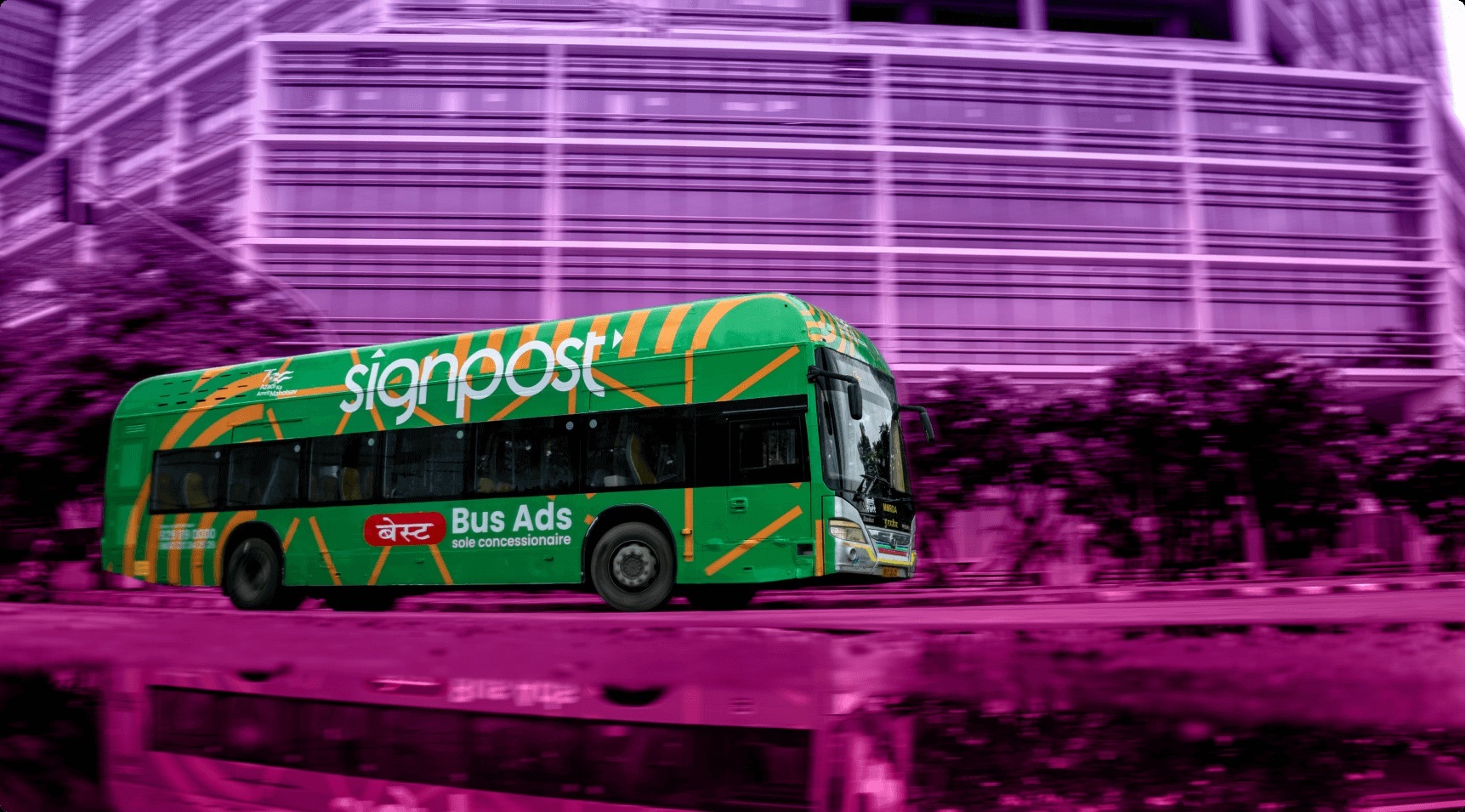
1. At a Glance – The Billboard Mafia Goes Digital
If you still think advertising is about some uncle staring at a highway hoarding while eating vada pav… congratulations, you’re stuck in 2005.
Because Signpost India just walked into FY26 like a full-blown AdTech operator — posting ₹142 crore revenue and ₹18.1 crore PAT in Q3 alone, with profit growing 215% YoY .
Yes, you read that right. A company that literally sticks ads on bus stops just delivered startup-level profit growth.
But here’s the real masala:
- They are not just selling ad space
- They are selling eyeballs with data analytics
- They are not just building hoardings
- They are building infrastructure with PPP contracts
- And they are not just an ad agency
- They are slowly morphing into a data + transit + smart city monetisation machine
Meanwhile, the stock is sitting at a P/E of ~24, almost like the market is confused:
“Bhai yeh hoarding company hai ya SaaS startup?”
But before you get carried away imagining this as the next tech darling, let’s zoom out.
Because behind every shiny metro ad screen, there’s:
- Heavy capex
- Debt
- Government contracts
- And receivables that move slower than Indian Railways during fog season
So the real question is:
👉 Is this a scalable high-margin AdTech platform… or just a capital-heavy billboard business with fancy PowerPoint slides?
2. Introduction – From Khamba Ads to AI Ads
India’s advertising industry has quietly undergone a transformation.
Earlier:
- Paint wall → put poster → hope someone notices
Now:
- Install digital screens → track movement → optimise ads in real-time
And right in the middle of this transition stands Signpost India.
Founded in 2008, the company has built:
- 12,500+ advertising assets
- Presence across 25+ cities
- 1,600+ clients
- ~60% repeat business
Which basically means brands are coming back like:
“Bhai, aur eyeballs dikhaao.”
Their core model is simple but powerful:
👉 Acquire high-footfall locations → install infrastructure → monetise ads
But the twist?
They are doing this through PPP contracts.
That means:
- Government gives space (metro, airport, bus stop)
- Company builds infra
- Company earns from ads
Translation:
“Government gives land, company sells attention.”
Sounds smart, right?
But there’s a catch.
PPP contracts =
- Long tenure (good)
- High upfront cost (painful)
- Execution risk (stressful)
Now add one more ingredient:
👉 They are shifting from traditional hoardings → digital DOOH
And that changes everything.
Because digital screens:
- Allow multiple advertisers
- Increase revenue per square foot
- Enable programmatic pricing
Basically:
One hoarding becomes a Netflix subscription model
Now ask yourself:
👉 If digital ads scale, does this become a tech company?
3. Business Model – WTF Do They Even Do?
Let’s simplify this like explaining to a lazy investor who only cares about IPL ads.
Step 1: Grab prime real estate
- Metro stations
- Airports
- Bus shelters
- Fuel stations
Step 2: Build infrastructure
- Digital screens
- Hoardings
- Smart shelters