1. At a Glance – Masaledaar Snapshot
₹45.4 crore market cap, current price hovering around ₹95, stock P/E of 12.8 when the industry is busy showing off at 27.4, and suddenly Signoria Creation Ltd is behaving like that quiet Jaipur cousin who studied sincerely while others were doing fashion shows. The latest Half Yearly Results (H1 FY26) show sales of ₹20.62 crore and PAT of ₹1.82 crore, with quarterly sales growth clocking a shocking 106% YoY. This is not a typo, not a fashion influencer exaggeration, and not a Diwali sales WhatsApp forward. ROCE stands at 16.8%, ROE at 17%, and the company has just added a new manufacturing unit that boosted daily production by 40%. Yet the stock is down ~15% over one year like the market is saying, “Bhaiya, show more.” High debtor days, no dividends, and some bank loans sitting quietly in the balance sheet — all present, all accounted for. But growth is also very real. So is this a boutique growth story or just ethnic wear ka seasonal jadoo? Let’s open the lehenga layer by layer.
2. Introduction – Welcome to Jaipur, Capital of Kurtis & Cash Cycles
Signoria Creation Ltd was incorporated in 2019, which means it is younger than most investors’ demat accounts but already running two manufacturing facilities in Jaipur. The company does exactly what its name suggests — creates fashion, signs invoices, and waits patiently for customers to pay (sometimes for 199 days, but we’ll come to that gossip later).
This is not a fancy tech startup promising AI-powered kurtis. This is proper old-school Indian garment manufacturing with ethnic wear, designs, tailors, machines, inventory, and distributors who say “payment next month pakka.” The company focuses on women’s ethnic wear — kurtis, kurti-pant sets, dupattas, gowns, co-ord sets — basically everything that fills Indian wardrobes before weddings, festivals, and sudden family functions.
The interesting part is timing. Signoria listed on the SME platform, expanded capacity in May 2025, diversified into PPE earlier (yes, even ethnic wear companies tried PPE during COVID hangovers), and is now showing aggressive top-line growth. Yet valuation remains modest. Why? Because the market doesn’t trust textile stories easily. Been there, burned lehengas there.
So the real question is: is Signoria stitching a scalable brand or just riding a temporary demand wave? And more importantly — can cash flow ever keep up with the fashion sense?
3. Business Model – WTF Do They Even Do? (With Style)
Imagine a fashion house that doesn’t do runway shows but does bulk orders. That’s Signoria.
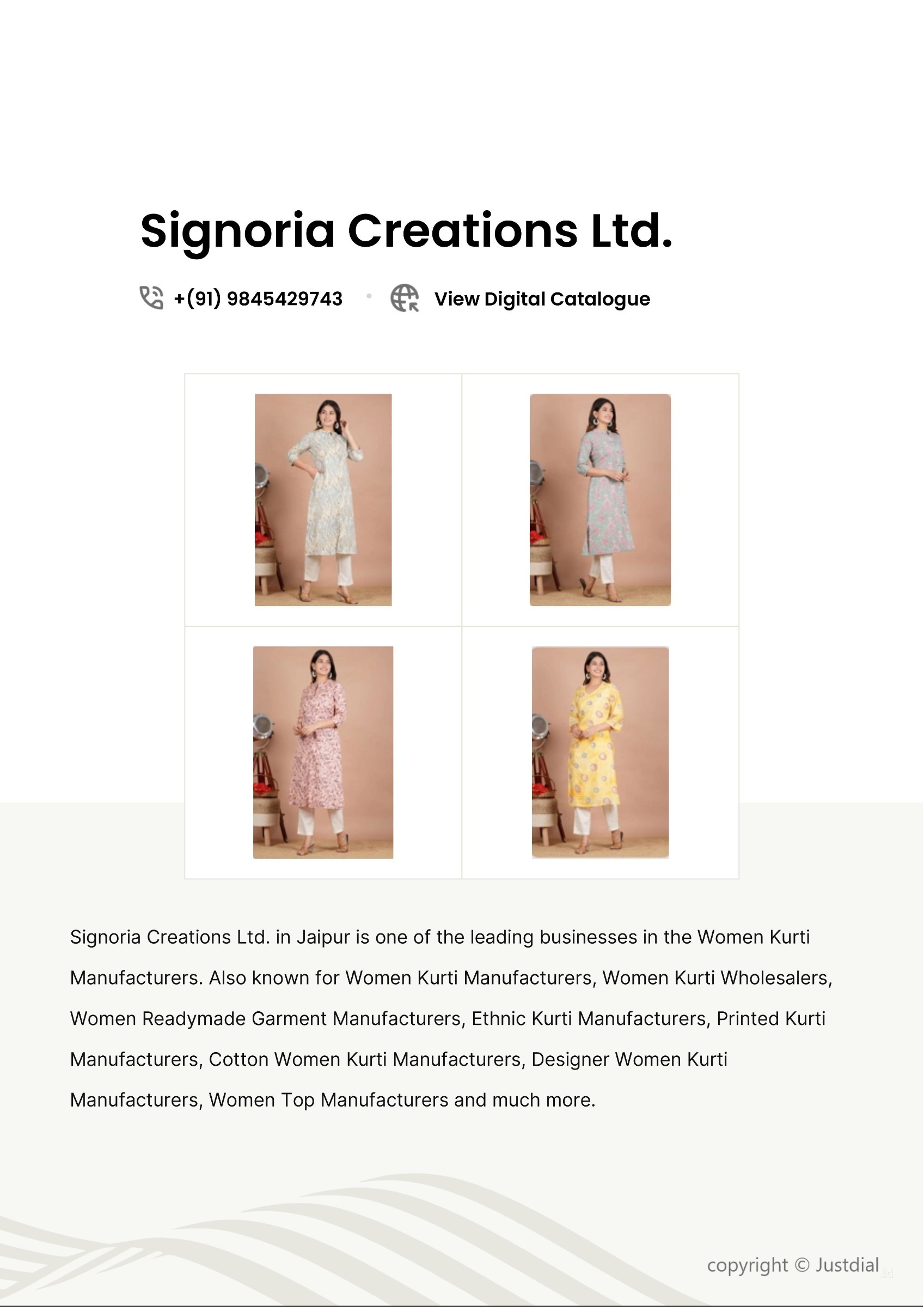
The company designs, manufactures, and markets women’s ethnic apparel under the brand “Signoria.” It has a design portfolio of 950+ designs, which basically means someone in Jaipur is constantly saying, “Isme thoda aur embroidery daalo.”
Manufacturing happens in-house at two facilities in Jaipur, Rajasthan, supported by 140+ employees and a serious army of machines. Installed capacity across product categories totals 4.77 lakh garment pieces, with actual production utilization varying product-wise. Tops and kurti-pant sets are running near full capacity, while gowns and co-ord sets still have room to breathe.
Sales are largely B2B and distributor-led, not D2C influencer Instagram reels (yet). The company focuses on volume-driven ethnic wear rather than premium luxury couture. That means margins are decent but not Page Industries-level flex.
In May 2025, the company added a new 5,000 sq. ft. facility with 130 machines, increasing daily production from 2,500 to 3,500 pieces. That’s a clean 40% jump in output capacity — very real, very tangible, no PowerPoint fantasy.
So the model is simple:
Design → Manufacture → Distribute → Wait for payment → Repeat.
The risk? Fashion changes, inventory piles up, and working capital starts behaving like a lehenga with too many layers.
4. Financials Overview – Half Yearly Results Locked, Calculator Out
Result Type Detection (LOCKED 🔒)
The latest official heading clearly states “Half Yearly Results”.
👉 EPS annualisation will be latest EPS × 2