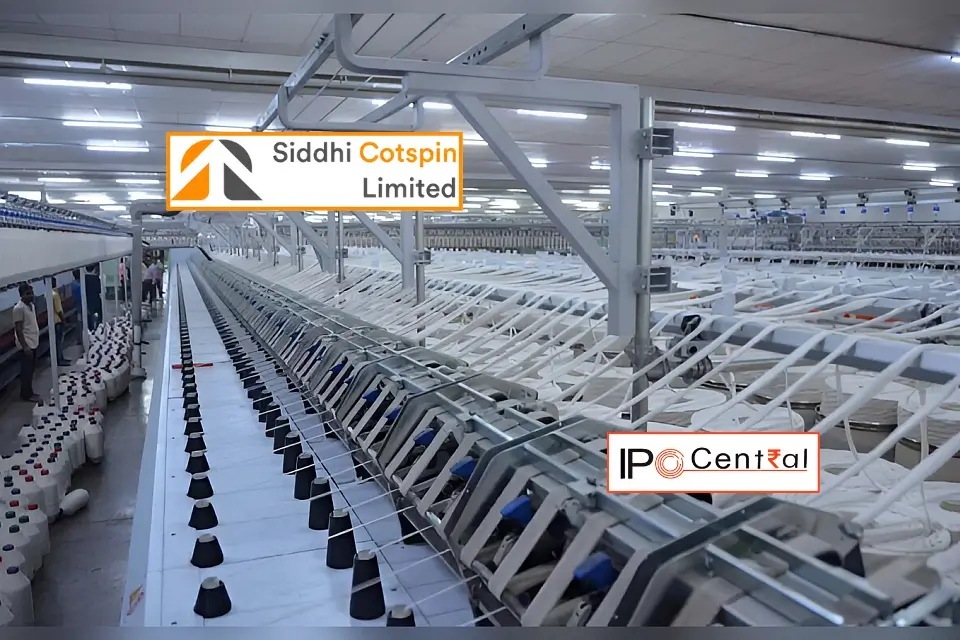
Siddhi Cotspin IPO Q1 FY26 – SME Yarn Spinner with ₹724 Cr Sales, ₹13 Cr PAT, and a 20x P/E Ask: Cotton or Khaki Scam?
1. At a Glance
Breaking News: One more SME company from Gujarat has decided to make the stock market its private ATM. Siddhi Cotspin, a cotton yarn spinner, is pitching a ₹69.85 crore IPO on NSE SME. With revenues crossing ₹724 crore in FY25 but profits stuck at a mere ₹13 crore (that’s like serving a 5-course Gujarati thali but only offering one piece of dhokla), they’re asking retail investors to cough up ₹2.6 lakh per lot. Yes, you read it right – minimum ticket size ₹2,59,200. Looks like SME IPOs are the new crypto casinos.
2. Introduction
Some companies make luxury cars. Some make iPhones. Siddhi Cotspin makes yarn. Spinning mills are the background dancers of the textile industry—nobody talks about them, but without them, Salman Khan would still be running around in lungis made of jute sacks.
Siddhi Cotspin was incorporated in 2015, and in just 10 years, it has managed to reach a turnover of ₹724 crore. Sounds impressive until you look at the PAT: just ₹13 crore. That’s a net margin of 1.8%. Even pani puri vendors make higher margins, and they don’t need IPO approvals.
Now, here’s the fun: despite wafer-thin profits, the company wants a post-IPO market cap of ₹263 crore at the upper band. That’s a 20x P/E (post-dilution) for a business where raw cotton prices and power bills decide your fate. Essentially, they’re selling a ₹13-crore profit company as if it’s the next Page Industries.
But wait—the twist is that the promoters will dilute from 85.6% to 65.6%. Still retaining control but conveniently pocketing some cash through Offer for Sale. And retail? Well, retail is being treated like fresh cotton—cheap, plentiful, and easily ginned.
3. Business Model – WTF Do They Even Do?
Think of Siddhi Cotspin as the neighborhood “charkha” guy but on steroids. They buy cotton, spin it into yarn, and sell it to garment makers. Their product catalogue includes:
Compact carded and combed hosiery yarns
Slub and siro-slub yarns (fancy names, basically “designer” yarn)
Lycra-core spin yarns (aka elastic mixed yarns, so your jeans don’t rip after one plate of biryani)
TFO double yarns (adds strength—because apparently, “single” wasn’t strong enough, just like your gym trainer says).
They operate out of Dholi, Ahmedabad with ~29,000 spindles and an annual capacity of ~90 lakh kg yarn. Customers? Textile mills, garment exporters, distributors. Basically, they don’t sell directly to you or me, unless you like buying yarn in bulk to knit sweaters for your extended family of 200.
In short, they’re middlemen between cotton farmers and Zara/H&M suppliers. A classic B2B commodity player pretending to be an innovation-led manufacturer.
4. Financials Overview
Here’s where the yarn unravels.
Source table
Metric
Latest Qtr (Q1 FY26)*
YoY Qtr (Q1 FY25)*
Prev Qtr (Q4 FY25)**
YoY %
QoQ %
Revenue
181.2
158.7
170.5
14.2%
6.3%
EBITDA
8.1
7.8
7.5
3.8%
8.0%
PAT
3.2
3.0
3.1
6.7%
3.2%
EPS (₹)
0.79
0.77
0.76
2.6%
3.9%
*Estimated from annual FY25 numbers. **Back-calculated from PAT and margins.
Annualised EPS = ₹3.16. Post-IPO dilution makes it ~₹2.7. At issue price of ₹108, you’re paying 20x P/E for a textile spinner. Even Arvind Mills doesn’t command that consistently.
Detective note: Profits are so slim, one wrong shipment of cotton bales and the year’s EPS vanishes faster than free chai at a political rally.
5. Valuation Discussion – Fair Value Range Only
Let’s unroll three threads:
a) P/E method
Post-IPO EPS = ₹2.7
Industry average P/E = 12–15x (textiles, spinning peers).