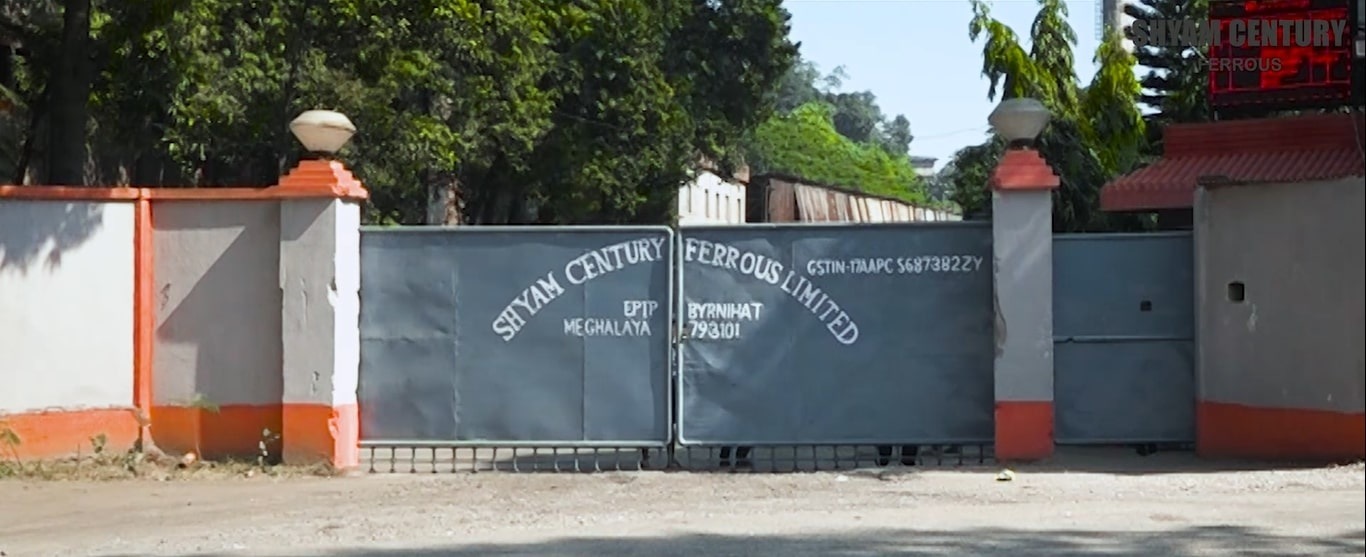
Shyam Century Ferrous Q3 FY26: ₹0.84 Cr Revenue, -₹6.14 Cr PAT, Plant Shut, Assets on Sale — Is This a Ferro Alloy Company or a Fire Sale?
1. At a Glance
Shyam Century Ferrous Ltd is currently trading at ₹6.02, with a market cap of ~₹128 crore, and the stock has politely informed shareholders that gravity exists — down ~42% over 1 year and ~32% over 3 years. The latest quarter looks less like a business update and more like a medical report.
Q3 FY26 numbers? Revenue collapsed to ₹0.84 crore, down 97.4% YoY, while PAT came in at -₹6.14 crore, which is not a typo but a full-blown operational shutdown signature. ROCE and ROE are both negative (~-5.7%), operating margins are at -1,162% (yes, four digits), and the plant that contributes 100% of turnover has been shut since 7 May 2025 due to power tariff issues.
Valuation metrics are doing somersaults because earnings are missing in action. The stock trades at 0.75× book value, debt is almost zero (₹1.13 crore), but that’s mostly because there’s barely any business activity left to borrow for.
This is not a cyclical downturn quarter. This is a “business paused, assets being explored for sale/lease” quarter. Curious yet? You should be.
2. Introduction
Shyam Century Ferrous was supposed to be a simple story. Make ferro silicon. Use captive power. Sell into steel and alloy markets. Print steady mid-cycle profits.
Instead, what we have today is a company that has shut its only operating plant, is bleeding losses every quarter, and whose board has approved an in-principle sale or lease of substantially the whole of its assets.
That sentence alone tells you this is no longer a “growth” or even “recovery” narrative. This is a survival + optionality narrative.
Ferro alloys are brutally power-intensive — power makes up 45–50% of cost of sales. Shyam Century’s entire strategy depended on cheap and reliable power in Meghalaya. When that assumption broke (tariff hikes, regulatory interruptions, pollution board notices), the business didn’t bend — it snapped.
Over FY22–FY23, volumes were stable (~15,000 MT of ferro silicon), but margins were already under stress. Fast forward to FY25–FY26, and revenues have evaporated quarter by quarter, culminating in ₹0.84 crore sales in Q3 FY26 — effectively nothing for a listed manufacturing company.
So the real question isn’t “Is Shyam Century cheap?” The real question is: Is Shyam Century even operating?
3. Business Model – WTF Do They Even Do?
On paper, Shyam Century Ferrous does two things:
Manufactures ferro silicon
Generates power (in theory)
In reality, as of Q3 FY26:
Ferro silicon plant: Closed
Captive power plant (14 MW): Non-operational
Power sourced externally: Too expensive
Revenue engine: Off
Expense engine: Still running
Ferro silicon is a commoditized alloy used in steelmaking and foundries. Pricing is cyclical, volumes are steady, but margins depend entirely on power cost discipline. Large players survive because they have:
Captive power
Scale
Long-term contracts
Cost buffers
Shyam Century had only one plant, in Meghalaya, and that plant is both power-dependent and regulator-sensitive. Once power tariffs went up and pollution board issues kicked in, there was no Plan B.
In FY23, the company produced 14,967 MT and sold 14,981 MT of ferro silicon — a clean, boring, functional manufacturing story. Today? That plant contributed 100% of turnover, and now it contributes zero.
If you’re wondering whether this is diversification risk — yes. If you’re wondering whether management anticipated this — filings suggest they reacted, not anticipated.
4. Financials Overview
Quarterly Performance Table (₹ crore)
Metric
Latest Qtr (Q3 FY26)
Same Qtr Last Year
Prev Qtr
YoY %
QoQ %
Revenue
0.84
32.67
7.23
-97.4%
-88.4%
EBITDA
-9.76
-0.25
-1.04
NM
NM
PAT
-6.14
0.06
0.80
-10,333%
-867%
EPS (₹)
-0.29
0.00
0.04
NM
NM
Annualised EPS (Quarterly Rule): Q3 EPS = (-0.29 + earlier quarters average) × 4 is meaningless here because operations are shut. Practically, EPS visibility is broken.
Commentary: This is not margin compression. This is revenue extinction. When sales drop below depreciation + fixed costs, losses become mechanical. Shyam Century is now losing money by default, not by inefficiency.
5. Valuation Discussion – Fair Value Range Only
Let’s be honest: traditional valuation methods struggle here. Still, let’s walk through them.
1. P/E Method
EPS (TTM): -₹0.65
P/E: Not meaningful
P/E fails when E is negative. Next.
2. EV / EBITDA
Enterprise Value: ₹43.6 crore
EBITDA (TTM): Negative
Again, unusable.
3. DCF (Asset-Centric Interpretation)
This is no longer a cash flow DCF. This is an asset optionality DCF.
Key reality:
Total assets (Sep 2025): ₹178 crore
Net worth: ₹148 crore
Debt: ₹1 crore
Plant shut, assets proposed for sale/lease
If assets can be monetised at even 30–40% of book value, the implied value band looks different from earnings-based valuation.
Indicative Fair Value Range (Educational Only): Based on asset backing and liquidation/lease optionality, valuation appears anchored