Shri Bajrang Alliance FY26: A ₹271 Crore Steel Roller That Books ₹44 Crore of Profit It Didn’t Quite Earn
Spotted a factual error — a wrong number, date, or fact? Tell us and we will check the source.
General information and entertainment, not investment advice. The author is not a SEBI-registered adviser or research analyst. No recommendation, no promised returns. Markets carry risk including loss of capital. Figures may not be current. Consult a registered adviser before acting.
1. At a Glance
Shri Bajrang Alliance closed FY26 with revenue of ₹271 crore, down about 32% from ₹398 crore the year before. Operating profit sat at roughly ₹4 crore — an operating margin near 1%, where it has more or less lived for years. And yet the consolidated bottom line reads ₹44.27 crore, up from ₹32.6 crore, the best profit figure in the company’s recorded history.
Two numbers moving in opposite directions is the entire story here. A shrinking steel roller with a wafer-thin operating margin somehow reports its fattest-ever net profit. The reconciliation isn’t hidden — it sits in the consolidated accounts, where profit before tax was ₹3.81 crore and the share of profit from associate companies did the rest of the lifting.
Alongside the results came a clean-out: a Chairman resigned, a new Chairman & Managing Director was named, an independent director’s term ended, a partnership was exited, and the bank facility was downgraded a notch. A busy June for a quiet company.
The market, meanwhile, pays about 3.9x earnings for all of this — against a peer median north of 22x. That single gap is the question the rest of this entry circles.
2. Introduction
Incorporated in 1990 and run by the Goel family out of Raipur, Chhattisgarh, Shri Bajrang Alliance is described in its filings as one of the larger structural rolling mills in the state. The Goel group’s interests spread across steel, media, digital marketing, hydro power and food processing, and SBAL has operational linkages with the group’s flagship, Shri Bajrang Power & Ispat Ltd, for sourcing raw materials.
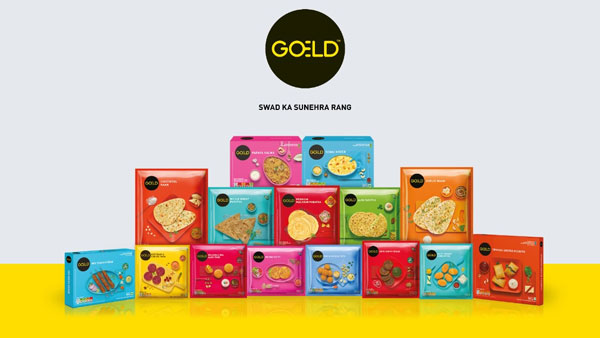
The company runs two divisions. The steel manufacturing unit — angles, beams, channels, flats, rounds — carried a rolling capacity that expanded from 60,000 MT to 100,000 MT over the recent period. The food division, incorporated in 2020, sells 100% vegetarian frozen products under the GOELD brand and has picked up approved-supplier arrangements with names including KFC, Domino’s and Nestlé India in earlier years.
FY26 was interrupted in a literal sense: plant operations were temporarily shut from 18 November 2025 to 6 February 2026 for capacity expansion and process improvement, per the credit rating rationale. That closure is visible in the December quarter, which we come to below.
The consolidation matters more than usual for this company, because SBAL holds an associate stake in the flagship steel entity, and that associate is where the reported profit largely originates.
3. Business Model: WTF Do They Even Do?
On paper, two things. They roll steel into structural shapes, and they freeze samosas. The revenue-weighted answer is steel — the manufacturing operations dominate the top line, with trading a small slice — while the food business supplies the growth narrative and the KFC-Domino’s-Nestlé name-drops.
But the profit model is a third thing entirely, and it’s the interesting one. SBAL’s own operations threw off roughly ₹4 crore of operating profit on ₹271 crore of sales in FY26. The reported ₹44 crore of net profit comes overwhelmingly from its share of an associate’s profit, sitting well below the operating line. So the honest description of the business model is: a low-margin steel roller and frozen-food maker that also happens to own a meaningful stake in a much more profitable steel company, and consolidates its share of that profit.
This is not a criticism — associate accounting is standard. It’s just worth being precise about which engine is pulling the train. When someone points at a ₹44 crore profit, the operating business contributed a rounding error of it; the associate contributed the bulk.
The frozen-food arm is the part management clearly wants investors to watch — supercritical oils, nutraceuticals, retail foods, an ESG deck, thirty-five cities of “GOELDEN presence.” It is also, so far, a small operation attached to a steel company whose margins the food business has not yet meaningfully changed.
Does a fast-food supplier list fix a 1% operating margin, or just make the deck look better?
4. Financials Overview
Figures are consolidated, in ₹ crore.
Metric
Latest Q (Mar 2026)
YoY (Mar 2025)
QoQ (Dec 2025)
Revenue
47.29
80.43
46.96
Operating Profit
0.76
1.55
-2.50
PAT
19.40
11.33
6.17
EPS (₹)
21.56
12.59
6.86
Revenue fell about 41% year-on-year, yet PAT rose 71% — the March quarter carried ₹4.13 crore of other income and, again, the associate profit share doing the heavy work below the operating line.