1. At a Glance
Shree Renuka Sugars Ltd is what happens when scale, ambition, and government policy walk into a sugar mill… and only two walk out smiling.
Market cap is hovering around ₹5,262 Cr, while enterprise value balloons to ₹11,456 Cr—because debt refuses to leave the party. The stock trades near ₹24.7, down ~11% in 3 months and ~33% over 1 year, which is not exactly a victory lap.
Latest Q3 FY26 (Dec 2025) numbers show ₹2,273 Cr revenue (QoQ down, YoY struggling) and PAT loss of ₹38 Cr, which—believe it or not—is actually better than earlier disasters. ROCE is at ~10.6%, interest coverage is a scary 0.16, and book value is negative ₹10.9. Yes, negative. That’s not a typo, that’s accumulated trauma.
Sugar refining is booming, exports are strong, branded sugar is flexing, ethanol is limping, and debt is sitting on Renuka’s chest like a gym bro who skipped leg day. Curious how all this fits together? Good. Read on.
2. Introduction
Shree Renuka Sugars is not a newbie mill trying to find its footing. Incorporated in 1995, it is one of India’s largest integrated sugar players with sugar mills, refineries, distilleries, and cogeneration plants—basically a full buffet of sugar economics.
On paper, Renuka looks powerful:
• 4th largest sugar manufacturer in India
• Largest sugar refiner in India
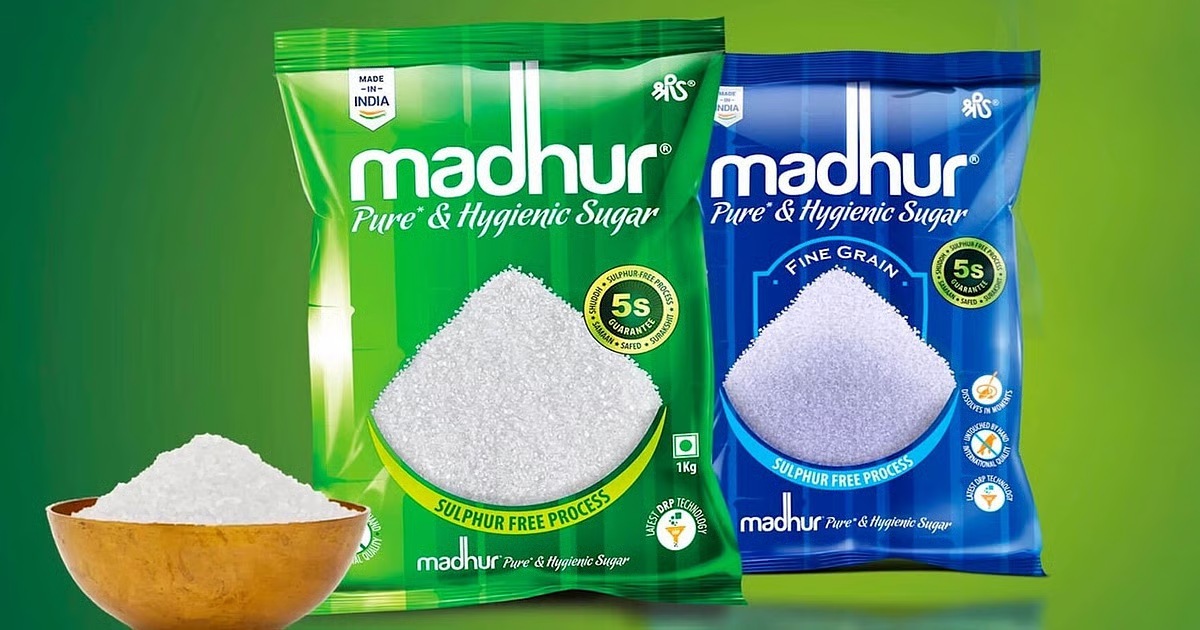
• Madhur brand with ~33% share in branded sugar
• 75% exports in FY24
And yet, financially, it behaves like someone earning well but drowning in EMIs. Despite revenue of ₹9,398 Cr, the company reported a TTM loss of ₹578 Cr, negative net worth, and borrowings of ₹6,266 Cr as of the latest quarter.
So what’s going on? Is this a cyclical pain story, a policy casualty, or just aggressive expansion funded by debt at the wrong time? Let’s break the sugarcane stalk