1. At a Glance
Shree Rama Multi-Tech (SRMTL) is currently operating in a high-stakes environment where the backing of the Nirma Group provides a safety net, but internal legacy issues continue to haunt the books. For the financial year ended March 2026, the company reported a total income of ₹24,346.78 lakhs (₹243.47 cr), showing a steady climb from the previous year. However, the headline numbers tell only half the story. While the company has managed to turn profitable, the audit report is stained with a “Qualified Opinion” that has become a repetitive feature of their financial storytelling.
The primary red flag remains the defunct Mauritius subsidiary. The management admits that it is impossible to consolidate the accounts of Shree Rama (Mauritius) Limited because the resident directors resigned nearly two decades ago. This missing link in the consolidated financial statements is a persistent thorn in the side of transparency. Furthermore, the company recently had to issue a clarification regarding a massive clerical error in its audit impact statement—initially reporting total assets at a measly ₹207 lakhs before correcting it to the actual ₹22,785 lakhs. Such “typographical errors” in regulatory filings rarely inspire confidence.
Despite these accounting shadows, the company is gaining investor attention due to its Debt-to-Equity ratio sitting comfortably at 0.12 and a significant reduction in borrowings. Net profit for FY26 stood at ₹24.76 cr, nearly doubling the operational performance of previous years if we exclude the massive deferred tax boost seen in FY25. With a Market Cap of ₹607 cr, the market is pricing this as a recovery play, but the baggage of the past and the concentration of revenue—where 10 customers drive 65% of sales—keep the risk profile elevated.
Is the Nirma pedigree enough to polish this legacy packaging player, or will the “defunct” ghosts eventually catch up?
2. Introduction
Shree Rama Multi-Tech Ltd (SRMTL) is a veteran in the packaging industry, incorporated back in 1987. It operates out of Gujarat, the industrial heartland of India, and specializes in primary packaging solutions. If you have ever squeezed a tube of toothpaste or a gel-based cosmetic, there is a fair chance SRMTL’s multi-layer tubes were involved.
The company’s identity shifted significantly when it became part of the Nirma Group, which now holds a dominant 61.57% stake. For a company that once struggled with deep-seated financial stress, the entry of a conglomerate like Nirma was a lifeline. Under this umbrella, SRMTL has focused on laminated tubes, flexible laminates, and specialty packaging.
The journey hasn’t been smooth. The company has spent years cleaning up its balance sheet, using rights issues to pare down debt and redeeming non-convertible debentures. Today, it serves over 150 clients across India and international markets, including Asia, Europe, and Africa.
However, the organizational structure remains lean and occasionally volatile. We have seen frequent changes in Key Managerial Personnel (KMP), with the CFO position seeing a revolving door of exits and appointments over the last two years. While the operational machinery at the Moti-Bhoyan plant is humming with new capacity expansions, the administrative side seems to be in a constant state of “catch-up” with regulatory and audit requirements.
3. Business Model – WTF Do They Even Do?
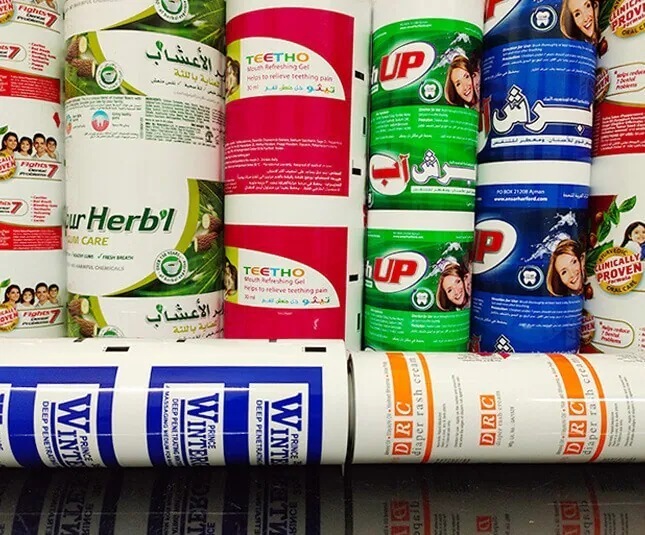
SRMTL is essentially the “skin” maker for the FMCG and Pharma world. They manufacture the tubes and films that hold the products you use daily. Their business is split into three main buckets:
- Multilayer Tubes: Their bread and butter. These are used for everything from dental care to gel-based medicines.
- Tube Laminates: Specialized high-performance films, mostly feeding the demanding Pharmaceutical sector.
- Flexible Laminates: Think of the sachets or “miniature packs” used for carry-home goods.
They operate a massive plant in Gujarat with a capacity of 9,514 lakh multi-layer tubes. That’s nearly a billion tubes. But here’s the catch: they are heavily reliant on the big fish. Their top 10 customers contribute nearly 60-65% of their total revenue. If one big FMCG giant decides to switch