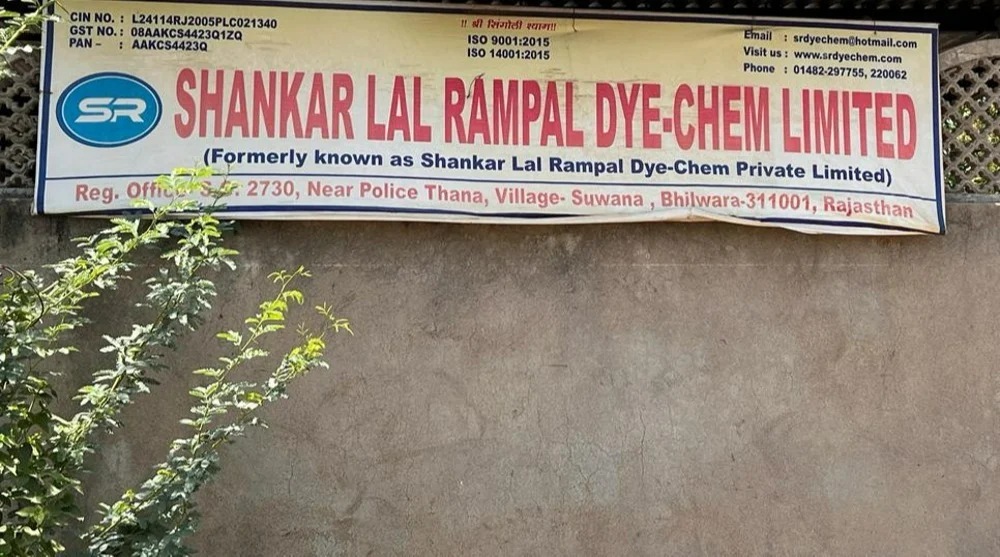
1. At a Glance – The Chemical Trader With Thin Margins and Thick Family Control
Shankar Lal Rampal Dye-Chem Ltd is currently trading at ₹42.9 with a market cap of ₹274 Cr. The stock has fallen 35.8% in the last 3 months and 31.8% in one year. Ouch. That’s not a correction. That’s a chemical spill.
Stock P/E stands at 24.5 while the industry median is 60.8. ROCE is 14.1%, ROE 10.9%, and debt-to-equity a comfortable 0.15. Sounds decent? Wait till you see the margins. Operating margin is just 3.81%. Net profit margin last year was 2.83%. In chemicals, this isn’t margin — this is pocket change.
Q3 FY26 (Dec 2025) revenue came at ₹90.54 Cr versus ₹101.89 Cr last year. Profit fell to ₹2.08 Cr from ₹2.86 Cr. That’s a 27% drop in profit YoY. EPS came at ₹0.33 for the quarter.
Is this a stable trading business with limited upside? Or a sleeping margin story? Let’s dissect.
2. Introduction – The Trader That Doesn’t Manufacture, Just Negotiates
Incorporated in 2005, this company doesn’t manufacture chemicals. It trades them. Think of it as the middleman at the mandi — except instead of onions, it’s Sulphur Dyes, Paraffin Wax, Phosphoric Acid, Sodium Hydrosulphite, Hydrogen Peroxide, and more.
Revenue breakup tells us 99% comes from sale of dyes and chemicals. Commission income is just 1%. So yes, they are primarily traders.
Exports contribute only 5% of revenue. Domestic is 95%. So despite exporting to Malaysia, Turkey, Germany, Japan and half the world, bulk money is still Indian.
Which means margins are dictated by competition and pricing power. And in chemical trading, pricing power is like Indian summer rain — unpredictable.
So the question is: Can a trading company with 3% margins create shareholder wealth long term? Or does it need scale explosion?
3. Business Model – WTF Do They Even Do?
Let’s simplify.
They buy chemicals in bulk.
They sell chemicals in bulk.
They make 2–4% margin.
That’s it.
Their product basket includes:
- Sulphur Dyes
- Paraffin Wax (fully & semi refined)
- Phosphoric Acid
- Sodium Sulphide Flakes
- Hydrogen Peroxide
- Citric Acid
- Glycerine
Customers include textile and garment industries.
They operate as traders, exporters, importers, and commission agents.
In Q1 FY26, the board approved acquisition for backward integration and manufacturing expansion. Now that is interesting. Because trading margins are thin. Manufacturing margins? Potentially fatter.
Is management trying to escape the 3% trap? Or just expanding balance sheet without expanding profits?
4. Financials Overview – Let’s Open the Books