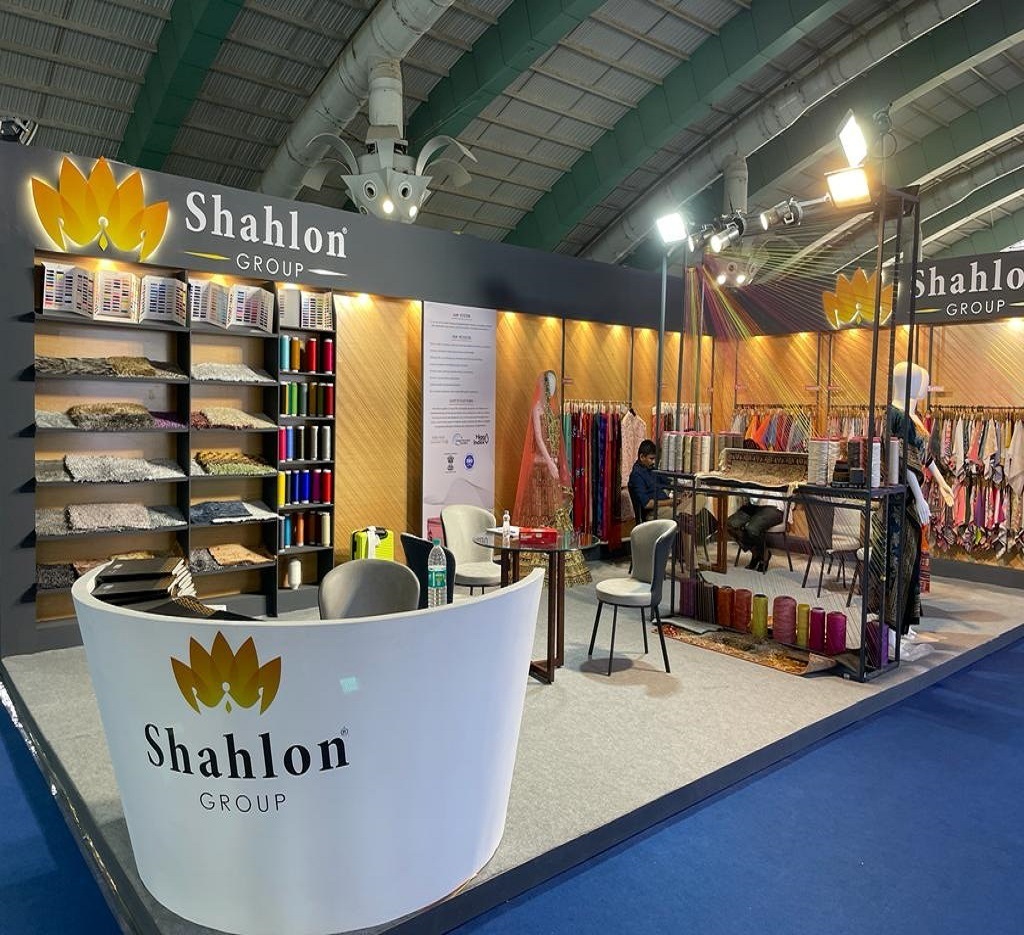
Shahlon Silk Industries FY26: A Textile Company That Made More Money Selling Buildings Than Fabric
Spotted a factual error — a wrong number, date, or fact? Tell us and we will check the source.
General information and entertainment, not investment advice. The author is not a SEBI-registered adviser or research analyst. No recommendation, no promised returns. Markets carry risk including loss of capital. Figures may not be current. Consult a registered adviser before acting.
1 — At a Glance
Shahlon Silk closed FY26 with revenue of ₹260 crore and net profit of ₹4.45 crore — a profit up 27% on the prior year, sitting on top of a business that grew sales just 3.3%. The gap between those two numbers is the whole story, and the story runs through a segment table most textile companies don’t have: a “Real Estate & Construction Services” line that booked ₹22 crore of revenue and ₹9.43 crore of segment profit before interest, against the textile division’s ₹238 crore of revenue and ₹11.97 crore. The looms did the volume; something else did the margin.
The balance sheet carries ₹123 crore of borrowings against ₹110 crore of net worth. The year’s operating cash flow came in at negative ₹0.22 crore, while ₹19 crore of cash arrived through investing — the proceeds of selling fixed assets, whose book value dropped from ₹67 crore to ₹46 crore in twelve months. A credit rating spent the year migrating to “Issuer Not Cooperating” before being withdrawn entirely. A GST show-cause notice proposing ₹5.5 crore of penalty landed in March.
A company that sells its own machinery to fund the year is telling you where it thinks the growth is. Whether the textile floor or the property ledger carries this forward is the question the segment table keeps asking.
2 — Introduction
Shahlon Silk Industries, incorporated in 2008 and headquartered in Surat, is a fully integrated textile enterprise inside the Shahlon Group. It runs water jet, air jet and rapier looms across plants at Kim, Karanj, Kosamba and Sachin in Gujarat, spanning texturising, twisting, sizing, yarn dyeing, weaving and finished fabric. It also trades partially oriented and fully drawn yarn, and acts as a del credere agent for Reliance Industries — the middleman who guarantees the buyer’s payment and takes a cut for the risk.
That is the textile half. The other half is newer. The audited FY26 results carry a formal second reportable segment — Real Estate & Construction Services — alongside the textiles. The board also disclosed a GPCB approval in February for a 5 MLD effluent-treatment and 2 MLD water-treatment plant, a ₹67.93 crore project slated for completion by December 2026, extending an earlier move into the CETP business.
The board approved the FY26 audited numbers on May 29, 2026, recommended a final dividend of ₹0.07 per ₹2 share (3.5%), and appointed a new cost auditor for FY27. The re-appointments of the Chairman, Managing Director and Whole-time Director run through September 2028. On paper, a settled family enterprise. In the footnotes, a busier year than the top line suggests.
3 — Business Model: WTF Do They Even Do?
Start with what the yarn actually is. Shahlon buys polyester chip and filament economics from the top of the chain, texturises and twists and sizes it, occasionally dyes it, sometimes weaves it into grey fabric, and sells the result to weavers, knitters and furnishing makers. The product list reads like a fabric-shop inventory: textured yarn, intermingled yarn, carpet yarn, space-dyed yarn, then plain, twill, satin, dobby, oxford and herringbone weaves. At one point the company even manufactured non-woven safety kits and shoe covers through a joint venture — a pandemic-era diversification now sitting quietly in the archive.
The del credere role is the interesting bolt-on: for Reliance, Shahlon guarantees payment from yarn buyers and earns a commission for underwriting that credit risk. It is a business of thin margins and other people’s balance sheets — you make money by being trusted with settlement, not by making anything.
Then there is the part no loom explains. FY26’s segment disclosure splits the company cleanly in two. Textiles: ₹238 crore of revenue, ₹11.97 crore of segment profit before interest — a return of about 5% on sales. Real Estate & Construction: ₹22 crore of revenue, ₹9.43 crore of segment profit. One segment is nine times the size of the other and earns roughly the same rupees. A textile company whose property arm out-earns its factories per rupee of sales is a textile company in the way a diversified holding entity is a textile company — nominally.
Does a 22,200-MTPA yarn capacity define this business, or is the yarn now the thing that keeps the lights on while the land does the earning?
4 — Financials Overview
Figures are consolidated, in ₹ crore.
Metric
FY26
FY25
YoY
Revenue
259.55
251.27
+3.3%
Operating Profit
26
28
−7%
PAT
4.45
3.50
+27%
EPS (₹)
0.50
0.39
+28%
The shape here matters. Revenue barely moved, operating profit slipped, and yet PAT and EPS rose more than a